5,000 Toys, one garage, and a phone number on every box
Official homepage: https://www.melissaanddoug.com
Melissa & Doug put a home phone number on its first products — because the founders believed creation begins with connection.
In 1988, two twenty-somethings who hated their finance jobs started a toy company in a Connecticut garage. Thirty-five years later, Melissa & Doug had designed more than 5,000 products, grown for over three decades without interruption, and sold to a global entertainment giant for roughly $950 million — with wooden building blocks at the heart of the story from the first fuzzy puzzle to the final shelf. This review traces the company from garage to conglomerate, examines the design philosophy that made its blocks a nursery default, and asks what the 2023 sale means for the families still buying.
A Panic Attack, an LSAT, a Garage Decision
The founding story is unusually well documented because Melissa Bernstein has told it honestly for years. Both she and Doug came from families of educators — three of their four parents taught — and both were funneled toward conventional success: Melissa to a Wall Street analyst desk, Doug toward law. Melissa hated the numbers; a panic attack during the LSAT was, in her retelling, her body refusing to keep lying about what she wanted.
The couple met through their families in 1986, married in 1992, and in August 1988 — before the wedding, before the money, before any plan — founded a children's product company in Doug's parents' garage in Westport, Connecticut. The first idea was videos; the first manufactured product, a textured farm-animal puzzle the founders dubbed their number thirty, became the breakthrough that proved people would pay for thoughtfully made children's products.
The Fuzzy Farm Puzzle That Changed Everything
The fuzzy puzzles succeeded because they treated tired categories with respect — Melissa's stated formula, repeated in business school talks, is to take a lackluster category and inject pizzazz into it. Farm animals with fuzzy textures were the proof of concept, and the formula then went to work on the biggest sleepy category in the toy aisle: wooden toys.
The beautiful, classic wooden playthings the founders remembered from their own childhoods had essentially vanished from American shelves, replaced by plastics and, later, screens. Melissa & Doug rebuilt the category deliberately — durable hardwood, non-toxic finishes, open-ended designs — and wooden toys became the company's bestsellers for years. The third act applied the same formula to plush animals, proving the model was repeatable and the company was a system, not a lucky puzzle.
Reinventing Wooden Toys, Then Reinventing Them Again
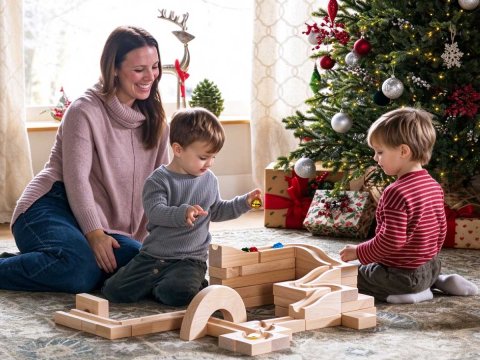
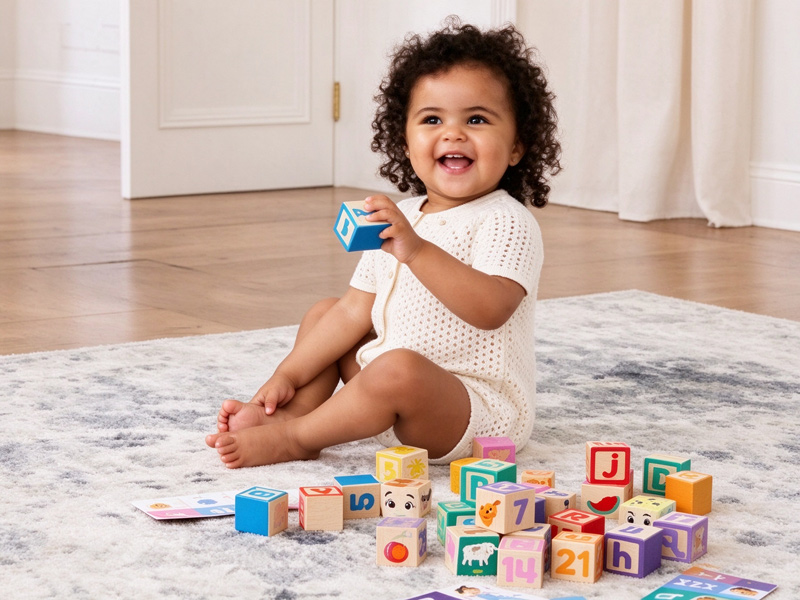
For the Building Blocks shopper, this history is not background — it is the product. The brand's block lines descend directly from that 1990s reinvention: solid wood unit blocks in the architectural tradition, colored blocks with printed details, block-and-roll sets for toddlers, and specialty lines like architectural building blocks that carry schoolhouse credibility into the nursery.
The design signatures parents recognize — rounded edges, child-safe paints, storage-friendly packaging, that slight oversize that makes blocks easy for small hands — were set decades ago and have barely wavered. In a category where Grimm's and HABA define the European premium tier, Melissa & Doug occupies the American middle: mass-market availability, wooden-toy values, and prices that do not require deliberation.
One Designer, Six Thousand Products, Thirty-Five Years
The creative engine of this company was, for thirty-five years, one person. Melissa served as chief toy designer and estimates she personally conceived more than 6,000 products — a pace of roughly one new idea every day and a half across three decades. Colleagues and interviewers have described the output as almost incomprehensible; prototypes were made by hand at the Wilton, Connecticut headquarters until each was right.
That single-designer engine explains both the coherence of the catalog — a Melissa & Doug toy is recognizable across a store aisle — and the risk the brand carried for decades. The founders addressed it the old way: no outside capital for twenty years, 100 percent ownership, and complete control. Only later, as growth turned them, in Melissa's phrase, into custodians rather than entrepreneurs, did they invite investors in and begin planning an exit.
The Phone Number Printed on Every Toy
The early products carried a detail that has become founding lore: the founders' home phone number, printed on the packaging, because they believed creation begins with connection. Customers called — with questions, complaints, and ideas — and the calls shaped products.
The gesture distilled a retail philosophy the company systematized as it grew: relentless availability and responsiveness built the loyalty of independent toy stores first, then the big boxes, then the e-commerce era. The anecdote survives in the company's culture stories because it marks the difference between the founders' version of quality — accountable, personal, almost stubborn — and the commodity logic of the toy aisle around them.
Taking Back Childhood as a Brand Mission
Around the late 2010s the company gave its philosophy a public name: the Take Back Childhood movement. The argument — that overscheduled, over-screened children need open-ended, tactile, imagination-first play — was also, not coincidentally, the argument for the product line. Partnerships with the American Academy of Pediatrics and a steady drumbeat of screen-free-play advocacy positioned the brand as the default answer for millennial parents reacting against their own screen-saturated childhoods.
Skeptics can note that mission-driven marketing is still marketing. But in this case the mission predated the slogan by twenty years, and the products genuinely embody it: no licensed characters on the classic lines, no apps, no batteries — just wood, paint, and the child's imagination doing the work.
The Spin Master Sale and What Followed
In 2023, after thirty-five years and thirty-two consecutive years of growth, the Bernsteins sold the company to Spin Master, the Canadian entertainment giant behind PAW Patrol, in a deal valued at approximately $950 million. Public coverage framed it as both a culmination and a release — Melissa described letting go as deeply personal, and the founders moved on to Lifelines, their wellness venture.
The practical questions for buyers are the usual post-acquisition ones: the Wilton headquarters remains the creative heart, the classic wooden lines continue, and the Shopify store still sells the full catalog directly. The long-term risk — that a mission-driven brand slowly optimizes toward the acquirer's entertainment logic — remains visible mostly in the absence of anything having changed yet. The wooden blocks, notably, are still blocks.
Blocks at the Center of a Vast Catalog
The modern store spans thousands of SKUs — puzzles, plush, pretend-play kitchens, crafts, games, outdoor play — but the block lines remain the category closest to the founders' original mission. Standard unit blocks teach the physics of stacking and balance; architectural sets stretch older builders; toddler lines introduce color sorting and first towers. Quality is consistent with the company's reputation: solid wood, safe finishes, and the durability that survives daycare rotations and younger siblings.
Against the premium European wooden brands, the trade is philosophical rather than material: Melissa & Doug blocks are made for every nursery, not only design-conscious ones, and the pricing, distribution, and absence of scarcity all serve that positioning.
The Nursery Shelf This Brand Still Owns
The Melissa & Doug household is, statistically, almost every household with a child under eight in North America — the brand's ubiquity at Target, Walmart, Amazon, and every specialty toy shop on the continent makes it the default wooden toy gift. That ubiquity is the review's honest summary of its position: not the rarest blocks, not the most artisanal, but the ones a grandparent can buy in any town and trust completely.
The verdict from thirty-five years of evidence: a garage company that reinvented the wooden toy, kept its founder at the design table for three decades, and exited on its own terms. The phone number may be off the packaging now, but the blocks still do exactly what they did in 1988 — give a child something worth stacking.