Yedi, on the move: the 1979 family business feeding america's air fryer appetite
Official homepage: https://yedihouseware.com
Kitchen-appliance stores usually launch with a single hero product and a crowdfunding page. Yedi Houseware launched in 1979 — as a gift and tabletop design house, four and a half decades before the air fryer made the family name a fixture of T.J. Maxx aisles and America's Test Kitchen equipment reviews. The Los Angeles company, still family-owned and still run by its president from the same West Coast base, spent its first life designing dinnerware and tabletop collections for department stores nationwide, then pivoted into small electrics when the countertop-appliance boom arrived — bringing its old discipline of everything-included gift packaging to a category that usually sells bare boxes. The result is the Total Package line: air fryers, pressure cookers, and sous vide machines shipped with accessory kits, recipe books, and phone apps, priced to undercut Ninja by half and warrantied for two years when bought direct. I went through the 47-year history, the equipment-lab verdicts, and the tariff ledger. Here is the store across its dimensions.
Forty-Seven Years of Yedi
The origin is longevity as strategy. Founded in 1979 — the year the Walkman launched and the microwave was still a novelty — Yedi built its business on gift and tabletop design for national retailers, developing what its about page calls a unique international approach to gift and tabletop design that earns global recognition for creativity. The small-electrics pivot extended the same logic: appliances as gifts, packaged the way gifts should be, with nothing left to buy separately. The family ownership and West Coast base survived both transitions, and the distribution now spans Walmart, Ross, T.J. Maxx, Marshalls, HomeGoods, Wayfair, and Amazon alongside the direct storefront.
The Total Package Doctrine
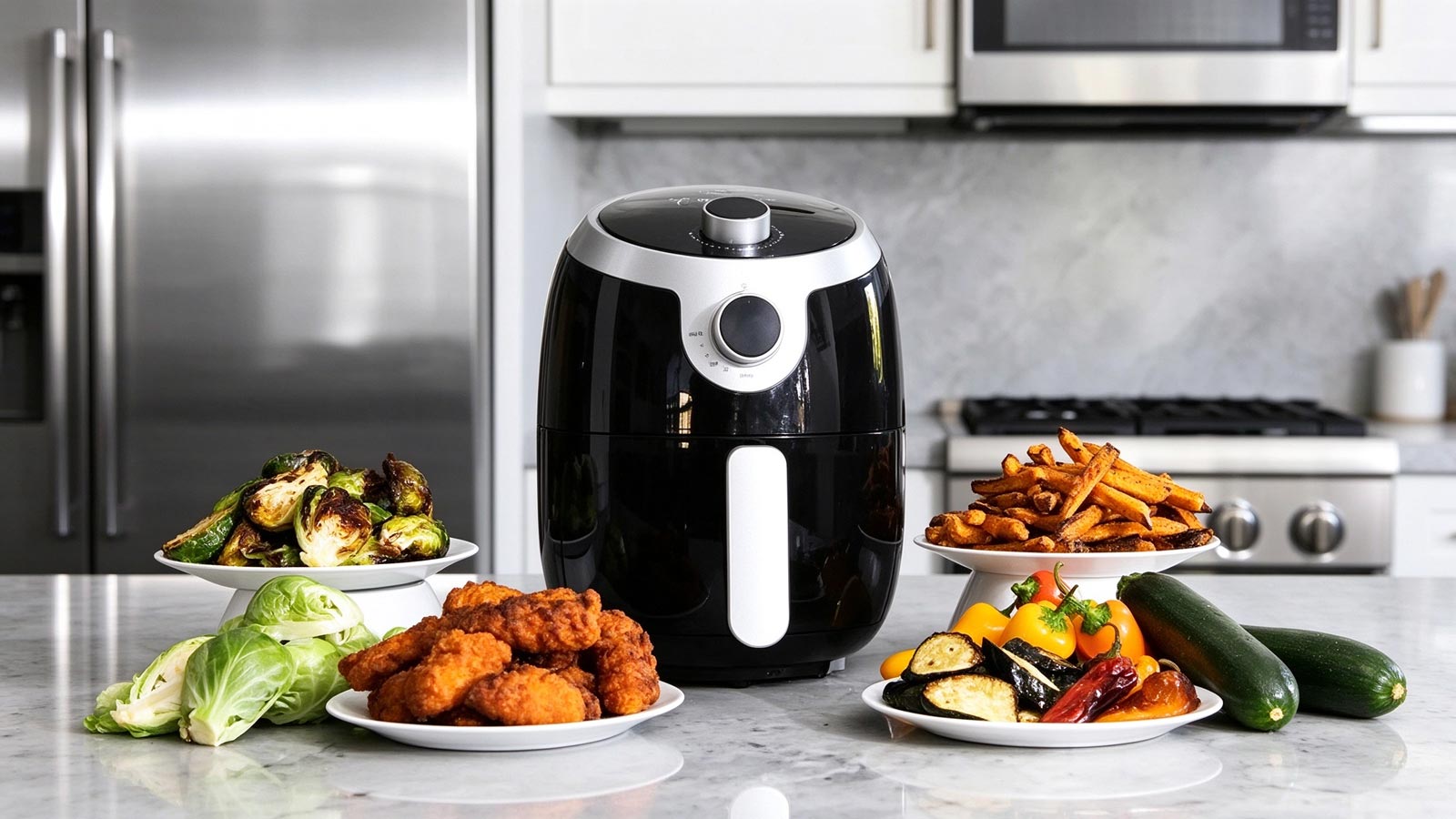
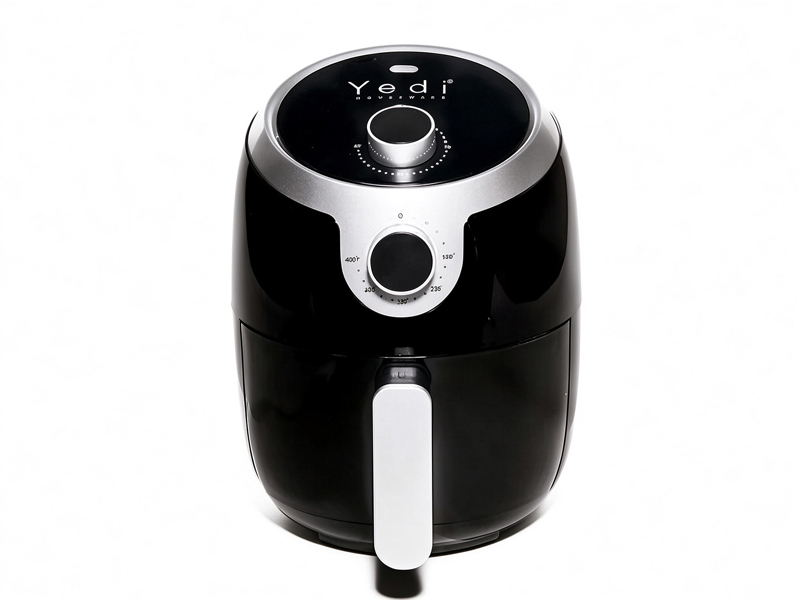
The product philosophy is the brand's entire differentiation. Where category leaders sell a bare machine and monetize accessories separately, Yedi ships everything at once: the five-point-eight-quart air fryer arrives with a divider, fifty perforated parchment sheets, an eight-inch cake pan and pizza pan, a multipurpose rack with three skewers, a silicone cupcake mold, a rubber mat, a hundred-recipe book, and a phone app with weekly uploads. The six-point-eight-quart Evolution adds a 360-degree stainless body and ceramic-coated, PFOA-free, BPA-free components. The pressure cooker line includes stainless steel steamers enabling two dishes at once, and reviewers consistently describe the out-of-box completeness as the pitch — a comprehensive starter kit, especially as a gift, that needs nothing else to begin cooking.
America's Test Kitchen Approved
The credibility ceiling belongs to the Infinity sous vide, which America's Test Kitchen awarded its Review Winner badge with Kitchen Tested verification. The lab praised its dead-on temperature accuracy, solid construction, speed, and circulation power — the octagonal Octcision body with its 160 perforated openings beat the entire lineup in the food-coloring circulation test — and verified the quiet operation and great cooking results. The same review recorded the design flaw that defines the product: the control panel display points straight up, making it nearly impossible for a shorter cook to read without a step stool, and there is no app to substitute. The included bags and hand-pump vacuum sealer drew the expected caveat — small, flimsy, plastic, but a usable starter kit. A machine that wins its category in America's most demanding test kitchen while shipping for under ninety dollars on promotion is the brand in miniature: overperforming hardware, honest compromises, gift-friendly price.
The Air Fryer Middle
The broader catalog occupies the value middle. The flagship baskets run eighty to one hundred thirty dollars — the 6.8-quart Evolution lists at $130 with Wayfair shoppers reporting six-year-old units still in daily use — against Ninja's $160-plus equivalents. The 9-in-1 pressure cooker carries a two-year warranty where Instant Pot offers one, lands on best-under-$150 roundups, and draws owner praise as a beautiful centerpiece with a stainless pot that cleans in a breeze. Roundup culture has rewarded the math: the brand surfaces in air-fryer buyer's guides from Business Insider's best-overall mention to family-of-four lists, consistently on value-for-money grounds rather than spec-sheet dominance.
The Tariff Ledger
The operational candor is unusually public. When 2025 tariffs on Chinese imports hit at least 145 percent for the category, Yedi's president told trade press that no country outside China could manufacture hundreds of thousands of air fryers a year at the expected quality and standards — a blunt admission most brands avoid — and detailed the countermeasures instead: frontloading five months of inventory against the usual three, pruning the SKU count to half or less to keep cash turning, and raising prices about ten percent while absorbing the rest because, as he put it, folks will not buy the product if you pass on all of it, especially in a very small margin business. For a store review, the episode matters less for politics than for what it reveals: a forty-seven-year-old family business managing its thin margins in public, with off-price retail partners like Ross already accepting the increases without pushback.
The Two-Year Safety Net
The direct-store warranty outguns the category standard. Purchases on the brand's own site carry a two-year promise — refund or replacement if anything goes wrong — while most models carry a one-year warranty through other retailers, and the product pages repeat the assurance in the Total Package voice: risk-free shopping, buy with confidence. The practical guidance follows the channel rule everywhere: buy direct for the longer coverage, or accept the retailer's terms at the discount chains where the same models often cost less.
The Honest Ledger
The complaint file is real but bounded. One deep-dive reviewer's unit arrived beeping with an Error 1 heat-sensor fault out of the box; another owner's valve jumped eighteen months in; a third's touch panel died entirely — each resolved through warranty, but each a data point on quality-control variance at the value tier. Slow cooking requires stirring, a small hassle but one the reviewer noted might be distinctive, and the lid earned a minor-design knock. The sous vide's upward-facing display punishes shorter cooks, as the test kitchen flagged, and the hand pump deserves its flimsy label. Off-price channel pricing runs inconsistent — the same oven appears at a pawn shop for eighty dollars while listing at $190 — which is the tax on a brand that lives in multiple retail worlds.
Under Pressure
Yedi Houseware is the appliance store as family business: forty-seven years old, still owned by the founding family, selling America's Test Kitchen-approved sous vide machines and fully accessorized air fryers at prices that make the category leaders look greedy, with a two-year direct warranty absorbing the risk. Buy the sous vide if you are between five-four and six-two or own a step stool, the Evolution air fryer if you feed four, and the pressure cooker if you want Instant Pot's job at half the price with double the warranty — then register the machine and keep the box, because value-tier quality control is a lottery the two-year promise is designed to cover. The pressure is on the margins; the products, mostly, hold it.