Waboba, afloat: the forty-year ball that bounces where nothing should
Official homepage: https://waboba.com
Outdoor stores usually improve on the ball. Waboba taught the ball to break the one rule every ball in history has obeyed — that it stops at the waterline. The Swedish company's namesake invention is a gel-cored sphere wrapped in Lycra that skips across lakes, pools, and ocean swells exactly like a perfectly thrown stone, and it exists because an inventor named Jan von Heland, throwing a Frisbee upside-down at a Swedish beach in the early 1980s, noticed it skimmed the surface like a flat rock — and wondered why nothing had ever been built to do that on purpose. The answer took twenty years of testing shapes, materials, and compositions: in 2002 he discovered that a soft ball with a Lycra covering achieves easy flow separation at the hydrodynamic stagnation point, converting an impact that should splash into a bounce that carries. The patent was granted in 2009, the History Channel featured the invention on its Million Dollar Genius series in 2016, and the United States Navy has studied the ball's materials behavior in water. Forty years from lightbulb to recreation-station empire, the brand now sells the water ball plus a land arsenal — the cratered Moon Ball that bounces toward rooftops, pocket-folding discs, light-up night balls — through more than seventy-five countries. I went through the physics, the patents, and the paint. Here is the store across its dimensions.
An Upside-Down Frisbee and a Twenty-Year Quest
The origin is patient invention rather than startup speed. Von Heland's lakeside observation sat for years before experimentation began in earnest; the breakthrough combined a soft polyurethane body with the Lycra skin that lets water flow smoothly around the impact zone, and the ball floats — a detail that turns every missed catch into a swim rather than a dive. The throwing motion mirrors stone skipping: flat and fast over the surface. The ball, famously, does not bounce on land, a by-design constraint that first-time buyers occasionally misread as a defect and veterans cite as proof of the engineering's specificity. The company's sell-in deck tells the story with characteristic modesty: a family-owned global company with teams in Sweden, China, the United States, Mexico, and Portugal, selling millions of balls a year, proud to bring people together so they can unplug and play outside until the sun goes down.
Physics at the Stagnation Point, Patents in Two Names
The intellectual-property record reads like a family archive. The foundational 2009 patent — a ball with a gel section, an elastic outer shell, and a floating-enhancement section combining plastic and gas — carries Jan von Heland's name; a 2021 continuation patent for water-game balls was filed by Axel von Heland, and the company's product literature now references both. The science attracted institutional attention beyond the toy aisle: naval researchers have examined how the ball's softness and flexibility govern its interaction with water, treating it as a case study in material-fluid dynamics. The 2016 History Channel episode formalized the invention's folk status, and the company's celebration of its own history — down to the first sales on the island of Öland in 2005 — gives the storefront an autobiography few toy brands attempt.
From an Island in Sweden to Seventy-Five Countries
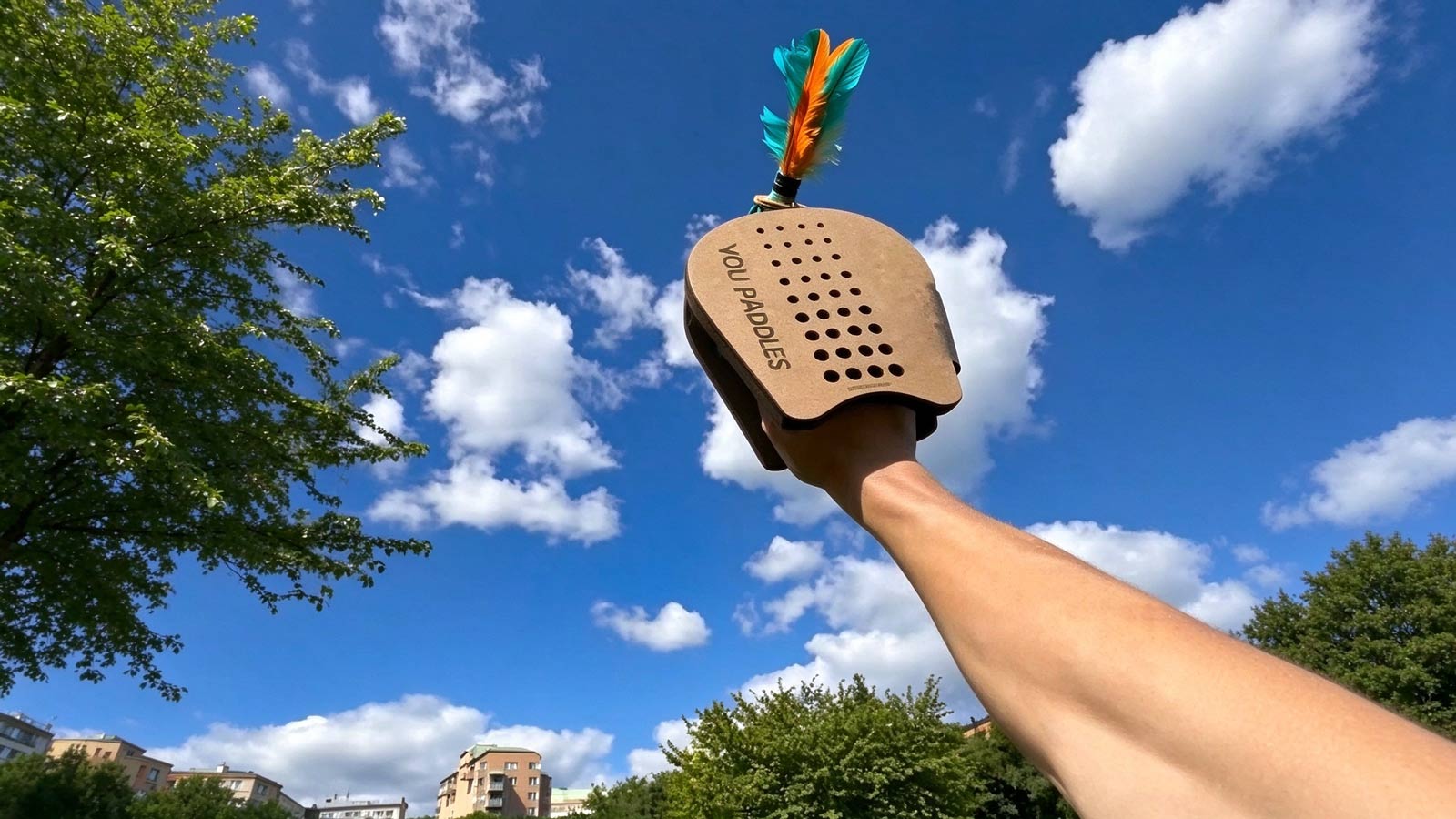
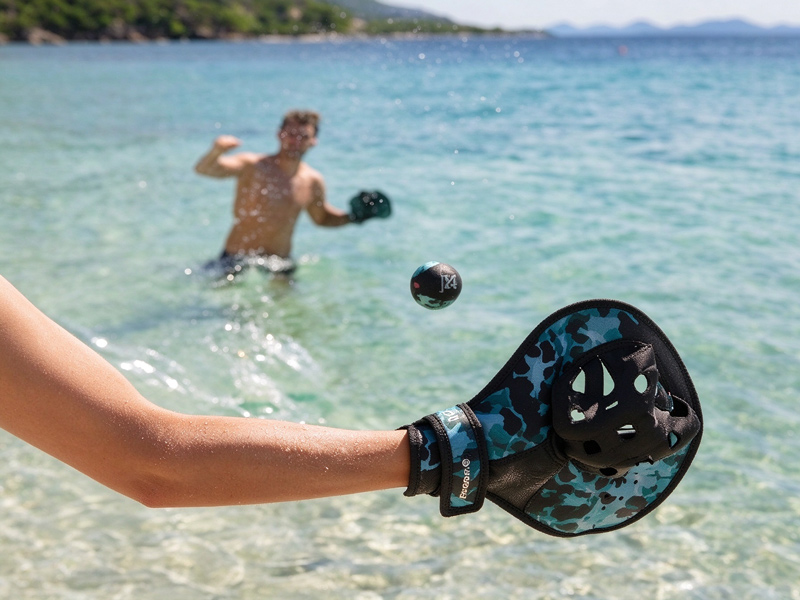
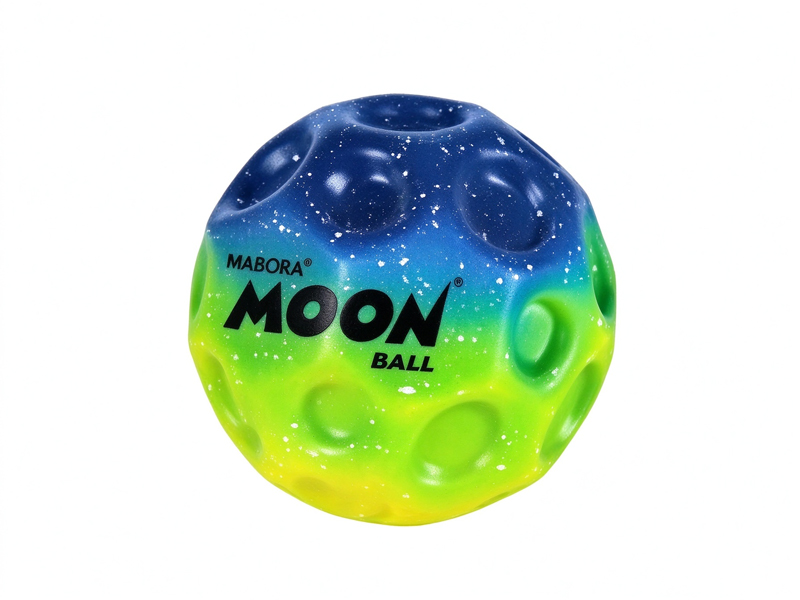
The commercial arc was deliberately geographic. Two years of Swedish sales, then Austria and Denmark, Australia in 2007, the United States in 2008, and seventy-plus countries by the end of the 2010s. The catalog expanded in the same unhurried cadence: the Pro ball for strong arms and open water, the Surf for beginners, color-shifting Sol, the dog-line Fetch, then the 2013 Moon Ball — the land product that arguably outshines the original, a cratered Zero Gravity Foam sphere that returns bounces with a satisfying pop and a claim of thirty-meter heights that playground testing keeps confirming. Around the balls grew the accessories: ambidextrous Catch gloves, the Cracket bat, beach paddles, and the Wingman — a silicone flying disc that folds into a pocket, floats, and has quietly become the brand's dark-horse favorite among dog owners.
Bounces to the Rooftop, Peels in the Craters
The honest product ledger concentrates on the Moon Ball's finish. Multiple reviews across a decade describe the paint and logos peeling from the cratered surface with use — the earliest documented complaint dates to 2014, the most recent to 2025, where a consensus review noted newer versions may not be as well made as earlier ones and one skeptical tester measured less than half the drop height returned, calling performance comparable to an inexpensive rubber ball. The Moonshine light-up variant ships a battery that cannot be replaced, an accepted trade for a glowing ball but a point of disposal grumbling. The water balls demand respect for their intended environment — no throwing on pavement or rocks, the packaging insists, which is also, inevitably, the first thing every child does. None of this has dented the core reputation; all of it recurs in the record with metronome regularity.
Dogs Love It, Labels Forbid It, Owners Buy Both
The product's most entertaining contradiction is canine. The Moon Ball's packaging warns it is not a dog toy and unsuitable for pets — and the review wall overflows with owners reporting it as the best dog toy ever purchased, indestructible through months of daily mouthing, with one buyer keeping spares for a retriever mix who sleeps with his. The officially dog-approved Fetch line exists for exactly this tension, and the Wingman's teeth-safe silicone has made it the frisbee of choice for sheltie owners whose dogs reject hard plastic. The brand has quietly learned to profit from both sides of the warning label.
Thirty Days, a Random-Discount Clause, and Instant Replacements
The policy page deserves quoting for its personality. Returns run thirty days in original condition through a support-initiated flow, with a label provided; damages must be reported immediately; exchanges follow the return-then-repurchase standard. Then the clause no competitor would write: the company's discounts happen at random, and if a buyer's order landed within twenty-four hours before a sale was announced, support will refund the difference on request — a retroactive price-protection policy written in the register of a shrug. The review wall supplies the service proof: a beach ball that would not hold inflated air was replaced immediately, no argument, one of several such stories in the six-hundred-entry wall.
What a Review Wall of Six Hundred Sounds Like
The unprompted record is a catalog of small delights. A toddler's cricket bat, improvised from the Cracket. A Wingman praised as the ideal parking-lot friend-maker at a jam-band show. A pizza-shaped Fly Disc reviewed exclusively through a deadpan dialogue about carrying pizza in a pocket. Water-ball converts reporting that the devices pulled cold-reluctant swimmers into staying longer at the beach. The complaints — paint, battery, the occasional size surprise — ride along at the margin, answered by a support operation that the wall describes as responsive and generous. The overall register is what a toy company's wall should sound like: joy with footnotes.
A Ball That Refuses to Do the Ordinary Thing
Waboba is the rare outdoor store whose founding invention remains its best advertisement: a ball that bounces on water, patented by a father, extended by his son, studied by the Navy, and sold on the story of a Frisbee thrown wrong on a Swedish beach. Buy the Pro for the lake, the Original for the pool, the Surf for nervous beginners, the Moon Ball for every child over five — accepting the peeling paint as the price of lunar gravity — and the Wingman for the dog. Read the random-discount clause before you order, report any leak within the thirty days, and treat the water ball's refusal to bounce on land not as a flaw but as the entire point. The company has spent forty years proving that the oldest plaything on earth still had one rule left to break.