Micro kickboard, upgraded: the wirecutter pick that treats toys like transit

Official homepage: https://microkickboard.com
Ride-on stores usually sell childhood. Micro Kickboard sells infrastructure — and the distinction explains everything about the price, the engineering, and the awards shelf. The American storefront of the Swiss company that invented the modern folding kick scooter at a Zurich train station in the late 1990s approaches a three-year-old's first ride with the same tolerances it applies to the commuter decks that have replaced car trips across Europe: high-grade polyurethane wheels, a fiberglass-reinforced deck engineered to flex over sidewalk cracks, a modular architecture in which virtually every component is individually replaceable, and a two-year manufacturer's warranty that activates on registration. The strategy has made the brand the most awarded scooter company in the world — the storefront claims the title without visible embarrassment, and the evidence supports the posture: an ASTRA Best Toy Award, multiple Oppenheim Toy Portfolio seals, a Parents' Choice citation, and — as of 2026 — a Wirecutter pick badge displayed on the homepage. I went through the Swiss origin, the lean-to-steer doctrine, and the fine print that excludes the very accessories it sells. Here is the store across its dimensions.
The Swiss Train Station Problem Nobody Was Solving
The origin is commuting, not childhood. Micro Mobility Systems was founded in Switzerland in the late 1990s when Wim Ouboter, frustrated by the gap between his home and the train station — too far to walk, too short to drive, absurd to take a bus — designed a folding aluminum scooter light enough to carry onto a train and compact enough to slide under a seat. The device created the kick-scooter category as the world knows it; within years, children had claimed the form factor, and the company's pediatric line, led by the three-wheeled Mini and Maxi, became the premium reference every licensed-character imitator measures itself against. The American operation runs the same playbook: urban-transport solutions that fill the gap between driving and walking, beginning with toddlers.
Lean-to-Steer and the Original-Proprietor Claim
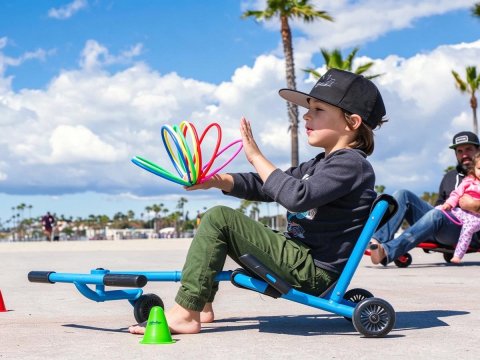
The steering doctrine is the brand's signature and its most defensible claim. Instead of turning handlebars, riders shift body weight side to side, carving the way a skateboard or snowboard carves; the T-bar provides stability without requiring the wrist articulation young children have not developed. Micro claims original-proprietor status on the mechanism, and independent reviewers consistently validate the design as the safest and most intuitive entry into wheeled motion — the flexible fiberglass deck absorbs impact, the low center of gravity resists tipping, and the non-marking polyurethane wheels are quiet enough for indoor learning. The learning curve is real but brief: one detailed long-term review describes children mastering the carve in a session or two, and aggressive young riders exploiting the same stability for air hops and sidewalk surfing. The adjustment to the physics is the one recurring caveat in otherwise ecstatic coverage.

An Award Shelf That Needs Its Own Room
The validation stack is unusually deep. The Mini Deluxe alone carries an ASTRA Best Toy Award, Platinum and Gold seals from the Oppenheim Toy Portfolio across three consecutive years, a Parents' Choice Award, and a Tillywig Top Fun citation — and the brand's homepage compounds the claim with the most-awarded-scooter slogan and the current Wirecutter pick. The commercial proof matches: the Mini holds a 4.8-star Amazon average across more than three thousand reviews, with 88 percent five-star ratings, and the review corpus repeats the same findings as the professional testers — the smoothest, quietest ride in the category, the easiest assembly in the industry, and build quality that survives hand-me-downs across siblings.
Every Part Replaceable, Two-Year Warranty Included
The sustainability argument is structural rather than rhetorical. The modular design means wheels, brakes, grips, decks, and handlebars all detach and replace with household tools; the product pages explicitly coach owners through the secondhand pathway — pass it down, donate it, or take advantage of the well-earned resale value — as an alternative to landfill. The two-year manufacturer's warranty, registered after purchase, covers the frame and components against defect, and the replacement-parts store sells everything individually. In a category where broken scooters are usually whole-unit disposals, Micro's spare-parts ecosystem is the quiet differentiator that justifies the premium over the thirty-dollar licensed competitors.
The Learning Curve, the Bumper, and the Price
The honest critique file is short and specific. Lean-to-steer takes adjustment for children accustomed to handlebar steering, and the fold mechanisms on the folding models require adult hands — kid testers in professional reviews could not operate them independently. One long-term owner review flags the front plastic bumper between the wheels as the vulnerable component in wall collisions, repairable under warranty but worth knowing. And the price — one hundred to one hundred eighty dollars depending on model and light-up wheel options — is two to four times the big-box entry tier, a premium that buys engineering rather than character licensing. None of these surprises anyone paying attention; all of them belong in the decision.
Thirty Days, Ten Dollars, and a Gift-Credit Bridge
The policy stack is strict where it matters and clever where it can be. Returns run thirty days, but only for items purchased on the direct website — a channel-protection clause that redirects retail buyers to their retailers — and exclude accessories, helmets, replacement parts, and warehouse-deal stock, which is to say most of the basket beyond the scooter itself. A ten-dollar deduction covers the prepaid label; exchanges are handled as return-then-repurchase; and the gift mechanic is genuinely thoughtful — recipients can exchange for store credit equal to the original spend without the purchaser knowing, a bridge between registry politeness and practical sizing.
From Age One Rockers to Adult Commuter Decks
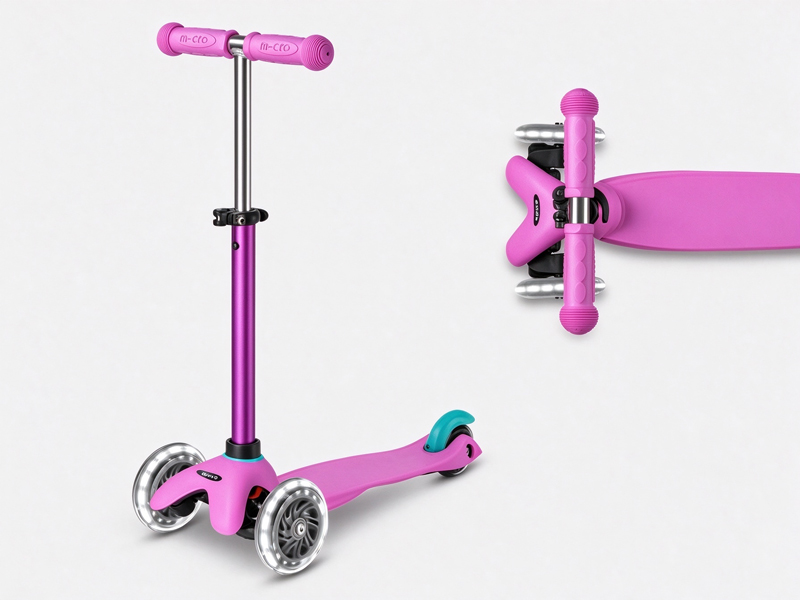
The catalog spans the full human lifespan of scooting. The newest entry, the Rock & Go LED at two hundred dollars, combines a rocking base with a scooter platform for ages one through six, extending the brand's reach below the Mini's toddler threshold; the Mini 3-in-1 adds a seat and push bar for the same demographic. The Mini proper serves two-to-five-year-olds at one hundred dollars, the Maxi line covers five-to-twelve at one hundred fifty to one hundred eighty with Deluxe, LED, Foldable, and Pro variants, and the adult commuter decks — Sprite, Classic, and electric options — complete the loop back to the train station where the company began. Accessories round out the margin: helmets in color-shifting Neochrome finishes, streamers, lights, baskets, and bells.
Buy the Maxi Deluxe, Register the Warranty, Skip the Rest
Micro Kickboard is the scooter store that parents graduate to after destroying two cheap ones — and the Wirecutter badge, the award shelf, and the three-thousand-review Amazon wall all say the graduation is worth it. Buy the Maxi Deluxe for the five-to-twelve window, add the LED wheels only if evening riding is real in your neighborhood, register the warranty the afternoon it arrives, and keep the spare-parts page bookmarked for the hand-me-down. You will pay twice the big-box price for twice the lifespan and half the noise; in a category where the physics never changes, that is the entire arithmetic of value.