Twelve south review 2026: does this mac accessories store justify its premium prices?

Official homepage: https://www.twelvesouth.com
Computer accessory stores usually race to cover every device ever shipped. Twelve South walks the other way. The Charleston, South Carolina company — founded in 2009 by husband-and-wife team Andrew and Leigh Ann Green — has one rule, printed right into its identity: "We're not just Mac friendly, we're Apple only." That focus built a cult following and a catalog of iconic products, from the leather-bound BookBook case to the AirFly transmitter that lets AirPods connect to airplane seatback screens. I went through the Shopify store the way an Apple devotee with a budget would. Here is what I found, dimension by dimension.
Why a Small Charleston Team Bet Everything on Apple
The origin story explains almost everything about the store. Andrew Green spent years around Apple retail before starting Twelve South in Mount Pleasant, South Carolina, with his wife — a team that still numbers only around twenty people today. The bet was counterintuitive for 2009: ignore the wider PC market, design exclusively for Apple devices, and ship only a handful of products a year. The restraint became the brand. Forbes suggested as early as 2012 that Apple itself should buy the company, not for revenue but for the halo its products cast on the ecosystem. On the storefront, that heritage is used well — the story is told with photos of the Charleston studio, and the "Apple only" motto functions as both positioning and a filter, telling Windows users to leave before they waste their time.
What the Shelf Actually Holds Beyond the Famous BookBook
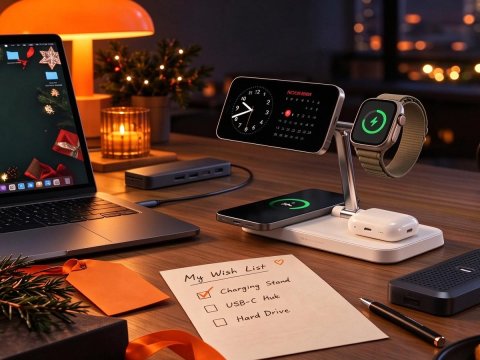
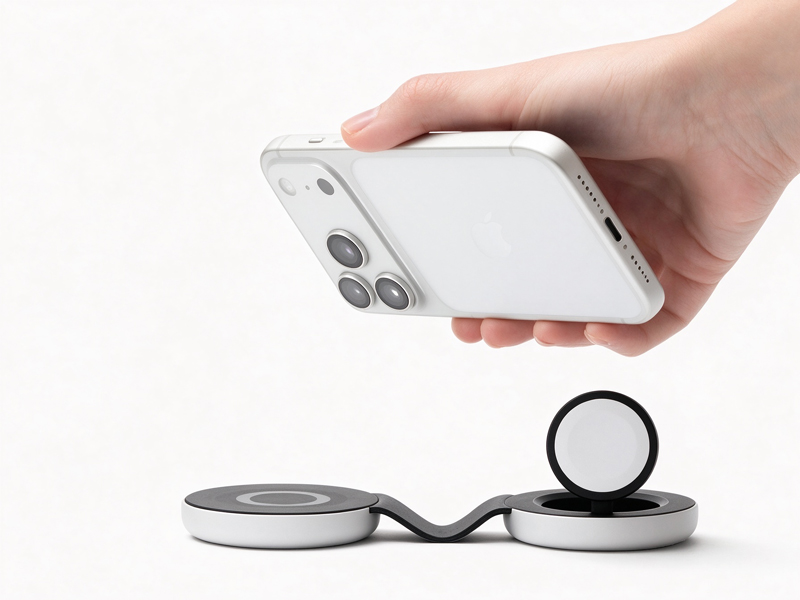
The catalog is smaller than you'd expect from a brand this famous, and that's deliberate. BookArc holds MacBooks vertically to free up desk space. The Curve family — Curve, Curve Nano, Curve Mini — angles laptops and phones toward eye level in sculpted aluminum. BookBook remains the flagship: hand-finished leather cases for iPhone and MacBook that disguise expensive hardware as vintage books. Then there's the product category the company effectively invented: AirFly, a Bluetooth transmitter that plugs into any 3.5mm headphone jack — airplane seats, gym machines, treadmills — so wireless earbuds can join the party, with the AirFly Pro 2 promising over 25 hours of playtime. The newer charging line, including the ButterFly SE 2-in-1 Qi2 charger, rounds out a shelf built around one question: where does your Apple device sit, charge, or travel? Every product answers it with the same materials language — leather, anodized aluminum, felt.

Walking Through a Store Built Like an Apple Showroom
The Shopify storefront mirrors the Apple aesthetic so faithfully it occasionally feels like an official store. Photography is warm, minimal, and consistent; product pages lead with lifestyle scenes rather than spec tables, and compatibility is communicated through device-model pickers rather than technical jargon. The navigation is clean — shop by device, by category, or by collection — and the search behaves intelligently. What struck me most is the copy discipline: every headline answers a real-world problem in plain language, the way Apple itself writes. The flip side of that polish is depth. Compared to spec-heavy accessory stores, Twelve South's pages can feel light on engineering detail — you'll learn how a stand transforms your desk, but not the alloy grade or load tolerance. Buyers who comparison-shop on specifications alone may find the store more seductive than informative.
Paying Premium Prices and What You Get for Them
This is where the store divides shoppers. BookArc Flex runs around $50, Curve sits near $60, BookBook cases run 60–60–80, and AirFly models land between $35 and $55. Nothing here is cheap, and nothing pretends to be. The argument is materials and design: genuine leather, precision-milled aluminum, and a fit-and-finish that generic Amazon alternatives visibly lack. The store backs the premium with a 30-day return policy and a one-year manufacturer's warranty, and it occasionally bundles products at a modest discount. What you don't get is a budget tier — there is no Twelve South equivalent of a $20 plastic stand. For buyers already inside the Apple ecosystem and numb to premium pricing, the numbers feel consistent. For everyone else, the store offers no on-ramp, and it clearly isn't trying to build one.
Shipping Windows, Warranty Reality, and Support Quality
Twelve South distributes through more than 50 countries, using a mix of its own regional storefronts and partners like Apple Stores and Amazon — a rare accessory brand you'll see on Apple's own shelves. Direct orders from the US store ship promptly, and regional sites in Australia and Europe localize pricing and shipping terms, with free-shipping thresholds that vary by market. Support runs through a help center and email, and the small-team structure shows: responses tend to be personal and product-literate rather than scripted, though not instant. The one-year warranty is honored without much drama according to long-term community feedback, with replacements for defective units handled directly. The store also keeps its user guides and setup videos genuinely excellent, which matters for products like AirFly where the use case — pairing earbuds to a gym machine — is new to many buyers.
Who Ends Up Buying Here and Who Walks Away
Twelve South is the right store for the committed Apple user who views accessories as furniture, not utilities — someone who wants their desk to look considered and their travel gear to feel designed. The BookBook remains one of the cleverest products in the entire accessories category, and AirFly solves a problem most people didn't realize was solvable. It is the wrong store for multi-device households with Windows or Android in the mix, for budget buyers who just need a functional stand, and for spec-driven shoppers who want charts before vibes. The store knows exactly who it serves, prices accordingly, and never blinks. In a category drowning in anonymous aluminum, that clarity is either its greatest strength or its biggest limitation — depending entirely on which side of the Apple divide you stand on.