Hyper review 2026: are hyperdrive and hyperjuice products still worth your hard-earned money?
Official homepage: https://www.hypershop.com
Computer accessory stores usually follow the market. Hyper keeps trying to get there first. The Fremont, California company — now operating under the Targus umbrella and closing in on twenty years of "world's firsts" — built its Shopify store around two product families that most shoppers know without knowing the brand behind them: HyperDrive, the connectivity line whose compact hubs turned one USB-C port into an entire desk, and HyperJuice, the power line behind stackable GaN chargers, 245W airline-safe battery packs, and Qi2 charging stands. Industry watchers have called it the number-one docking station brand in the US. I went through the store as a remote worker rebuilding a travel kit. Here is what each dimension revealed.
Two Decades of Worlds-First Engineering in Silicon Valley
The through-line of Hyper's story is being early. The company launched in the mid-2000s with a creator-focused mission — "Go Beyond" is still the motto — and positioned itself as a Silicon Valley specialist in power, connectivity, mobility, and desktop solutions for creative professionals. Its reputation was built less on marketing than on a habit of shipping first-of-their-kind devices: the first compact dual-port Thunderbolt hubs, the first stackable GaN chargers, the first 245W USB-C battery pack sized under the TSA's 100Wh carry-on limit. The Targus acquisition gave the brand distribution muscle, and its products now show up everywhere from B&H shelves to Apple accessory roundups. On the storefront, that history is compressed into product-page badges and CES award mentions rather than told as a narrative — a missed opportunity, because the engineering resume is genuinely the strongest thing the store has.
Crowdfunding as a Product Development Engine
Few established brands still run Kickstarter campaigns the way Hyper does — and fewer treat the results as a permanent R&D pipeline. The original HyperDrive 7-in-2 USB-C hub raised over $1.8 million on Kickstarter in late 2016, becoming one of the most-crowdfunded MacBook accessories ever, and the playbook never changed. The HyperDrive GEN2 family launched the same way with early-bird pricing near 50% off MSRP, and the Thunderbolt 4 Power Hub — a $299 compact dock with four 40Gbps ports and 96W of charging — followed through Kickstarter in 2022. For buyers, the mechanics matter: backers get genuine discounts on unproven designs, while the main storefront absorbs whatever the campaigns validate. The trade-off is that Hyper's public roadmap is a series of open bets. If a campaign slips, and they sometimes do, retail customers end up waiting behind the crowdfunding queue.
The Two-Brand Shelf: HyperDrive Meets HyperJuice
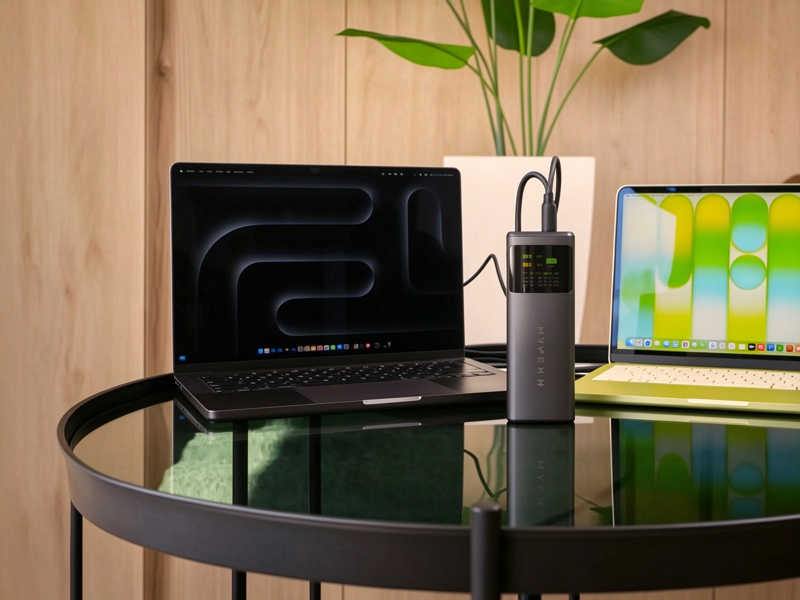
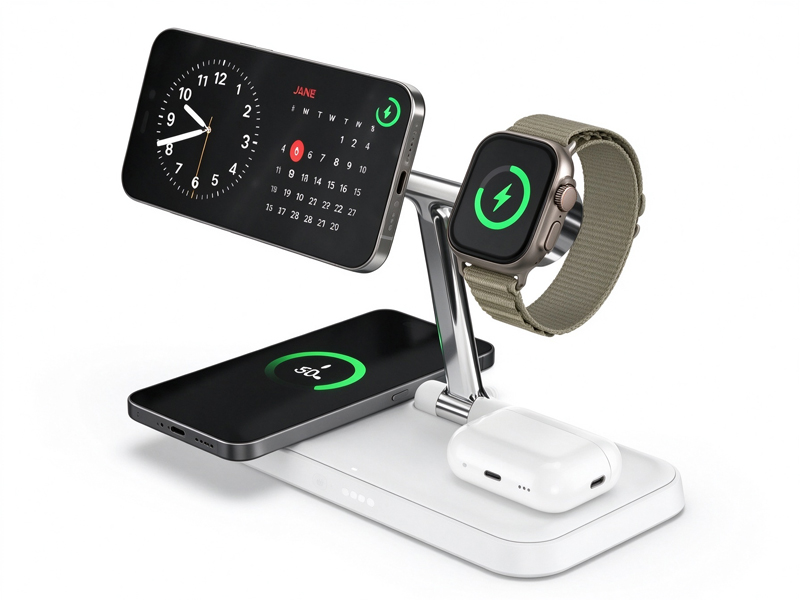
The catalog is easier to navigate than its size suggests, because everything sorts into two lanes. HyperDrive covers connectivity: the DUO 7-in-2 hub that plugs flush into a MacBook's twin USB-C ports with magnetic attachment, GEN2 docking stations with dual 4K60 output, USB4 and Thunderbolt docks, HDMI cables, and an M.2 PCIe enclosure line. HyperJuice covers power: GaN wall chargers from 30W to 245W desktop bricks, the airline-legal 27,000mAh battery pack with an OLED status screen that can charge four devices at once, and a Qi2 magnetic stand lineup built for the iPhone 16 generation. The naming discipline extends to the storefront — product pages carry full port-by-port wattage tables, and the compatibility footnotes are honest about which MacBook generations a hub won't fit. Where the shelf gets crowded is in the middle: hubs that differ by one port or one cable can sit side by side at meaningfully different prices, and the store doesn't always explain why.
Doorbuster Pricing and the Art of the Deal
Hyper sells like a brand that knows its MSRPs are starting points. The homepage leads with doorbuster deals advertising up to 60% off docks and hubs, the GEN2 12-in-1 dock — a hundred-dollar product at list — has appeared at $50, and product pages default to sale prices with the regular price struck through. HyperJuice chargers routinely run at 20% off around phone launch weeks. For deal-literate shoppers this is a feature: patient buyers can assemble a serious travel kit at half the sticker cost. For everyone else it's a tax on impatience, and it makes price comparison across retailers confusing because Amazon and B&H sometimes undercut the brand's own store. The non-negotiables are friendlier — free US shipping over $40, a two-year warranty on most lines, and a 30-day money-back guarantee — but those headline deals train customers to never pay full price, which is a strange long-term posture for a premium brand.
The Recall That Tested Customer Trust
No honest review of this store can skip September 2022. Hyper Products, working with the US Consumer Product Safety Commission, recalled about 13,700 HyperJuice 130W battery packs and roughly 18,200 stackable GaN chargers after overheating reports — melting, smoke, and property damage, with the battery posing a fire risk. The remedy was a refund in the form of hypershop store credit, a choice that drew real anger from affected buyers: one UK customer detailed paying shipping and import duties out of pocket on a replacement, then being stung again when FedEx taxed the package at full declared value. The episode matters not because recalls are fatal — competent brands survive them — but because the store's response converted a safety problem into a trust problem. Years on, the current power lineup carries TSA-friendly, airline-safe branding as if to close the loop, but the Trustpilot record keeps the older wound visible.
Verdict for Road Warriors and Desk Setups Alike
Hyper earns its reputation most clearly for two specific buyers. The road warrior benefits from an unmatched power-and-connectivity stack: a Qi2 travel charger, the 245W battery pack, and a compact GEN2 hub cover nearly every hotel-room and airport-lounge scenario at a deal-hunter's price. The desk-setup builder benefits from docks that hit spec targets — triple extended display, 100W passthrough — that competitors charge double to reach. The store is harder to recommend to buyers who want calm pricing, instant support, or a safety record without asterisks. Support responsiveness, per community feedback, can stretch to weeks on order confirmations and tracking fixes, and separate split shipments without notice remain a recurring complaint. Hyper is a store for shoppers who read the spec table, watch the sale cycle, and tolerate some messiness in exchange for engineering that's frequently first and rarely matched at the price.