The vermont mill that bet everything on a lifetime sock promise

Official homepage: https://darntough.com
Darn Tough sells socks under a guarantee most businesses would consider a suicide pact — and it made them an institution.
In the early 2000s, Cabot Hosiery Mills in Northfield, Vermont was dying. The family mill, founded in 1978, had shrunk to 35 employees and a handful of knitting machines as American apparel brands moved production overseas. Ric Cabot's response was to double down on quality instead of cost: launch a premium sock so durable that the company would promise, unconditionally and for life, to replace any pair that ever wore out. This review examines how that gamble built one of the most trusted names in American-made gear, what the lifetime guarantee actually costs in practice, and whether the run category deserves the same devotion as the hiking line.
Thirty-Five Employees and a Handful of Machines
The company behind Darn Tough is three generations deep in hosiery. Marc Cabot founded Cabot Hosiery Mills in 1978, knitting private-label socks for big American brands of the era. His son Ric left a publishing career in 1989 to join the family business, and by the turn of the millennium the mill looked doomed — as customers offshore, the workforce dwindled to about 35 people and a few surviving machines.
The mill's survival strategy became its identity. Rather than chase offshore pricing, Ric launched Darn Tough in 2004 with a quality-over-everything bet, handing out first pairs at the Vermont City Marathon. The family stayed in Vermont through the collapse of American textile manufacturing — a sign inside the mill still reads that nobody ever outsourced anything for quality.
An Unconditional Guarantee Nobody Thought Would Work
Industry observers called the founding promise crazy: if a customer ever wears out a pair, Darn Tough replaces it free — no receipt, no time limit, no conditions. In a consumables category designed around repeat replacement purchases, guaranteeing a product for life looked like surrendering the business model.
Instead it became the business model. The guarantee forced manufacturing discipline — a company that replaces failures forever must make failures extraordinarily rare — and it generated a customer acquisition engine that advertising cannot buy. Two decades later, returned socks are examined at the mill and recycled, wear patterns feed product improvements, and the guarantee remains the brand's defining asset.
Small Needles, Dense Knits, True Seamless Toes
The engineering claim behind the guarantee is knitting density. Darn Tough uses small-needle machines that pack substantially more stitches per inch than conventional knitting, producing a tighter, more durable fabric that resists the thinning and hole-punching that kills ordinary socks. True Seamless toe construction eliminates the bulky closure seam that rubs toes raw on long miles.
Runners get purpose-built constructions rather than repurposed hiking socks: the Run line maps cushioning and compression zones to footstrike patterns, with heights from no-show to micro crew and multiple cushion weights. Merino blends wick moisture, regulate temperature across seasons, and resist odor naturally — though the dense knit does run warmer than ultra-thin synthetic racing socks, which hot-weather road runners should weigh honestly.
RWS-Certified Merino and the Global Wool Question
The wool is responsibly sourced under the Responsible Wool Standard, but shoppers should know what that does and does not mean: the merino fiber itself is imported, as essentially all merino wool is, while the knitting, finishing, and inspection all happen in Vermont. The company is transparent about the split, which is more than most Made-in-USA apparel brands offer.
Blends typically pair merino with nylon for structural durability and a touch of Lycra for fit retention — a 60/30/5-style recipe that keeps shape through years of washing. The result is a sock that outlasts pure-wool rivals without the itch older generations associate with wool.
Six Categories From Ski Runs to Work Boots
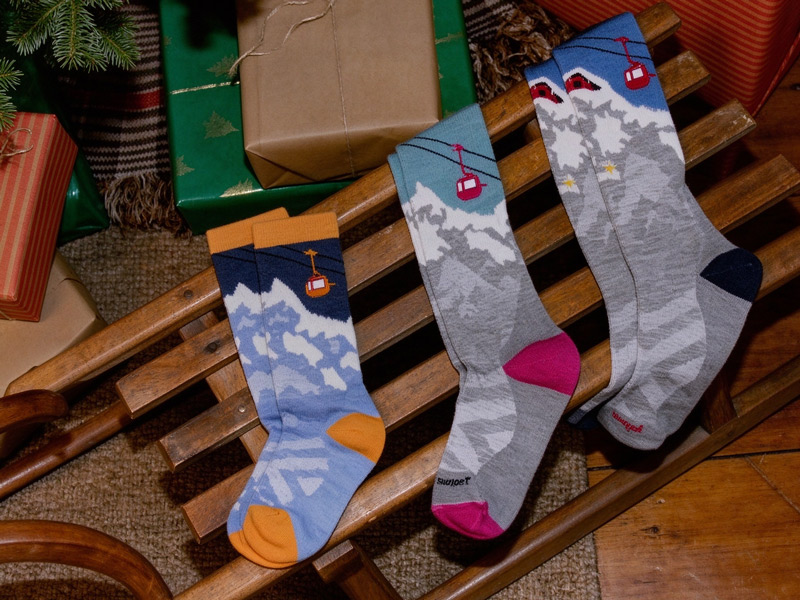
The catalog runs far beyond the trail: Ski/Ride, Hike/Trek, Run/Bike, Lifestyle, Hunt, Kids, Work, and Tactical lines each carry activity-specific constructions, with women's and youth sizing throughout. The Run/Bike category that matters here includes ultra-lightweight options for racing, cushioned trainers' socks, and over-the-calf styles for compression-minded athletes.
This breadth is strategically important. A brand that only serves hikers caps its customer lifetime; a brand that covers a runner's training miles, ski seasons, and workweek becomes the default answer to every sock question a household has — which is exactly how the lifetime guarantee converts into decades of loyalty.
Under One Percent Returns: The Guarantee as Strategy
The guarantee's economics turn out to favor the manufacturer. Fewer than one percent of socks sold are returned under warranty in a typical year — the knitting is simply that durable — which means the promise costs relatively little while functioning as a perpetual quality signal. Returned pairs get recycled and analyzed, feeding design iterations that lower the return rate further.
For customers, the process is deliberately low-friction: an online claim form, a roughly two-dollar postage stamp to Vermont, and a credit code for replacement pairs. REI stores also accept in-person returns on the brand's behalf, a distribution partnership that doubles as a warranty outpost.
Three Vermont Facilities Knitting Seven Days a Week
Scale followed survival. The company now reports more than 300 employees across three Vermont facilities, knitting around the clock — machines running seven days a week — with output past five million pairs annually and revenue well into nine figures. Exports reach more than 25 countries, aided by federal export financing.
Leadership has professionalized without leaving the family: Ric Cabot remains CEO, and in early 2026 the company named the first non-family president of the parent mill, signaling institutional maturity rather than exit. The online storefront runs on Shopify with a loyalty program, subscriptions, and the full catalog — the direct channel that complements thousands of specialty retail doors.
What a Free Replacement Actually Costs You
The guarantee's asterisk is minimal but real. Buyers pay $16 to $30 per pair up front — several times the price of multipack cotton — and replacement claims require mailing worn socks to Vermont, a small effort that filters out casual claimers. Merino care demands gentleness: cold or warm machine washes, low dryer heat, no fabric softener, which shortens any premium sock's life.
The economics still favor the buyer across a long enough horizon. A $24 pair that survives five years of trail seasons, or is replaced free when it does not, beats a $5 pair replaced twice a year — and the comfort difference is immediate rather than deferred.
Who Should Own the Last Socks They Buy
The Darn Tough runner is the high-mileage athlete who has already cycled through cheap socks: ultrarunners logging multi-hour efforts, trail runners in wet seasons, and through-hikers who famously treat a single pair as primary equipment. The Run line's ultra-lightweights serve summer road runners, while cushion-heavy models suit cold-weather and long-day use.
The honest verdict from two decades of evidence: Darn Tough turned a dying mill into one of the most trusted manufacturers in American apparel by making a promise its knitting could keep. For runners tired of treating socks as disposables, the guarantee is not a gimmick — it is the entire point.