Stay lubed, friends: the flagstaff salve ultrarunners swear by

Official homepage: https://www.squirrelsnutbutter.com
The best anti-chafe product in ultrarunning was invented by a nurse trying to soothe her daughter's eczema.
Squirrel's Nut Butter began in 2015 in Flagstaff, Arizona, when wound-care nurse Stacy Thornley mixed a healing salve in her kitchen after over-the-counter ointments and steroid creams failed her daughter's skin. A year later, an employee nicknamed Squirrel borrowed the salve for a long mountain bike ride, and an accidental company was born. Today the salve sits in drop bags at Western States, rides in the pockets of some of the sport's biggest names, and has quietly become the most trusted answer to running's least-discussed problem. This review covers the ingredients, the community machinery, and whether a $17 tin outperforms the drugstore stick.
A Kitchen Remedy for a Daughter's Eczema
The Thornleys had no intention of starting a company — their own origin page insists it was an accident. Stacy, a nurse with a passion for skin health, began experimenting in her kitchen after standard treatments failed to relieve her daughter's eczema. What emerged was a simple salve built from coconut oil, cocoa butter, beeswax, and vitamin E oil, and it worked where pharmacy products had not. Friends and family started asking for jars, and the kitchen operation grew organically.
Only later did the family discover the salve's second talent. The same barrier that sealed and restored irritated skin also held up under hours of sweat and friction — the exact conditions that destroy runners' thighs, armpits, and feet over long distances.
A Bike Ride Without the Usual Balm
The brand's name came from a tree-climbing arborist. Brian Marshall, a friend and employee of co-founder Chris Thornley's tree business, was nicknamed Squirrel for his professional habit of climbing trees. When he forgot his usual anti-chafe product before a four-hour mountain bike ride in Sedona, he borrowed some of the unnamed salve instead and reported the best ride of his life — no chafing, no burning.
The Thornleys needed a name before they could market anything, and honoring the man who dared to apply a skin salve unconventionally was an easy call. Squirrel's Nut Butter was formally founded in 2015, and the irreverent name turned out to be marketing gold: impossible to forget, endlessly riffed on, and perfectly matched to the brand's aid-station humor.
Four Ingredients, Nothing Synthetic, No Shortcuts
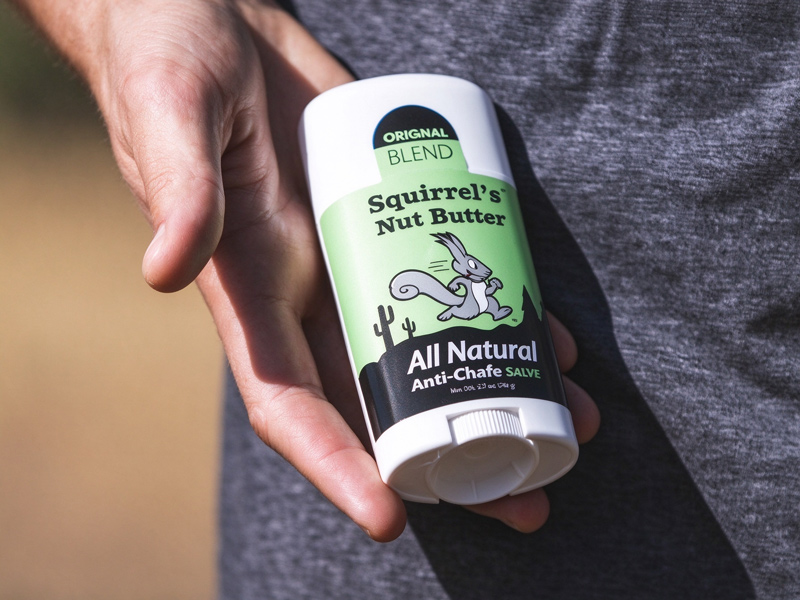
The original blend contains exactly four ingredients — coconut oil, cocoa butter, beeswax, and vitamin E oil — with no synthetic additives, no petroleum derivatives, and nothing the company cannot pronounce. The stated rule is simple: if it is not natural, it is not good enough for skin.
For athletes who coat sensitive areas daily, the ingredient list matters. The salve is weather-resistant, holding up through sweat and stream crossings, and doubles as a skin restorer after the fact — a dual-purpose design that separates it from pure lubricants. The one honest caveat, which the company acknowledges: as an oil-based product, it can stain some fabrics after repeated close contact, though reported cases are rare.
Vegan Wax and the Peppermint Foot Salve
The product family grew slowly from the original recipe. A vegan version swaps beeswax for candelilla wax, a plant-derived alternative from a southwest shrub, keeping the formula cruelty-free and accessible to bee-product avoiders. Happie Toes added peppermint and tea tree oils as a foot-specific salve for blister prevention and post-run foot care. Saddle Butter serves the cycling community with the same base plus a higher-tack blend for chamois-adjacent use.
Sizes range from small tubes for race kits to larger tubs for the bathroom counter, keeping per-application costs low for daily users. The expansion logic is consistent — same kitchen-tested base, tweaked for a specific friction problem — which keeps the catalog coherent in a way sprawling personal care brands never manage.
First Tested at the Western States Start Line
The brand's entry into running came through family ties that read like fiction. Chris Thornley's brother Craig is the race director of the Western States 100-Mile Endurance Run, and the first competitive test of the salve happened at the 2015 Western States, where ten-time finisher Matt Keyes used it on the course. Word traveled the way it always does in ultrarunning — from finish chute to training group to race expo.
The ambassador roster that followed reads like an ultra hall of fame: Jim Walmsley, Karl Meltzer, Kaci Lickteig, Zach Bitter, Pete Kostelnick, Michael Wardian, and Sage Canaday have all been associated with the brand. More than one hundred ambassadors now carry the flag, and aid stations sponsored by the brand hand out salve alongside water with signs reading "Lube Station Ahead" and "Chafing Sucks."
A Race Director's Brother in Flagstaff
Flagstaff, Arizona is not a random headquarters — it is altitude-training mecca and home to one of America's densest endurance communities. The Thornleys are embedded in it personally: Chris volunteered with the county search and rescue, the family works aid stations at local races, and the company sponsors events across running, cycling, and triathlon rather than buying advertising.
This community-first posture is the brand's real distribution strategy. Athletes discover the salve at races where volunteers hand it out, convert, and evangelize. It is slow, local, and unscalable in theory — and it built a national brand in under five years.
Mixed, Poured, and Labeled by Local Hands
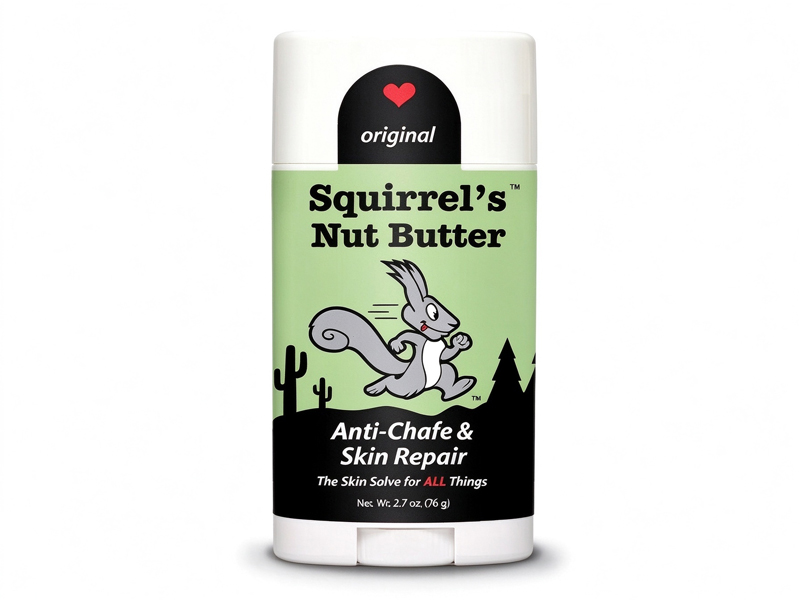
Production remains stubbornly in-house. The Thornleys mix and pour every batch themselves in Flagstaff, hire local people to label containers, and fulfill and ship every order from their own facility. The company frames this as quality control — overseeing every step — and as community investment.
For buyers, the practical implication is consistency and freshness: small batches mean the tin arriving in the mail was poured recently, not warehoused for a year. The trade-off is scale — the brand cannot flood big-box retail the way petroleum-based competitors do, and it shows little interest in trying.
Tins, Tubes, and the Price of Simple
Pricing is mid-premium: individual tins and tubes sit in the mid-teens, multi-packs bring per-unit costs down, and the smallest tubes cost about what a single race entry's worth of body glide would. Against drugstore sticks the salve looks expensive; against a ruined 100-mile race — or the cost of the antibiotic ointment for a bad chafe — the math is trivially favorable for ultrarunners, who are the core buyers.
The store also sells branded merchandise and gift sets, leaning into the joke without letting it overwhelm the product. Subscriptions and multi-tin bundles serve the daily users who go through a tub every few months.
Every Runner With Thighs Eventually Learns
The Squirrel's Nut Butter customer is anyone who has ever winced in a post-race shower: ultrarunners, marathoners, triathletes, cyclists, hikers, and eczema sufferers who found the product through its original purpose. The brand's own founding creed — that everyone deserves healthy skin — keeps the door wider than pure performance marketing would.
The verdict after a decade in the sport's trenches: a kitchen remedy with four ingredients, an unforgettable name, and a community strategy no competitor has managed to copy. In a category dominated by petroleum sticks and synthetic balms, Squirrel's Nut Butter is the small Flagstaff brand the ultrarunning world decided to keep — one liberally applied tin at a time.