America's #1 running sock brand is a family secret: inside the feetures empire
Official homepage: https://www.feetures.com
The best-selling running sock in America was named by a teenager doing his homework.
Feetures is the kind of brand that performance runners mention quietly, the way insiders share trailhead parking spots. Founded in 2002 in North Carolina by textile veteran Hugh Gaither after he lost his job at a sock mill, it became the number one sock brand in US run specialty stores and now sells in more than 50 countries — yet remains family-owned, with Gaither's sons running the company today. This review examines the patented technology behind the socks, the lifetime guarantee behind the brand, the quiet expansion beyond running, and whether premium sock prices are justified or simply expensive.
Laid Off After 27 Years at the Mill
Hugh Gaither spent roughly three decades working at a North Carolina sock and hosiery mill, one of the many in the state that manufactured products under other companies' brand names. When global competition shuttered mills across the region in the early 2000s, his job went with them — with several kids in or heading to college.
Gaither was a runner himself, and he believed the athletic socks he had spent a career producing had barely evolved since the 1980s: thick, bulky, seamed, and prone to blisters. He drafted a business plan for a technically advanced performance sock, secured a small office, and partnered with a South Korean manufacturer capable of producing a seamless toe — a construction not possible in US mills at the time. That seam-free toe became the first signature innovation, and specialty running shops became the first customers.
A Son Named the Company at the Table
The founding family story is unusually charming because it is verifiable. As Hugh talked at home about the "features" his new sock design would need, his son Joe — then a high school student doing homework at the kitchen table — suggested the name "Feetures" without looking up. Both sons joined the business: John, now CEO, and Joe, now chief marketing officer, have led the company through its growth and a deliberate succession plan that saw John assume the chief executive role.
The family structure matters to the brand's identity in practical ways. Decisions that a venture-backed company would escalate to a board — the pace of direct-to-consumer investment, whether to lay anyone off during the pandemic — were resolved at family level, and the company notably kept every employee on payroll through COVID-19.
Left Socks and Right Socks, Sold Separately
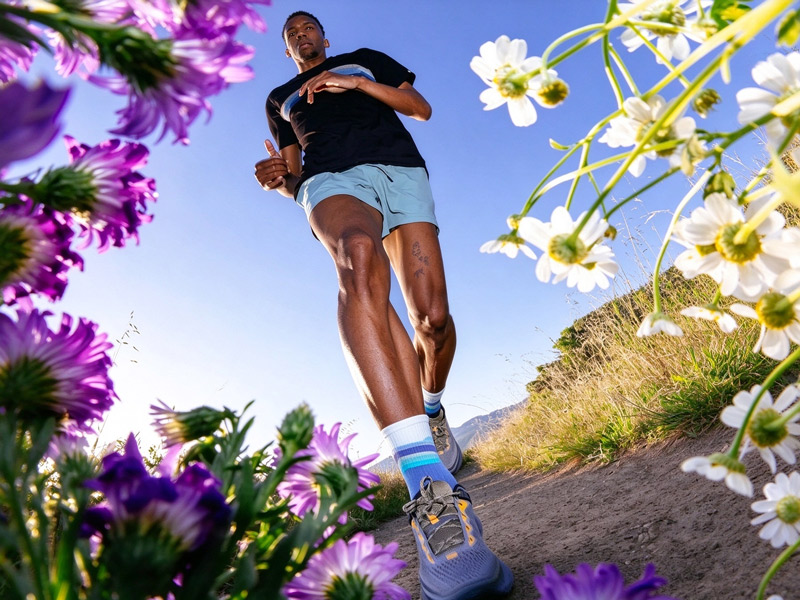
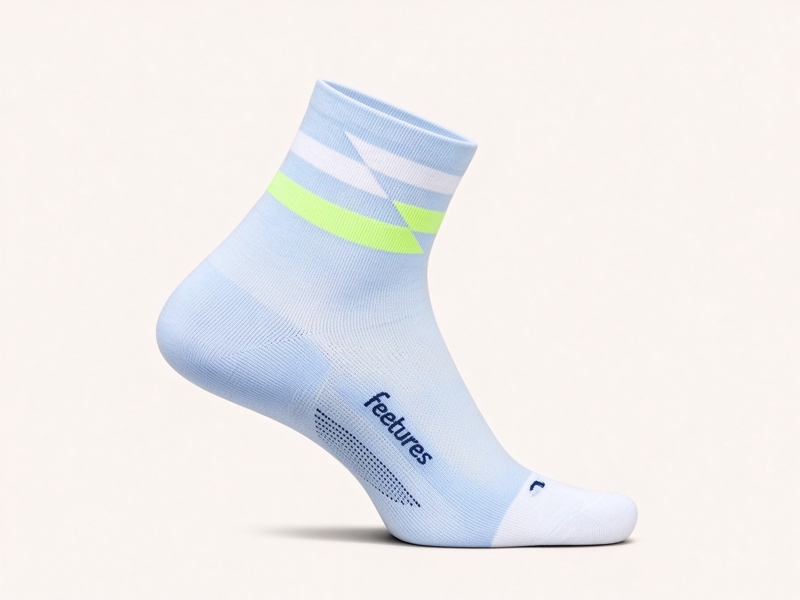
The technical claim behind Feetures' reputation is its 2011-patented targeted compression construction. Rather than knitting a sock as a symmetrical tube, the design maps compression to the foot's anatomy — a snug arch band, a fitted heel pocket, and on the Elite line, distinct left and right shapes that match each foot's contours. Roughly 80 percent of the catalog now uses the technology.
The practical result, confirmed across years of runner reviews, is a sock that stays locked in place with no bunching — the mechanical cause of most blisters. Supplementary details reinforce the fit: the Perfect Toe seam closure, iWick moisture-managing fibers, and on low-cut models a silicone Heel Hugger strip that keeps invisible socks from sliding into shoes. Runners routinely describe the sensation as forgetting the sock is there, which is the highest compliment in the category.
The Lifetime Guarantee Behind Every Pair
Every Feetures product carries a lifetime guarantee: wear the socks for years, and if they fail or disappoint, the company replaces or refunds them. In a category where most products are treated as consumables, this policy functions as both a quality signal and a retention engine — and reviewers who have claimed on it report painless resolution.
The guarantee also reframes the price. At roughly $18 to $25 a pair, Feetures costs several times a multipack of cotton socks, but the effective cost per mile compares favorably when a single pair survives thousands of miles without pilling or tearing, as long-term testers have documented. Runners on tight budgets will still flinch at checkout; the guarantee is the brand's answer.
From Run Specialty to Golf and Everyday
The catalog has expanded well beyond its running core. Golf socks with a signature heel pull tab, trail and hiking crews with reinforced hot spots, relief and recovery styles aimed at plantar fasciitis sufferers, diabetic-friendly options, cycling lines, and youth sizes now fill out the store. In late 2024 the brand launched its first non-sock product, the Stride Flex Performance Tee, followed by a women's tank — apparel is the current frontier, with shorts announced as next.
This expansion follows a consistent logic: apply the sock construction philosophy — minimal seams, mapped compression, moisture management — to adjacent categories. The risk is dilution of a sharp running identity, but so far the extensions have earned positive notices rather than diluting the core.
Merino Ten and the Made in America Line
Material sourcing deserves its own section because Feetures' supply chain is genuinely hybrid. Most production runs through three Asia-based facilities, but the Merino 10 line is knit in North Carolina from a merino-nylon blend, and the company has been onboarding a Tennessee manufacturer and sourcing yarn from US and Canadian suppliers, including Unifi in its home state.
For shoppers who weight domestic manufacturing heavily, the picture is partial but improving — a minority of the line is US-made today, with a stated strategy to grow that share. Merino 10 in particular gets consistent praise for temperature regulation and odor resistance in both hot and cold conditions.
Five Thousand Stores and Fifty Countries Later
Distribution explains how a family company became a category leader without national advertising. Feetures built its base through run specialty stores — the independent shops where serious runners buy shoes — earning the number one position in US run specialty sock sales, then expanded into national sporting goods chains. The brand reports 5,000-plus retail doors and availability in more than 50 countries.
The Shopify storefront serves as the full-catalog complement: every cushion level, height, colorway, and limited edition lives online, with subscriptions and multipacks rewarding repeat buyers. Runners who got fitted at a local shop can replenish direct, which is exactly the omnichannel loop the brand designed.
Gripes From Real Owners We Should Note
No honest review skips the complaints, and Feetures has a recurring set. Some longtime buyers on retail platforms report quality declining in recent years compared with older pairs. The size groupings — a single large covering roughly US men's 9 to 12 — leave runners at the edges of the range with imperfect fits. The snug compression feel that devotees love takes adjustment for first-timers used to loose socks. And despite the premium price, most of the line is imported, which matters to buy-American shoppers.
None of these complaints dominate the review corpus, but they pattern consistently enough that buyers with unusual foot sizes or strong domestic-sourcing preferences should read carefully before a bulk order.
When Socks Deserve Serious Money
The Feetures customer is typically a runner past the beginner phase — someone who has lost toenails, drained blisters, and understands that foot comfort is performance infrastructure. Podiatrist-recommended fit and plantar fasciitis sufferers form a secondary audience, along with golfers, hikers, and nurses on their feet all day.
The verdict after two decades of evidence: Feetures earned its number one ranking not through marketing but through a patented fit system, a guarantee the company actually honors, and a family that kept the business independent. Socks will never be the exciting purchase in a runner's kit — but the brand's entire proposition is that they should be the one you never think about.