The tights replacing knee braces: a look inside stoko's supportive apparel
Official homepage: https://stoko.com
Stoko built a medical device into a pair of leggings, and runners with aching knees took notice.
Founded in Vancouver by athletes who had been sidelined by injuries at the peak of their careers, Stoko positions itself as the world's first supportive apparel brand — athletic wear with adjustable, medical-grade joint support engineered directly into the fabric. Its flagship tights weave up to 100 feet of Dyneema cable around the knee and hide two adjustment dials in the waistband. With over 100,000 customers, a wall of industry awards, and FDA and Health Canada registration behind it, the brand has outgrown novelty status. This review examines the technology, the evidence, the price, and who it genuinely helps.
Injured Athletes Build What Braces Never Could
Stoko's founding story starts with frustration familiar to anyone who has rehabbed a knee. Founder and CEO Zack Eberwein created the company alongside fellow athletes who had been benched by injuries during their prime years, and the founding premise was blunt: traditional knee braces were uncomfortable, shifted during movement, and signaled injury to everyone in the room. A brace solves a problem while creating several new ones.
The idea that emerged was to make support invisible — to embed the function of a brace into clothing that looks and feels like normal athletic wear. It is a classic athlete-founded origin story, but the execution required years of development with engineers, knit designers, and medical professionals before the first product shipped.
Ninety Feet of Dyneema Hidden in Fabric
The engineering inside a pair of Stoko tights is unusual. Roughly 90 to 100 feet of flexible high-strength cable — built from Dyneema, the fiber marketed as fifteen times stronger than steel — is laminated through the fabric and routed around the knee joint. The system supports and slightly unloads the joint during movement rather than pushing against it the way rigid braces do.
Runners testing the tights describe the sensation as a soft limit: lunges, squats, and descents feel bounded rather than restricted. The design also won recognition for its construction, including Sport Apparel Design of the Year honors, with the build developed alongside technical apparel manufacturer MAS.

Dials at the Waistband, Support at the Knee
The adjustment mechanism is the detail that converts curiosity into purchases. Two small dials concealed at the waistband let the wearer tune cable tension separately for each knee — tighter on a sore side, looser on a healthy one — without stopping or removing anything. Targeted compression zones around the joint add warmth and blood flow on top of the mechanical support.
In practice this means one garment adapts across a rehab week: gentle support during early recovery sessions, firmer stabilization as mileage returns. Gear reviewers recovering from knee surgery have reported returning to splitboarding within months, crediting the tights as a daily training aid rather than a magic cure.
Registered as a Medical Device, Scrutinized by Scientists
Stoko's tights are registered as a medical device with the FDA and Health Canada, a designation that means safety and quality standards for their intended use — and the company publishes its research on its site, which already puts it ahead of wellness brands whose evidence is testimonials. Independent reviewers, however, have raised fair questions: the flagship biomechanics study was small, company-funded, and compared the tights to regular leggings rather than to actual braces.
The honest reading is that the science is preliminary but directionally positive — wearers report feeling more stable, and small studies suggest improved movement patterns. Stoko itself recommends wearing prescribed braces when a doctor demands them, positioning the tights as an additional tool rather than a replacement for medical care.
Beyond Tights: Shorts and Socks Join In
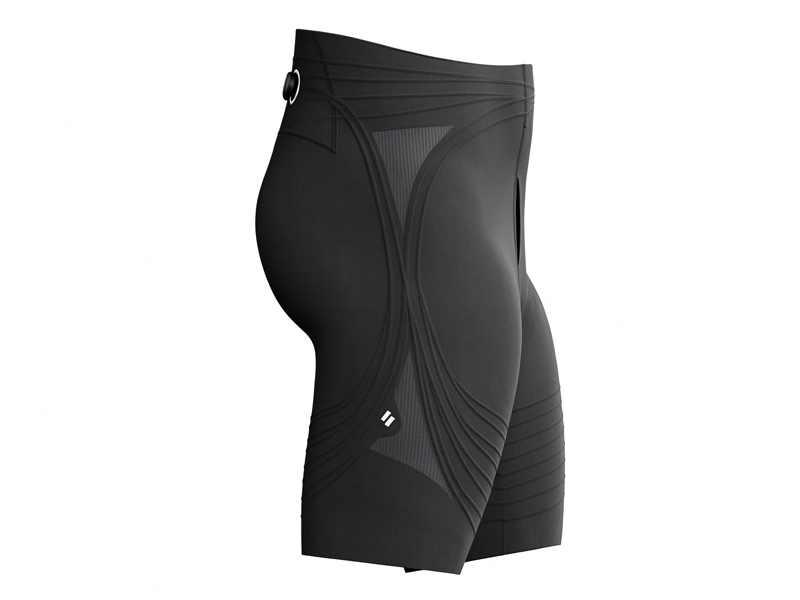
The product line has quietly expanded beyond the original knee-support tights. Supportive shorts now target the lower back, hips, and sacroiliac joints — a design aimed at runners and lifters whose problems sit higher than the knee — and a crew sock rounds out a growing basics category. Sizing runs from XS to XL across men's and women's lines, with 2XL in development.
This expansion signals the longer-term ambition: supportive apparel as a category, not a single product. Each extension reuses the same engineering logic — cables, dials, and targeted compression mapped to a different joint — which keeps the brand coherent even as the catalog grows.
The Price of Precision and Its 30-Day Trial
Precision engineering carries a premium price, and Stoko is upfront about why: dozens of specialists, patented technology, and medical-grade materials do not compress to fast-fashion economics. The store's own pricing page frames the cost against surgery, physical therapy, and the price of staying active.
To lower the perceived risk, the brand offers a 30-day trial, free shipping, and a one-year warranty. That trial structure matters for a product whose value is entirely experiential — the moment the cables engage on a downhill is something no product photo can convey, and the return policy lets skeptical runners test it with real mileage.
Awards, Reviews, and a Hundred Thousand Customers
Third-party validation is thick on the ground. Stoko has collected an Outdoor Retailer Innovation Award, Gear Junkie's Best in Show, a GOOD DESIGN award, and coverage across Ski Mag, Runner's World, Backpacker, and Freeskier. The brand reports more than 100,000 customers, including medical professionals and elite athletes.
Some of that validation deserves the usual skepticism — industry awards are partly marketing — but the breadth of positive editorial reviews, including from reviewers who started as doubters, suggests the product experience genuinely matches the claims for its intended use case.
Who Benefits From Supportive Apparel Today
The realistic customer is not an athlete with a fresh ACL tear ignoring their surgeon. It is the aging skier whose knees ache by midday, the runner managing early arthritis, the hiker who wants support without the bulk and stigma of a brace, and the rehab patient cleared for gradual return to activity. Customer testimonials skew heavily toward exactly this profile — people staying active longer, not athletes chasing performance gains.
For that audience, the calculus is compelling: medical-grade support, adjustable on the fly, in clothing that looks normal at the gym and on the trail.
Our Honest Take After Weighing It All
Stoko occupies a genuinely novel position — the engineering is real, the medical registrations are verifiable, and the testimonials are consistent across publications. The reservations are equally real: the evidence base is young and self-funded, the price asks for trust, and the tights augment rather than replace professional care.
For runners and outdoor athletes whose knees are the bottleneck between them and the activities they refuse to give up, Stoko has earned its trial period. Just go in with eyes open, and listen to your physiotherapist first.