The broken token, reloaded: how birch plywood became the board game hobby's favorite chore
Official homepage: https://thebrokentoken.com\
Board game stores usually sell games. The Broken Token sells what the games left out: order. Founded on a simple observation — that a hundred-dollar box of cardboard ships with no plan for what happens when you punch out all the tokens — the company turned laser-cut birch plywood into the tabletop hobby's default answer for its biggest physical problem: setup time. Its organizers, flat-pack trays and crates custom-fitted to individual titles, promise to convert a forty-minute Gloomhaven unboxing ritual into five minutes of tray-pulling, and its review wall has grown past eight thousand entries from owners who treat assembly afternoon as a feature rather than a tax. The Shopify storefront now runs from game-specific collections — Frosthaven, Spirit Island, Wyrmspan — into shelf accessories and third-party card protection, quietly becoming an accessories department rather than a single-product shop. I went through the plywood doctrine, the assembly contract, and the honest critique file. Here is the store across its dimensions.
The Box Inside the Box
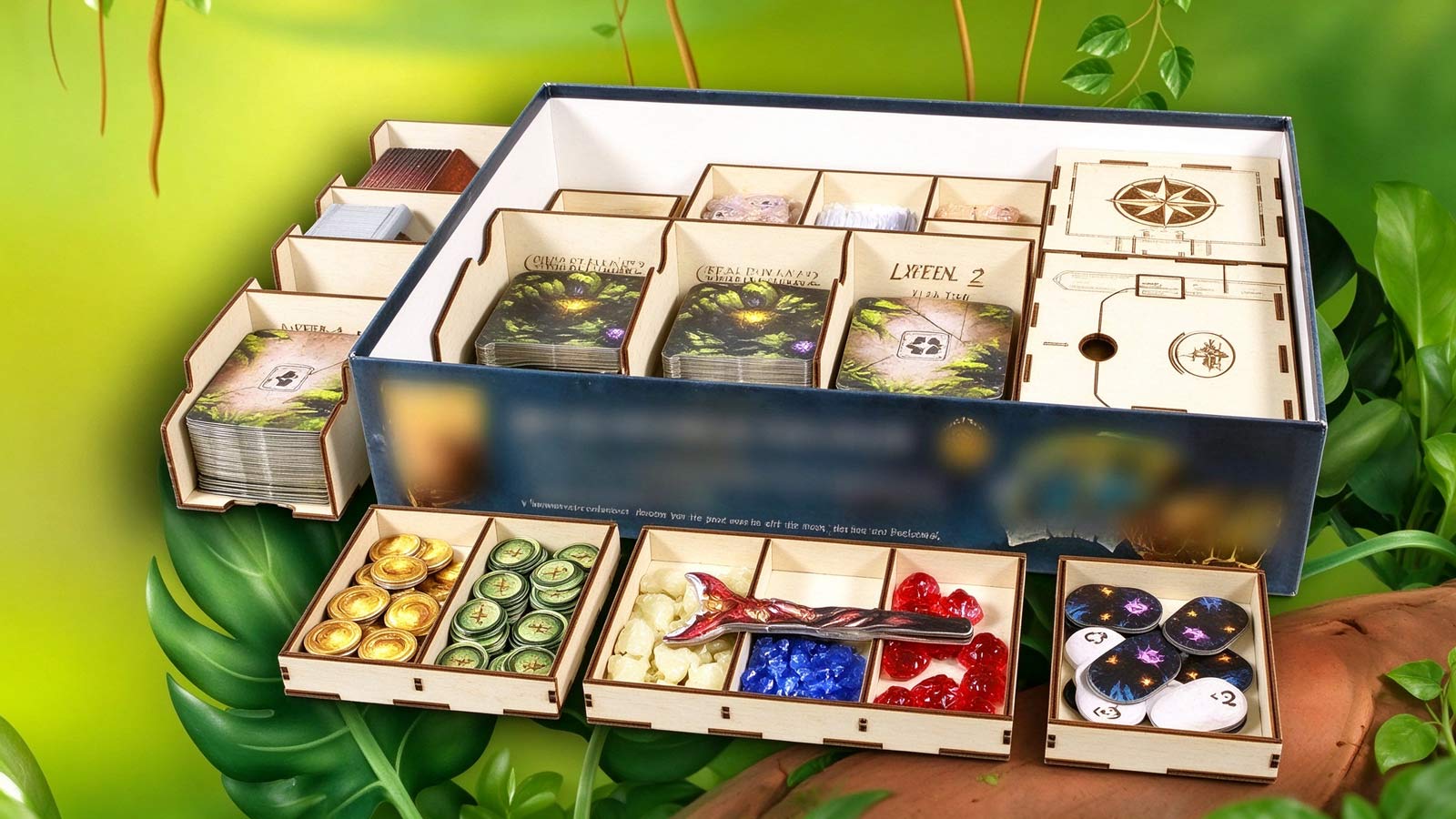
The pitch is setup elimination. Big hobby games ship with components for a dozen scenarios and no storage logic: baggies, rubber bands, and the slow archaeology of every session. A Broken Token organizer replaces that chaos with fitted trays — one per token type, sized to the game's own insert dimensions — so a scenario starts by lifting trays rather than sorting piles. The review wall makes the case better than the marketing does. One Frosthaven owner describes buying the organizer years after backing the game's crowdfunding campaign, having tried the official alternative first: "Pay for the best, get the best... this company knows how to create game organizers and is simply the best in the field." That review also preserves a useful piece of history — the brand was originally expected to partner with the biggest crowdfunded board game ever and ended up winning the aftermarket anyway.
Birch Plywood, Burned Edges, and an Afternoon of Glue
The materials are honest: unfinished birch plywood sheets, laser-cut with burned edges that most owners sand, stain, or simply leave, assembled with wood glue into interlocking tray systems. Instructions lean heavily on video — the written sheet gets you oriented, the build-along video gets you finished — and a large organizer takes a real evening: hobbyists routinely budget two to three hours for the biggest kits, plus glue-curing time. The assembly is the chore the title promises, and the community treats it as a rite: the testimonials speak of construction as part of the enjoyment, wood stain chosen for fun, everything fitting together with no issues.
What the Wall Actually Stocks
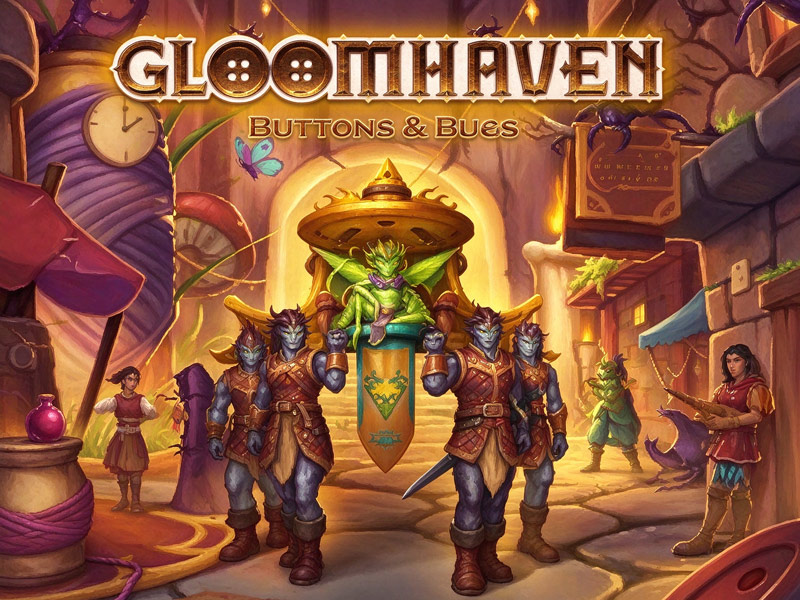
The catalog is organized by game, which is the store's quiet genius: you do not browse organizers, you search your game's name. Flagship fits include Gloomhaven and Frosthaven, Scythe, Spirit Island, and Wingspan-adjacent titles like Wyrmspan, with prices scaling from roughly fifteen dollars for card trays to a hundred-plus for the massive campaign-game crates. Around the organizers sit Kallax-compatible shelf windows, deck boxes, and — notably — a growing third-party accessories shelf carrying BCW card sleeves, toploaders, and inner sleeves, signaling a broader play to own the entire preservation-and-organization niche rather than just the plywood one.
Eight Thousand Reviews Deep
The evidence wall is the storefront's spine: more than eight thousand reviews, with a visible cadence of repeat customers — one reviewer notes that every organizer need since Scythe and Gloomhaven has come from the same store, citing fast turnaround and responsive support. The complaints that do surface are the category's classics — a missing piece here, a tolerance question there — and the pattern in the responses is replacement parts sent without ceremony. For a niche accessories brand, that review mass is close to category ownership.
The Assembly Contract
The policy ledger is short and clear. Returns run thirty days on unopened, unused items, with original shipping non-refundable — assembled organizers, for obvious reasons, cannot go back. Damaged or incorrect pieces route through a support ticket with photographic proof, and the resolution is parts, not platitudes: the company maintains spares for its cut sheets and sends them. It is a sensible contract for a build-it-yourself product, and the only friction worth noting is that the thirty-day clock starts before a slow builder has necessarily finished gluing.
The Honest Ledger
The critique file, then, in order of size. First, the time tax: a big organizer is a project, and buyers who skip the video instructions report avoidable confusion. Second, the price premium: fitted plywood costs meaningfully more than foam-board alternatives like Folded Space or a DIY plan, and for games played twice a year the math never closes — the value case only works at high replay counts. Third, tolerances run tight by design, which occasionally means a piece that demands gentle persuasion. Fourth, shipping weight: birch plywood is heavy, and international buyers feel it. None of these are defects; all of them are the invoice for the quality.
Who Should Buy Plywood for Their Cardboard
The practical verdict falls along replay frequency. Monthly-rotation campaign games — Gloomhaven, Frosthaven, Spirit Island — repay the organizer every single session, and owners describe the setup-time savings as changing how often the game hits the table. Occasional games do not; foam inserts or baggies remain the rational choice at twice-a-year play rates. The BCW shelf adds value for anyone already paying shipping on plywood, since sleeves and toploaders are consumables every collection eventually needs. And the building itself, the company understands, is part of the product — budget the evening, put on a podcast, and the chore becomes the second hobby.
The Last Piece
The Broken Token solved a problem the game industry created and then refused to solve itself, and it did so with a material honest enough to stain and a review wall deep enough to trust. Buy the organizer for the games you actually play monthly — the Gloomhavens and Spirit Islands of your shelf — and skip it for the flavor-of-the-month; buy the BCW sleeves while you are already paying for plywood freight; and budget the gluing evening honestly, ideally with a sanding block and no deadline. For heavy rotation games, this is the closest the hobby comes to a mandatory purchase.