Swiftwick store review: what to know before you buy performance running socks
Official homepage: https://www.swiftwick.com
Running stores usually begin with the shoe and treat the sock as an afterthought in a gift guide. Swiftwick begins with the sock and treats it as equipment — the storefront's tagline calls the product exactly that, equipment to take you further, and the about page uses the verbs of manufacturing: the company designs, engineers, and builds endurance socks. I browsed with a blister the size of a quarter and a new respect for any brand that argues the shortest garment in the sport deserves the longest engineering. Here is the counter, decision by decision.
Door Policy: The Sock as Equipment
The homepage refuses the word apparel entirely — the copy positions each pair as essential performance gear, crafted with a contoured compression fit and fiber-first moisture management. Elevating the sock from accessory to equipment targets the endurance athlete who budgets for shoes and skimps on the layer between foot and shoe: the tagline reframes the purchase as protecting a more expensive investment, and the engineering language — design, engineer, build — borrows the register of the bike and shoe categories the sock must survive. The sock stops being a commodity the moment the store calls it equipment, and the price follows the name.
Nine Lines, Nine Personalities
The catalog organizes into nine product families, each carrying its own name and its own promise — the ultra-light line for hot days, the maximum-cushion line for long efforts, the stability line with a trademarked technology, the all-season merino, the style-and-performance line, the hockey line, and a line whose slogan is nothing holds you back. Giving each family a personality builds navigation for the returning customer: she learns that Aspire means summer and Maxus means marathons, the names become shorthand in her training log, and the store converts one product category into nine loyal relationships. The families are the catalog's grammar, and fluency is the loyalty program.
Two Axes of Organization
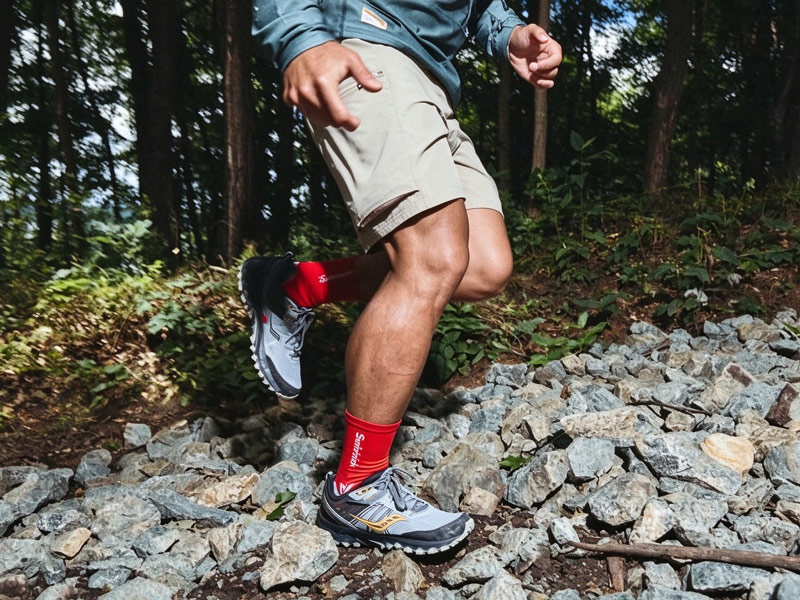
The navigation sorts the same inventory twice — once by activity, with separate shelves for road, trail, cycling, golf, hiking, hockey, and adaptive sport, and once by cuff height, with silhouette icons running from no-show to knee-high. Sorting by both sport and length serves the shopper who thinks in either dimension: the runner who knows she needs a quarter-crew finds it by the picture, the runner who needs a trail sock finds it by the word, and the two systems cross-reference until the matrix feels mapped. The dual taxonomy is the store's way of saying it has already thought of her exact Tuesday, and her exact Wednesday, and the race on Sunday.
The Sock Quiz as Shopkeeper
Between the navigation and the catalog sits a quiz — answer a few questions about sport, climate, and preference, and the store returns a recommendation with its reasoning. Offering a quiz for a product this small attacks decision fatigue: the quiz collapses the matrix into one answer, the reasoning teaches the taxonomy in passing, and the customer who arrives confused leaves with a named family and a new vocabulary. The quiz is the shopkeeper who never sighs, never up-sells, and is always right about the weather — and it works every shift without a break.
Three Tests, One Claim
The seasonal collection carries a three-part promise — lab tested, wear tested, and field tested — printed as a single sentence with nothing left to chance. Triple-testing a sock is claims discipline aimed at the skeptic who suspects marketing adjectives: the lab covers the engineering, the wear covers the durability, the field covers the truth, and the store stacks all three so no single failure mode survives the sentence. The testing is the marketing, and it cannot be faked three ways at once — one honest test is a claim, three honest tests are a reputation.

The Promise That Outlives the Pair
The policy page carries a name — the lifetime performance guarantee — and the copy treats it as a promise rather than a program. A lifetime guarantee on a consumable is retention aimed at the runner who burns through socks: the promise says the company expects the sock to outlast the athlete's patience with it, the replacement policy converts occasional failures into permanent loyalty, and the store that will stand behind a twenty-dollar pair is asking to be trusted with the next twenty. The guarantee is the brand's bet on its own knitting, and it pays out in loyalty every time.
A State Flag on the Calf
Among the products sits a tribute pair — the Tennessee state flag rendered on the calf of the mid-crew, sold beside a note about the company's Brentwood backyard. Selling state-flag socks is hometown pride aimed at the local athlete and the gift buyer: the flag converts a performance product into a regional identity, the hometown note reminds the customer the factory is a real place, and the sock becomes a small banner the wearer carries through every race. The flag costs nothing to knit and buys the loyalty of an entire state, and states are bigger markets than they look.
The City as a Season
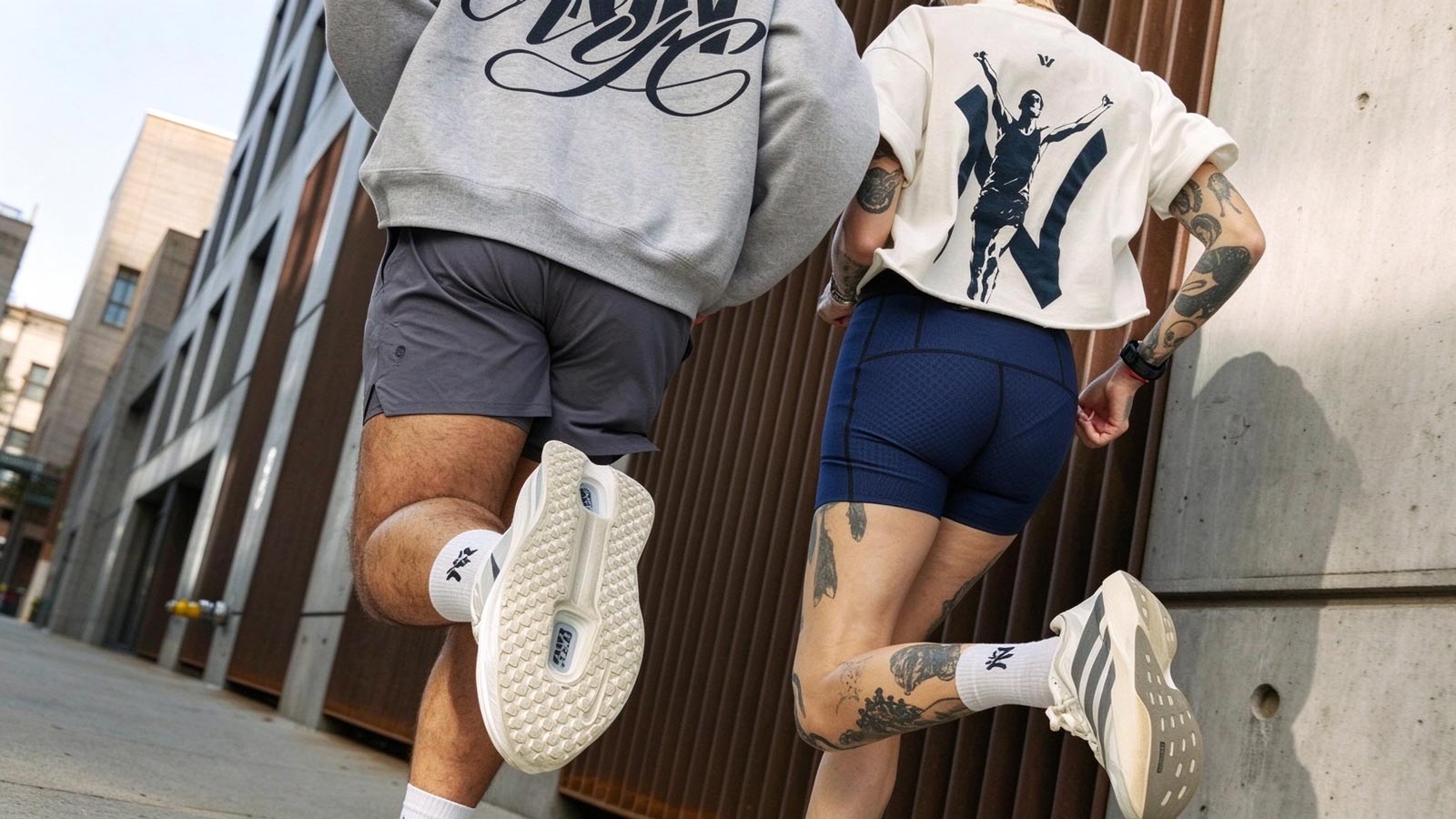
The homepage's seasonal feature belongs to a city — a collection named for New York, with streetwear pieces riding beside the socks, a runner silhouette on the tee, and the year printed like a marathon edition. Releasing a city collection each year borrows the energy of the marathon it sponsors: the sock brand extends into streetwear, the streetwear extends the brand beyond the foot, and the annual drop gives the community a ritual to anticipate. The city collection is the store's way of saying the sock is a passport — and every year, it stamps a new page.