Signaling at lumos: four helmets for four rides, kickstarter roots, crash-detected cities everywhere
Official homepage: https://www.lumoshelmet.com
Wearable stores usually measure the athlete — the pulse, the watt, the pace. Lumos measures something the athlete cannot: whether the driver behind her saw the turn. The storefront's entire catalog is a single argument — be seen, signal clearly — wearing four different shapes, one for the commuter, one for the mountain pair, one for the e-bike, one for the city night. I browsed as a rider who has been invisible at too many intersections and a believer that safety, like fitness, can be engineered. Here is the counter, decision by decision.
Door Policy: One Promise, Four Helmets
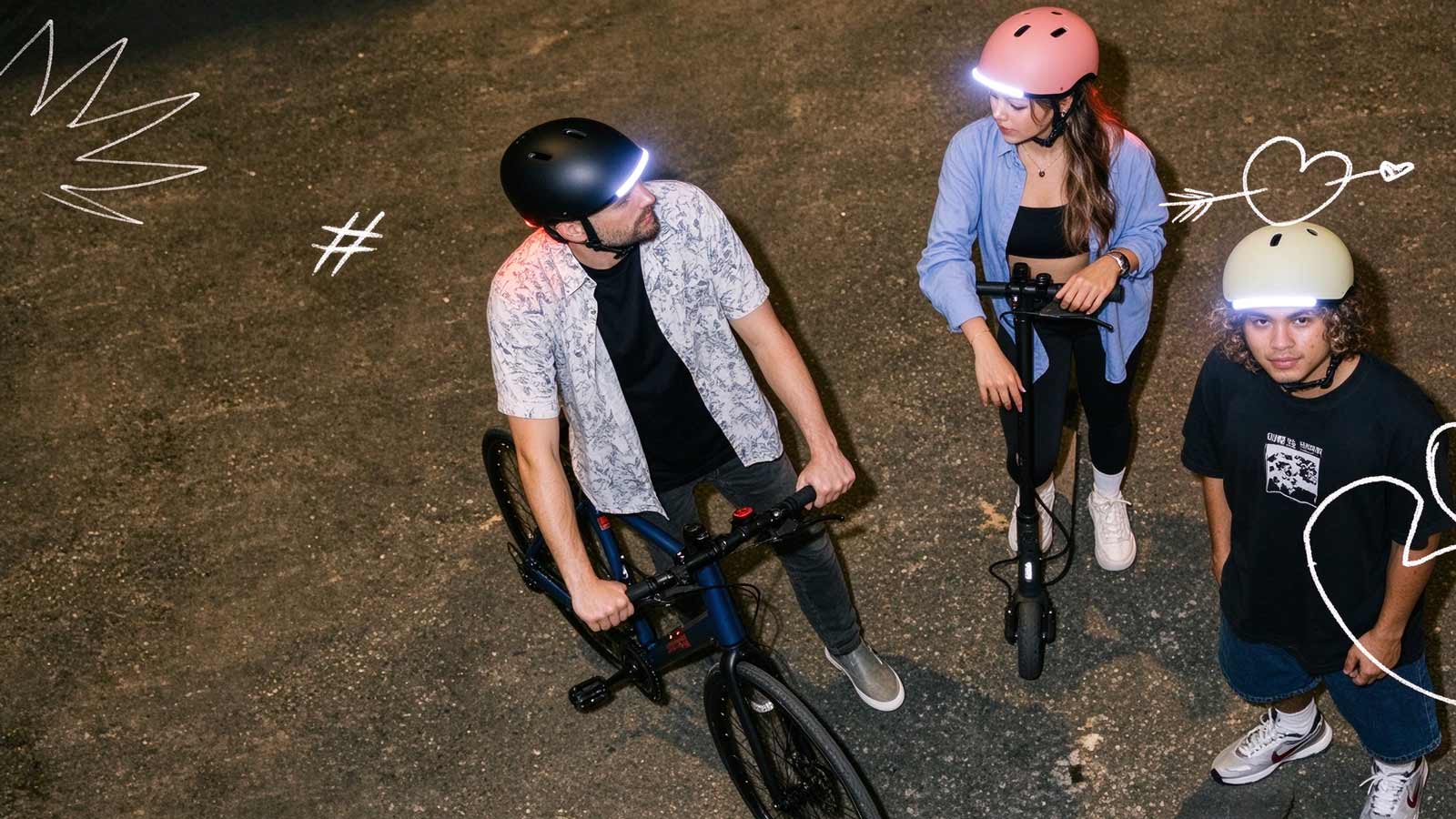
The storefront refuses the industry habit of one flagship with trims and fields a family instead — an ultra-vented commuter helmet with turn signals, a mountain lid with mesh intercom, an e-bike certified for speed, and an urban shell with crash detection, each wearing its own tagline the way a team wears its chant. Organizing by ride rather than by price tier lets the customer enter through her actual Tuesday — the commute, the trail, the throttle, the night shift — and find the promise already written for her. The segmentation is done by scene, not by wallet.
Founding Through a Price Experiment
The brand's origin is printed in the Shopify Masters case file: two students, a hundred dollars of Facebook ads, a landing page showing three prices through an optimizer, and a pre-order button that built a waitlist. Founding the company through a price-elasticity experiment rather than a focus group still governs the store's instincts — test the smallest assumption before building the biggest product, and let the customer's click, not the founder's hunch, set the price. The helmet that shipped to backers was crowd-chosen before it was crowd-funded.

Signals Instead of Screams
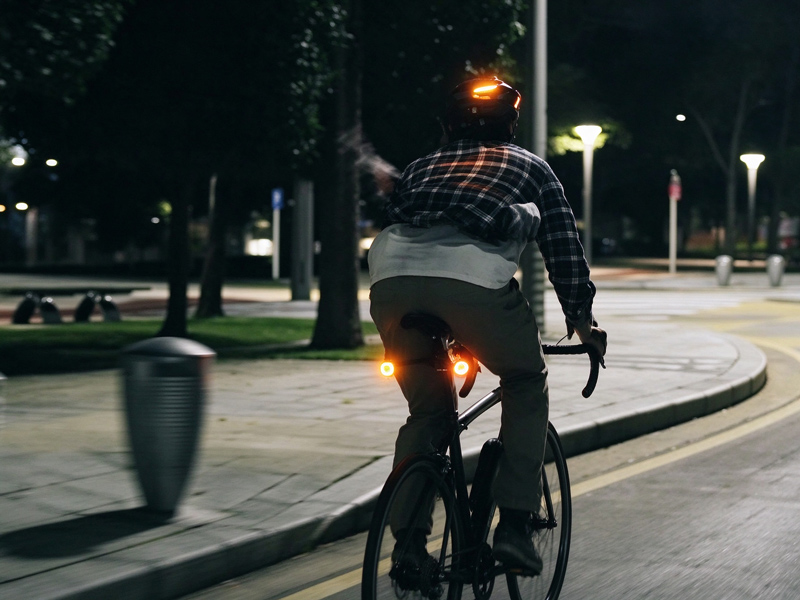
The flagship's defining hardware is a pair of integrated turn signals and an automatic brake light — indicators where a helmet normally wears a logo, wired to a handlebar remote. Building motorcycle-grade signaling into a bicycle helmet aims at the gap between what riders intend and what drivers perceive: hand signals disappear in dusk and rain, brake lights do not exist on bicycles at all, and the helmet turns the rider's head — the one thing drivers actually watch — into the instrument panel. The signal is the product; the foam is the warranty.
A Helmet That Speaks Trail
The mountain model carries a mesh intercom — rider-to-rider voice without fumbling for a phone — paired with the same lighting architecture for three-hundred-sixty-degree visibility. Adding group communication follows the signals into the woods: on a road, drivers are the audience; on a trail, the audience is the friend twenty meters ahead, and the helmet that speaks to both keeps one promise in two dialects. The expansion costs the brand nothing philosophically and wins it a second market outright.
The Vigilant City Shell
The urban model's signature is not a light but a sensor — intelligent crash detection that senses an impact and, after a countdown the rider can cancel, alerts her chosen contacts with location. Shipping an accelerometer with a conscience answers the solo rider's real fear: not the fall itself, but the hour after it, unnoticed and unfindable. The helmet cannot prevent the crash, but it refuses to let the crash go unnoticed, which reframes the product from reactive armor to vigilant companion.
A Newsstand as Proof
Beneath the product family runs a logo wall — a men's-gear magazine, a business paper, a style glossy, a travel title — five publications whose readership has nothing to do with cycling. Placing lifestyle and business press beside gadget blogs serves the non-rider gift buyer: the helmet must be legible to a sister shopping for a brother, and a wall that says the business paper covered it argues, better than any spec sheet, that this is not a niche toy. The proof is aimed sideways, at the person holding the credit card.
Prophecy on the Testimonial Wall
The customer wall runs on hyperbole no copywriter would invent — safer and saner, literally changed my life, in ten years everyone will have one — from named riders with photographed faces. Letting users overclaim trusts specificity over polish: the quotes describe futures, not features, and a customer predicting ubiquity sells the next decade better than any advertisement sells this season. The wall is the brand's prophecy, crowdsourced and dated by its own overreach.