Satechi review 2026: does this aluminum mac accessory store earn its premium reputation?
Official homepage: https://satechi.com
Computer accessory stores usually chase specs first and looks second. Satechi refuses the trade-off. The San Diego company, founded in 2005, built its Shopify store on a simple premise borrowed from its own motto — "Life Made Easy Since '05" — which in practice means accessories that look like Apple designed them and work like engineering mattered. Two decades in, the catalog spans USB-C hubs, docking stations, GaN chargers, wireless charging stands, mechanical keyboards, and even Find My tracking accessories, all sharing one material language: brushed aluminum. I went through the store as someone setting up a MacBook-centric desk on a real budget. Here is what I found, dimension by dimension.
Two Decades of Designing for the Apple Ecosystem First
The origin story explains the store's confidence. Satechi started in 2005 as a small San Diego design-led electronics venture, and it was among the very first brands to build Type-C accessories when USB-C arrived — a head start that turned it from a gadget label into an ecosystem brand. The company works closely with Apple, and its client list reportedly includes names like Disney, Netflix, and MLB, which tells you who buys aluminum hubs in bulk. CES has rewarded the product pipeline with multiple innovation awards in recent years. On the storefront, that history is converted into trust signals rather than nostalgia: category banners lead with new launches like the ExtendView USB4 dual-display adapter, and the copy consistently frames products as finishing touches for Apple hardware rather than generic add-ons. The brand knows its lane and has occupied it for twenty years.
What Two Decades of Aluminum Actually Looks Like on the Shelf
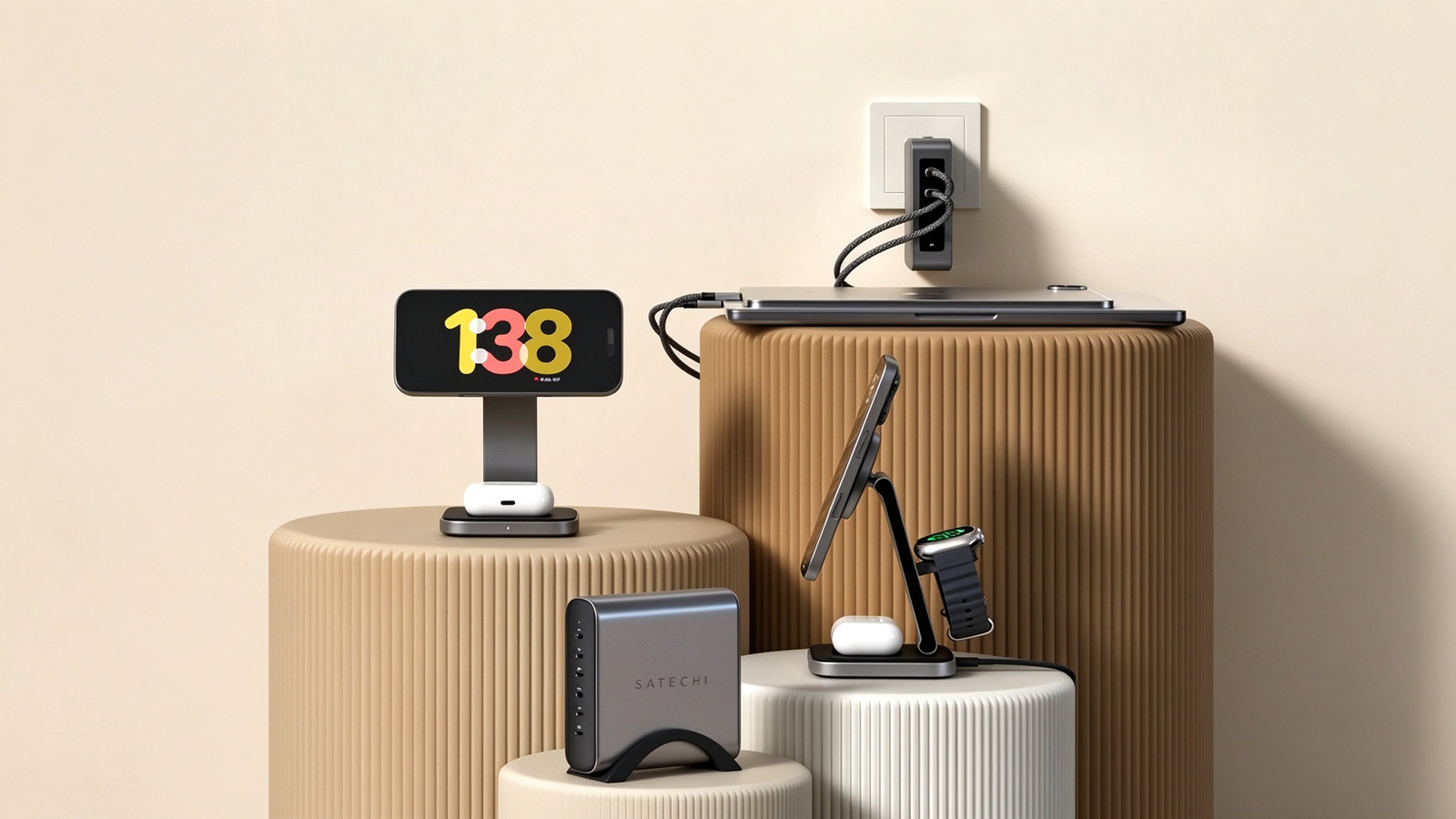
The catalog is organized by job rather than device, which keeps it navigable despite its size. The hub and multiport-adapter family is the core: slim dual-USB-C hubs that sit flush against a MacBook, 5-in-1 travel adapters, and full docking stations for desk setups. Charging is the second pillar — GaN wall chargers, MagSafe and Qi2 wireless stands, and the newer ChargeView 240W desktop charger. Stands and mounting solutions run from laptop risers to the Mac Mini Stand & Hub, a category-defining product that parks Apple's smallest desktop on top of added ports and an NVMe SSD enclosure. Then there are the newer lines: FindAll tracking accessories built on Apple's Find My network, the OntheGo travel collection, and low-profile mechanical keyboards. The through-line is real — almost everything is shaped from the same anodized aluminum in the same Space Gray and Silver tones, so a cart full of Satechi looks like one system, not a pile of purchases.
Shopping a Storefront That Feels Like an Apple Showroom Cousin
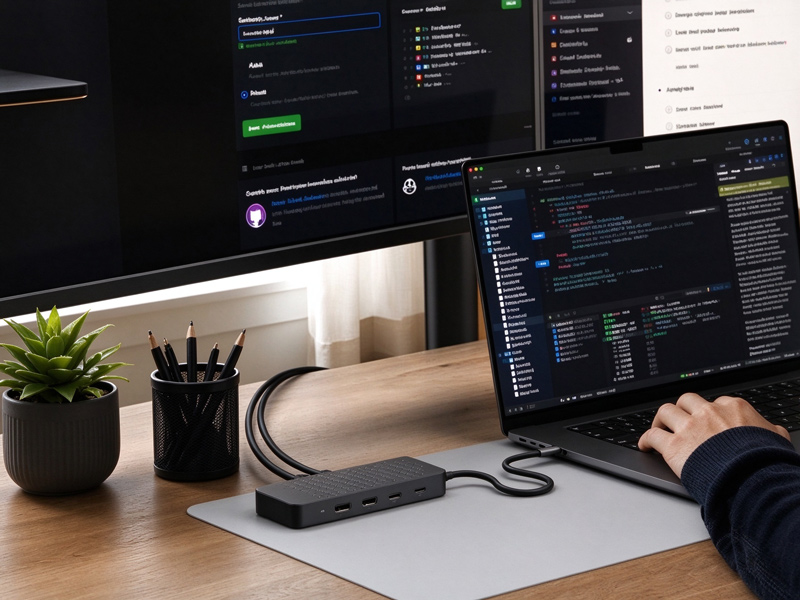
The Shopify build is polished without being sterile. Category pages open with clear lifestyle imagery, filters by device type and port count work as expected, and product pages carry the spec depth that spec-driven shoppers actually need — port layouts, power delivery wattage, supported display standards — alongside compatibility tables for Mac, iPad, and Windows. What the store does better than most accessory shops is decision support: hubs are grouped by scenario (travel, desktop, dual-monitor) rather than model number, which answers the beginner's real question. The weaknesses are the flip side of that polish. Sale pricing is everywhere, with strikethroughs that make the regular prices feel like theater, and product naming stacks trademarks — ExtendView, FindAll, OntheGo, ChargeView — into a fog that requires a glossary the store never provides. A first-time buyer may leave knowing what a hub does but not which Satechi hub is theirs.
What Satechi Gear Actually Costs Against the Competition
Pricing sits firmly in the mid-premium band. Simple hubs start around 30–30–45, the color-matched travel adapters land at $44.99, docking stations run from $80 into the low $200s, and charging accessories span $30 to $120. Against Apple's own adapters, Satechi is usually cheaper for far more functionality; against Anker or UGREEN equivalents, it's often 20–40% more expensive for the aluminum finish and tighter Apple compatibility. The store leans on promotions — sitewide sales of 25% appear regularly through media partners — so patient buyers rarely pay full price, which also means the list prices function as anchors. Warranty terms are decent, with two-year coverage on several lines. The value equation is honest: you pay the difference for design cohesion and ecosystem polish, and the store never pretends otherwise. Whether that premium is worth it depends on whether your desk is a workspace or a showcase.

Shipping Speed, Warranty Claims, and Support Reality
Satechi runs regional storefronts beyond the US site — Nordic and European shops localize pricing, shipping terms, and stock — and distribution also flows through Amazon and Apple-adjacent retail channels. Standard US delivery is quick, with free-shipping thresholds that vary by region and promotion. Support comes through a help center and email ticketing; community feedback describes it as competent and warranty-friendly, with the two-year limited warranty honored through direct replacements on several product lines, though not instant. The store's documentation is a genuine strength: setup guides and compatibility tables are kept current, which matters more here than in most categories because a hub that misreports power delivery can ruin a laptop's workday. The absence of live chat is the main gap — for a store whose customers are often mid-setup and blocked, a synchronous channel would convert better.
The Last Word Before Your Aluminum Order Ships Out
Satechi is the right store for the MacBook or Mac Mini owner building a desk that should look as considered as it performs — someone who wants dual 4K outputs, clean cable routing, and hardware that visually disappears into Apple's design language. The flush-fit MacBook hubs and the Mac Mini Stand & Hub alone justify the store's reputation, and the charging line has quietly become best-in-class. It is the wrong store for bargain hunters who treat accessories as commodities, for Windows-first users who won't use the ecosystem features they're paying for, and for buyers irritated by permanent-sale pricing. The store has spent twenty years earning its premium, and the storefront makes a clean case for it — as long as you know which trademarked collection you're shopping before you arrive.