Roll recovery, all the way down: the spring-loaded clamp runners love and hate
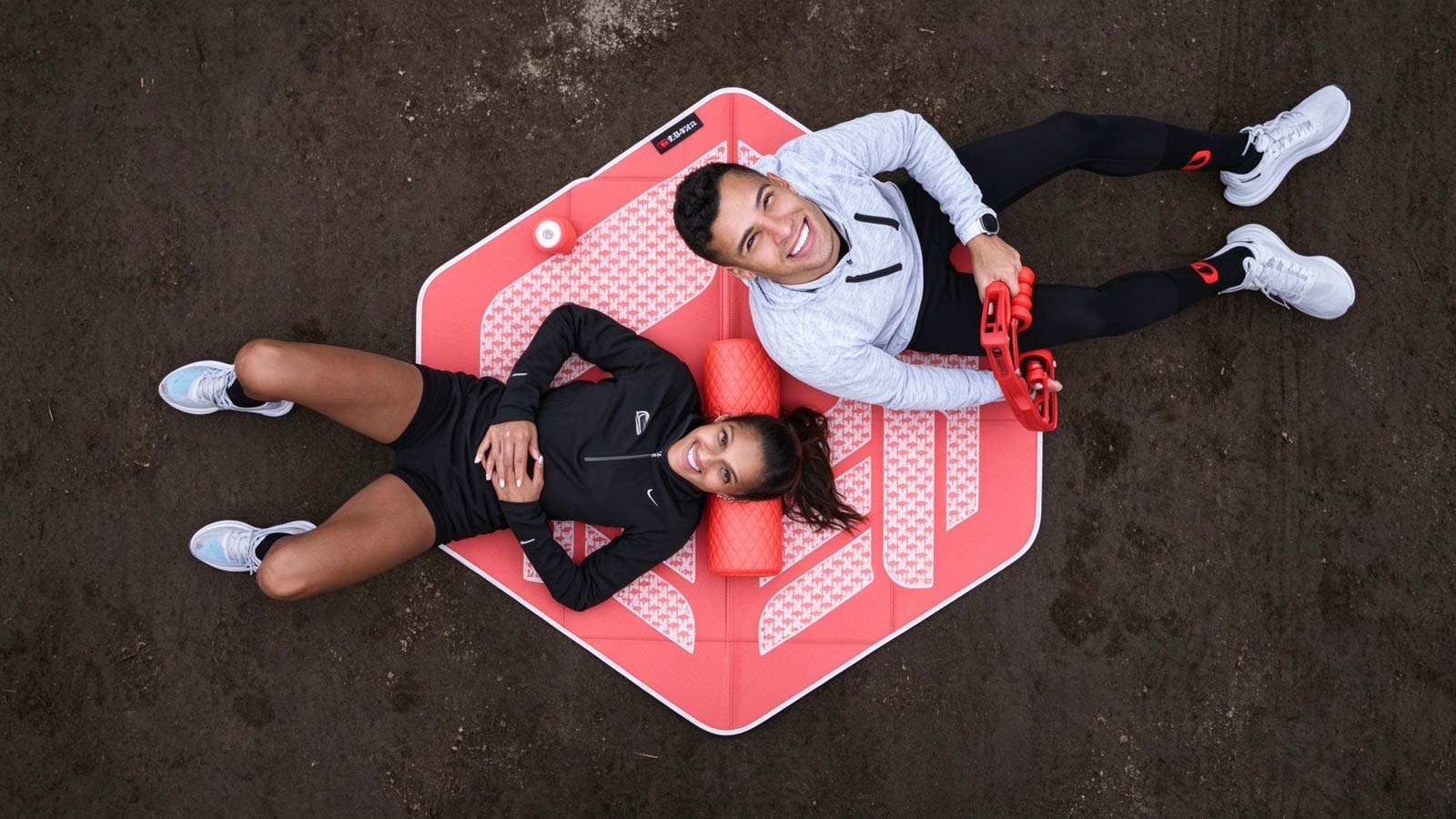
Official homepage: https://rollrecovery.com
Recovery stores usually ask you to get on the floor. Roll Recovery asks you to stay standing. The Boulder, Colorado company makes a spring-loaded clamp — four rolling wheels on each side of a frame that bites around your thigh, calf, or quad and applies sustained deep-tissue pressure while you simply move it — and in doing so solved the two oldest complaints about foam rolling: the gymnastics required to reach your own legs, and the arm fatigue that leaves your forearms needing the massage you just gave your hamstrings. The device, called the R8, has become a fixture of elite running: its testimonial wall reads like an Olympic village — a triathlon champion, a multiple American record holder, a two-time Olympic gold medalist — and its 97-percent five-star review wall across three hundred thousand units sold suggests the pros are not an outlier. Yet the professional testing consensus lands somewhere more interesting: the people who love it call it the best recovery purchase they ever made, and the people who do not call it a hundred-and-forty-dollar clamp that cannot reach their back. I went through the physics, the dial, and the divisive reviews. Here is the store across its dimensions.
A Clamp That Replaces Rolling Around on the Floor
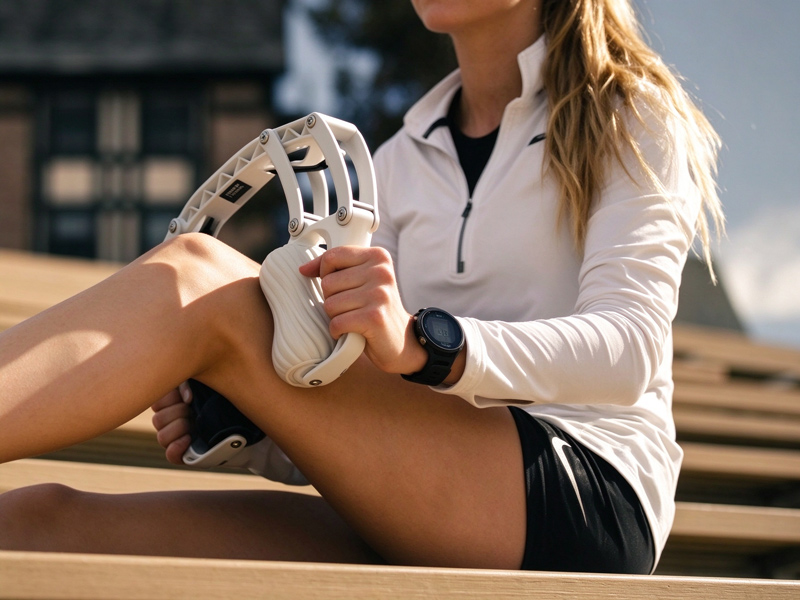
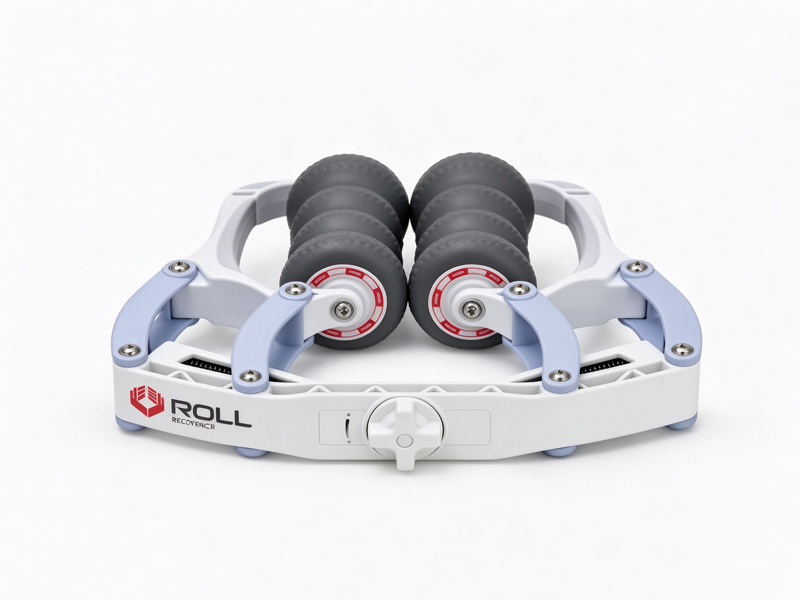
The insight is mechanical empathy. Self-myofascial release — the clinical name for deep-tissue rolling — works best with sustained, digging pressure, but traditional foam rolling demands you hold a plank over the roller, lowering and raising your bodyweight, which exhausts the upper body before the legs finish. The R8 inverts the labor: you pull the handles apart, seat the muscle group between the wheel sets, release, and the springs squeeze at a calibrated force — reviewers with scales measured roughly twenty pounds of clamping pressure — while you roll the device up and down the muscle standing, sitting, or lying down. The wheels themselves are engineered to mimic human fingers, four knobs per side, spinning on sealed ball bearings with stainless hardware through a reinforced thermoplastic frame. The result, owners consistently report, is a deeper massage with a fraction of the effort, and access for people — the less flexible, the injured, the post-surgical — who simply cannot get down onto a floor roller.
Twenty Pounds of Squeeze in a Three-Pound Frame
The specifications explain both the devotion and the complaints. The standard R8 weighs just over three pounds — substantial in the hand, and reviewers note it is not a travel-friendly race-weekend item — with a footprint that stores flat against a wall. It is registered with the Food and Drug Administration as a medical device, which makes it eligible for American health savings and flexible spending accounts, and the build quality earns near-universal praise: one early reviewer concluded it could survive daily use on a rhinoceros for a decade. The frame accepts interchangeable inserts — a SuperPlush option for gentler sessions, a SuperDeep option for therapists-in-training — and the clamp design means pressure is applied passively and evenly across both sides of a limb at once, a quads-and-hamstrings or adductors-and-IT-band sandwich no foam roller can replicate.
The Plus Dial Finally Tames the Original's Brutal Pressure
The most instructive chapter in the brand's history is the adjustment the original skipped. The first-generation R8 applies its full spring force whenever opened beyond a threshold — no dial, no variability, which professional testers and running coaches flagged as its core flaw. One veteran running coach's verdict captured the schism: she found the fixed pressure a wrecking ball against her IT band, felt it actively aggravated her symptoms, and recommended a thirty-dollar foam roller instead — while her husband, reviewing the same unit, declared it the deepest, most effective self-massage he had ever used. The company listened. The R8 Plus, roughly thirty dollars more, adds an adjustable compression dial spanning fifty percent less force to fifteen percent more than the original, and reviewers who tested both describe the dial as the difference between a device you tolerate and a device you use daily. The honest guidance the testing community converges on is nearly unanimous: skip the original, buy the Plus.
Olympic Champions, a Medical Device Registration, and HSA
The credibility wall is uncommonly deep for a single-product niche. The storefront leads with Olympic champion Gwen Jorgensen calling the R8 Plus her go-to massage therapist and a cost-effective recovery tool for a busy mother; multiple American record holder Molly Huddle endorses the classic for adductors and IT bands; two-time Olympic gold medalist Christian Taylor describes a genuine love-hate relationship with his roller. Beyond the names, the product appears in Outside, the Wall Street Journal, Forbes, and Runner's World roundups of the year's best recovery gear, and the company claims trust across NFL, NBA, UFC, NHL, and MLB locker rooms, NCAA programs, and a quarter-million everyday athletes. The medical-device registration matters practically: American buyers can run the purchase through pre-tax health accounts, which one reviewer noted effectively discounts the premium price by a third.
What the Reviews Love, and What They Can't Reach
The consensus ledger, assembled. In favor: genuinely deep tissue work with minimal effort, durability that outlasts foam rollers by design, customization through inserts, and particular triumph for less-mobile users and those who underdose their foam rolling. Against: the fixed pressure of the original, the two-handed operation that makes arms, shoulders, and upper back effectively unreachable, the three-pound weight that stays home on race weekends, and the price — one hundred forty-nine dollars for the R8 and around one hundred sixty-nine for the Plus, against twenty-to-forty-dollar foam rollers that cover more anatomy. The most striking single data point in professional testing is a major gear reviewer's category breakdown: power and build scored fours and fives out of five, while warranty, returns, and customer service scored two-point-five. For a company whose product outlasts foam rollers by a decade, the after-sales machinery is the weak joint.
Thirty Days at Home, No Swaps, Nothing International
The policy stack is friendly at the border and rigid beyond it. Domestic buyers get thirty days from delivery on unused, tagged, originally packaged items through an account-based returns flow; sale items and gift cards are excluded. Exchanges are restricted to a narrow lane — recovery footwear size or color swaps and color exchanges on recovery products only; you cannot exchange an R8 for an R8 Plus, the policy directs you to return and reorder. International orders, including Canada, are final sale, with special circumstances handled by direct contact. For a premium recovery tool whose fit is subjective — and whose entire review record hinges on personal pressure tolerance — a final-sale policy abroad and no-swap rules at home are the purchase risk, mitigated by the dial-equipped Plus reducing the odds you will want to return it at all.
Who Actually Needs a Hundred-and-Forty-Dollar Roller
The honest audience narrows quickly. Buy the R8 Plus if you are a runner or athlete with chronically tight quads, hamstrings, calves, adductors, or IT bands; if floor rolling is physically difficult or you consistently underdo it; if you value passive pressure you can apply while watching television over active effort on a mat; or if you carry an HSA balance looking for a legitimate recovery expense. Skip it if your problem areas live above the waist, if you travel to races with a carry-on discipline, if your budget is honest about thirty-dollar foam rollers, or if you are the pressure-sensitive type the original R8 was built to challenge — and even then, the Plus's dial exists precisely for you.
Buy the Plus, Skip the Original, Roll Your Back Elsewhere
Roll Recovery is the rare recovery brand whose product is genuinely both overrated and indispensable — overrated by the athletes for whom twenty pounds of spring force is a badge, indispensable for the rest of the running world that finally gets its legs rolled without a floor, a plank, or a therapist on retainer. The R8 Plus is the version to buy: the dial converts the original's one-size-fits-all brutality into a daily tool, the build will outlast three foam rollers, and the FDA registration pays a third of the tariff in pre-tax dollars. Accept that your back, shoulders, and race-weekend suitcase are beyond its jurisdiction, keep a cheap roller for those, and you will understand why the Olympic village keeps one by the door.