Recovering at hyperice: formula-one boots, five physics shelves, fsa cards, best-buy pickups everywhere

Official homepage: https://hyperice.com
Wearable stores usually measure the workout — the miles, the watts, the heartbeats. Hyperice measures the hours after: the store's entire catalog exists for the space between training sessions, when the body rebuilds or breaks down depending on what you do next. I browsed with sore legs from a race I did not train for and a new appreciation for any brand that takes recovery as seriously as the effort. Here is the counter, decision by decision.
Door Policy: Claim the Other Half of Training
The storefront organizes around a principle the sports-tech aisle usually ignores — that adaptation happens in recovery, and recovery can be equipped. Framing the store as the second half of training escapes the crowded tracker market entirely: the watch on the wrist tells you what you did, the boots on the legs decide what you can do tomorrow, and the customer who buys both has closed the loop the watch opened. The door is held open by a premise, not a product — and the premise has no direct rival.
Formula-One Hardware
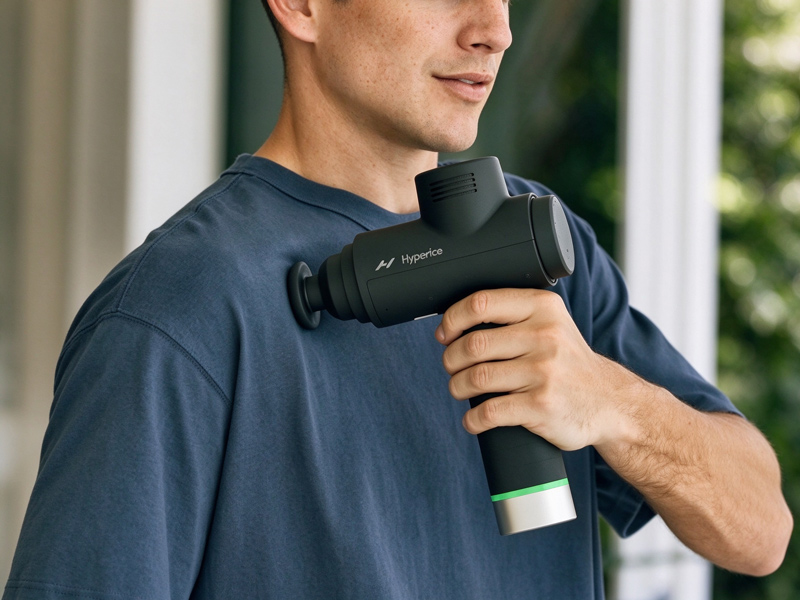
The flagship compression boots and the percussion gun both wear a racing logo — the store's most visible partnership is with the fastest sport on earth, the black-and-red livery running through the product photography like a factory paint scheme. Borrowing the paddock's authority targets the skeptic who suspects recovery gear is spa marketing: a device trusted by athletes who endure five Gs and two-hour cockpit heat does not need to explain pneumatic compression, and the logo compresses a white paper into one glyph. The speed is the credential.
Five Physics as Aisles
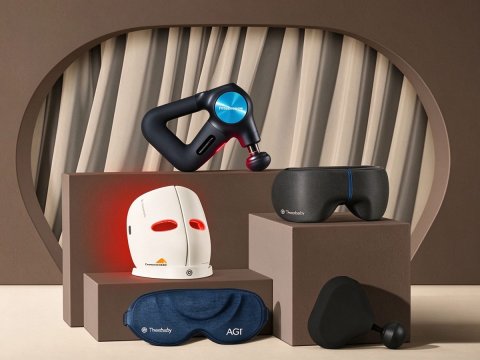
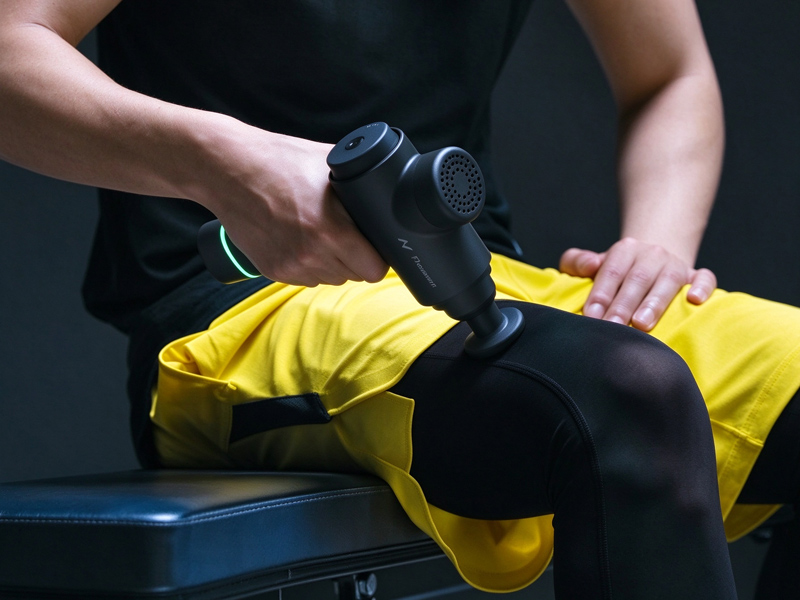
The catalog sorts devices by mechanism — dynamic air compression, rapid percussion, alternating heat and cold, sustained heat, high-frequency vibration — each aisle a branch of applied physics aimed at the same outcome. Organizing by mechanism rather than by body part or price is an education decision: the customer with a specific complaint finds her aisle by understanding the problem, the browser learns the taxonomy, and the store positions itself as the physics department of the training world. The aisles teach; the products obey.
Medical Money at the Register
Among the trust badges sits an unusual one — the devices are eligible for medical spending accounts, with checkout accepting FSA and HSA cards directly. Qualifying recovery hardware for pre-tax medical dollars reframes the receipt from luxury to care: the buyer hesitating at four hundred dollars for leg boots divides the price by her marginal tax rate, and the eligibility claim elevates the product from want to need. The register, in effect, accepts insurance.
The Big Box as a Warehouse
The store does not pretend exclusivity — order online, pick up today at the national electronics chain, same-day pickup baked into the flow. Partnering with a big-box retailer as a fulfillment option treats the direct store as the discovery layer and the box store as the instant-gratification layer: the customer who researches on the brand site but wants the boots tonight gets both, and the brand gets the sale either way. The competitor's shelf becomes the warehouse, and the brand's funnel keeps the margin of the story.
A Warranty That Jokes
The policy footer reads like a dare wrapped in a guarantee — thirty-day returns, a year of coverage, and a parenthetical that admits nothing will go wrong but promises coverage if it does. Writing the warranty with a wink addresses the customer wary of corporate fine print: the joke concedes confidence, the terms stay printed beneath it, and the register's last impression is a brand that trusts its engineering enough to mock it. Humor, here, is a policy feature, and the confidence it signals is the real warranty.