Rabbit's hop into shoes: shorts-born quests, pace chasers, women's marathon kits, polka-dot joy

Official homepage: https://runinrabbit.com
Running stores usually start with the shoe and work upward. Rabbit started with the shortest garment in the sport — the homepage still opens with the founding confession, born from a quest for better shorts — and only recently hopped the full length of the body to put a shoe on the foot. I browsed with a drawer of disappointing shorts and a curiosity about what happens when a clothing brand decides the feet are its business too. Here is the counter, decision by decision.
Door Policy: The Shorts Manifesto
The about section begins with a grievance — the founders could not find running shorts that felt as good as they performed, so they built the brand to fix it. Opening with a single garment's failure rather than a philosophy of sport still governs the catalog: the shorts remain the flagship, every other product is measured against the standard they set, and the customer arriving with her own shorts grievance finds the store organized around exactly her complaint. The grievance is the brand, and the brand never outgrew it — every rack in the store is the grievance, answered.
The Shoe as a Boundary Crossed
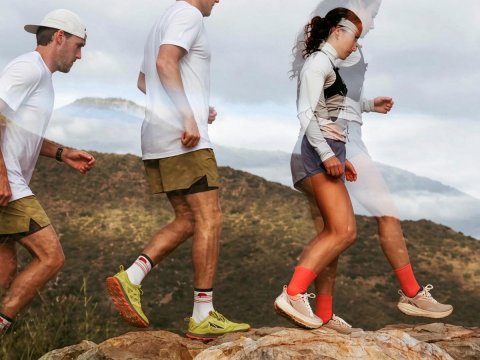
When I visited, the homepage's hero belonged to a road shoe — bright white, electric yellow, carrying the name Pace Chaser and copy that reads like a promise to the brand's own shorts loyalists: fast just got faster, a lightweight partner for the progress they have already been making. A shorts company shipping its first shoe asks the customer who trusts the brand with her most personal garment to extend that trust to her most injury-prone equipment, and the positioning — progress partner rather than speed demon — borrows the shorts' emotional register to make the leap feel continuous. The shoe is not a new business; it is the shorts, extended by six inches, and the extension lands on a foot that already knows the name.

A Kit for One Woman's Race
The homepage's second story belongs to a partnership — a training kit built for the miles leading up to a women's marathon, the product named for the event itself. Designing around a specific race targets the goal-oriented runner: the kit is not generic gear but a uniform for a documented sixteen weeks, the buyer is training toward a date the brand has acknowledged, and the purchase becomes a registration's companion rather than a wardrobe addition. The kit sells the race, the race sells the training, and the training sells the shorts — each sale handing off to the next like a relay.
Polka Dots Against the Peloton's Seriousness
The catalog's visual register runs to pink and yellow polka dots, neon accents, and a general refusal of the muted palette that serious running brands usually wear. Choosing cheerfulness as a design language targets the runner who finds the category's sobriety exhausting: the polka dot says the sport is allowed to be fun, the bright colors photograph like confetti against grey pavement, and the store quietly filters for the customer who wants her gear to smile back. The joy is the positioning, and it costs nothing to maintain — the dots are printed by the same machines that print the serious brands' grey.

The Rabbit as a Runner's Inside Joke
The name carries the sport's most familiar metaphor — run like a rabbit, chase the rabbit, the rabbit sets the pace — and the branding uses it with the lightness of an inside joke rather than the weight of a mascot. Choosing a name the community already says gives instant membership: the customer has been speaking the brand's language for years without knowing it, and the moment she sees the word on a tag she feels like the brand was started in her own running group. The name is the community's, loaned back, and the community pays the loan in loyalty.
Every Woman's, Twice
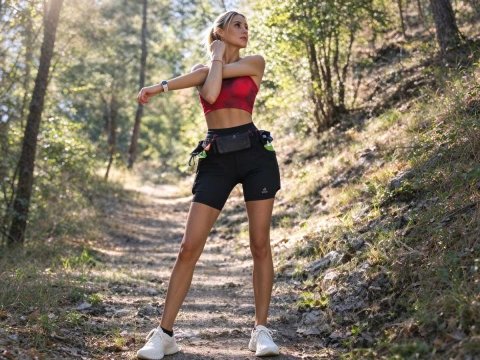
The women's marathon kit appears beside a broader truth the store tells without lecturing — the women's line is not a scaled-down afterthought but the collection the partnerships and photography treat as the default. Defaulting to women in running imagery targets the segment of the sport that gear photography underserved for decades, and the cheerful palette and event partnerships make the default feel like celebration rather than correction. The default is the brand's quiet politics, and it is winning — the shorts fit the runner the category kept cropping out of the frame.