Plantoys' timber standard: rubberwood aisles, water-based shelves, a solar dollhouse, and forty-five years
Official homepage: https://www.plantoys.com
Educational-toy stores usually lead with a learning outcome. PlanToys leads with a material origin — rubberwood trees that no longer produce latex, rescued from the burn pile and kiln-dried without chemicals — and then runs the entire shop as a factory standard wearing retail clothing. It has done so for forty-five years, since 1981. I browsed expecting eco-craft gentleness and found a six-hundred-thirty-SKU catalog with the discipline of a manufacturer that never outsourced its own story. Here is the standard, decision by decision.
Door Policy: Material as Positioning
The storefront opens with provenance rather than play value, and that ordering filters the room immediately. Rubberwood from exhausted latex plantations, organic pigments, water-based dyes, soy inks, a certified formaldehyde-free E-Zero glue, production that exceeds EN71 safety norms and aims for zero waste — every claim sits where a customer will see it, because the company thesis cannot survive as a footnote. Shoppers who care are converted at the door; the rest were never the audience.
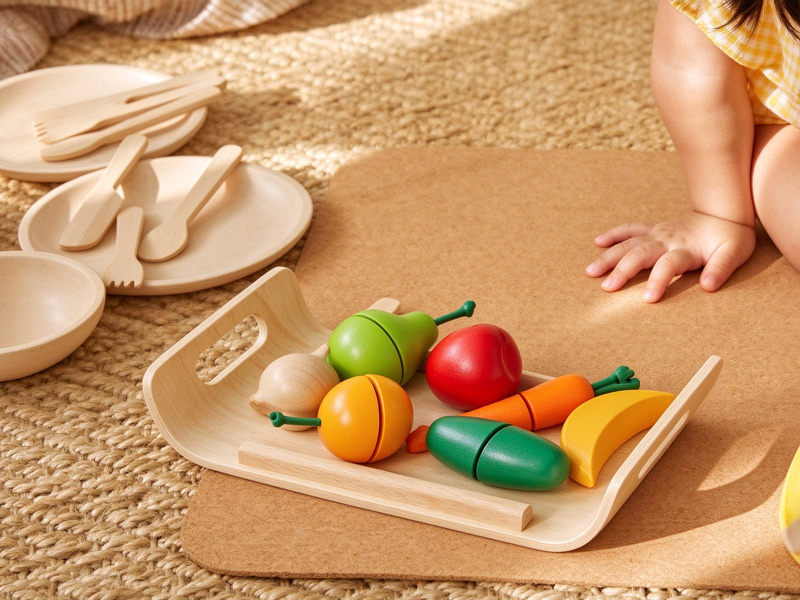
Taxonomy as the 630-SKU Survival Plan
The all-products shelf lists 630 items, and the answer to that scale is restraint: a standard sorting rail — best selling, alphabetical, price ascending, newest, availability — plus a Toy Categories filter, with nothing more theatrical bolted on. A manufacturer’s store at this size wins or loses on rails, not banners. A grandparent finds a birthday present by age; a collector finds the newest release by date. The taxonomy does the labor a curated boutique would perform with storytelling, and it never once talks down.
A House Style That Repeats Down Every Aisle
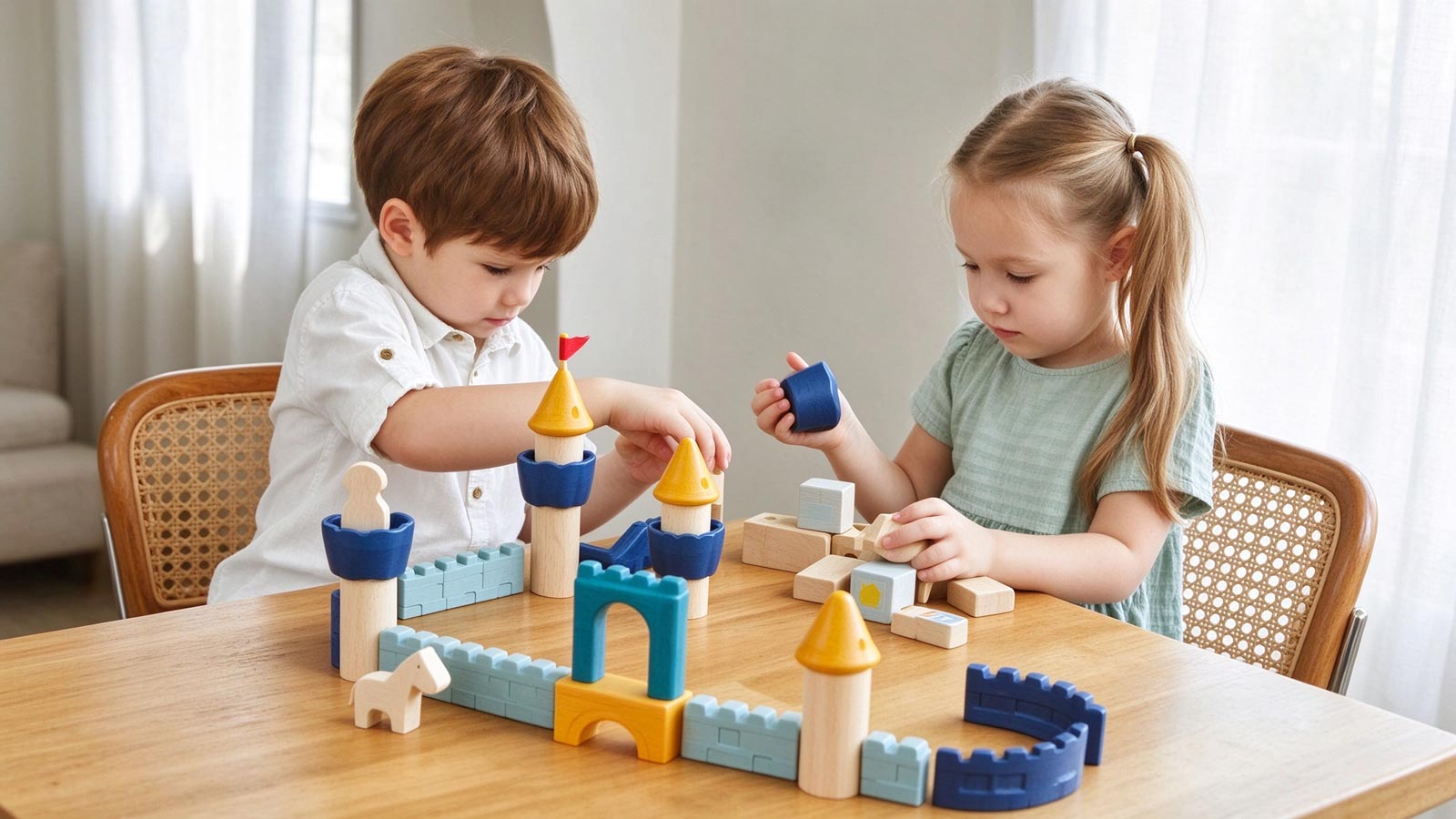
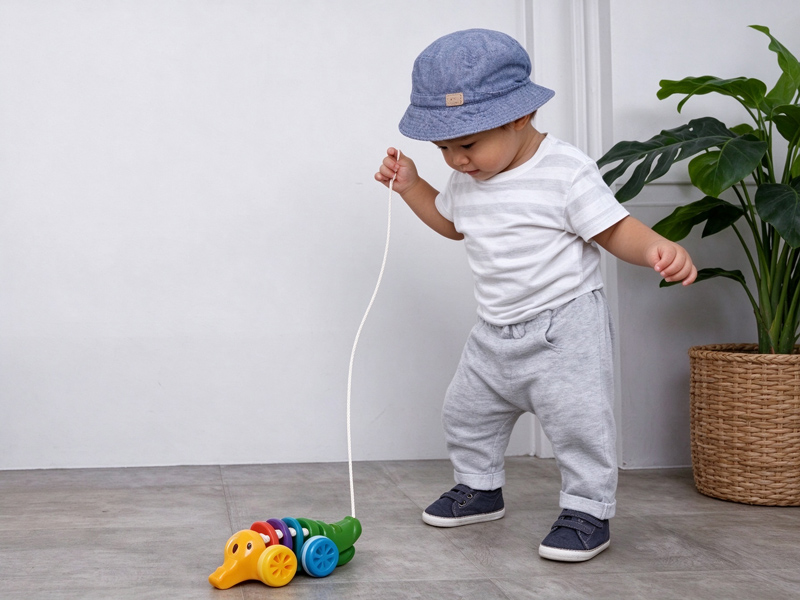
The grid keeps repeating one design handwriting, and the repetition is deliberate stock-keeping. The egg-shaped rattle trio — walrus, seal, penguin — turns a first grasp into character recognition; the balancing cactus converts stacking into turn-taking; a drummer robot pulls its own string. Rounded forms, low-saturation palettes, visibly jointed construction. A single shelf teaches the physical language, and the whole catalog becomes navigable by eye — product development and visual identity run as one department.
One Dollhouse That Argues the Whole Thesis
The green dollhouse carries the sustainability argument as play rather than packaging: solar panels on the roof, a small wind turbine, rooms arranged for energy-conscious living. It sits shelved as an ordinary SKU, no special banner, no lecture — the quietest call in the store. The thesis is simply priced and stocked beside everything else, confident the object will finish the sentence the door began.
The Retail Floor Doubling as Wholesale Showroom
Behind the counter sits a second business: PlanToys distributes to partner shops through Shopify Collective, importing its catalog into other merchants’ shelves while fulfilling from its own systems, with the company’s case study crediting that channel with a fifth of one month’s orders. Every product photo serves two registers — a parent choosing a rattle, a buyer for another store choosing a line. One catalog, run for both audiences, is an efficiency most brands never get to attempt.