OOFOS store review: what to know before you buy recovery sandals online

Official homepage: https://www.oofos.com
Running stores usually sell the miles — the shoes that carry you through them, the watches that count them, the socks that survive them. OOFOS sells the hour after: the store's entire catalog exists for the moment the run ends and the body begins asking for interest on its loan. I browsed with calves still negotiating from yesterday's long effort and a curiosity about why the most beloved shoes in a runner's rotation are the ones never worn for running. Here is the counter, decision by decision.
Door Policy: The Sound of Relief
The brand's name is an experience — the sound a body makes when it finally stops, printed as two letters and a promise: feel the OO. Building a store on an onomatopoeia targets the part of the runner that shops by sensation rather than specification: the word does not describe a feature, it rehearses the feeling, and the customer who has winced through a post-run kitchen floor understands the name before she understands the shoe. The sound is the product page, and the product page is the shortest in the category.
A Foam Wearing a Trademark
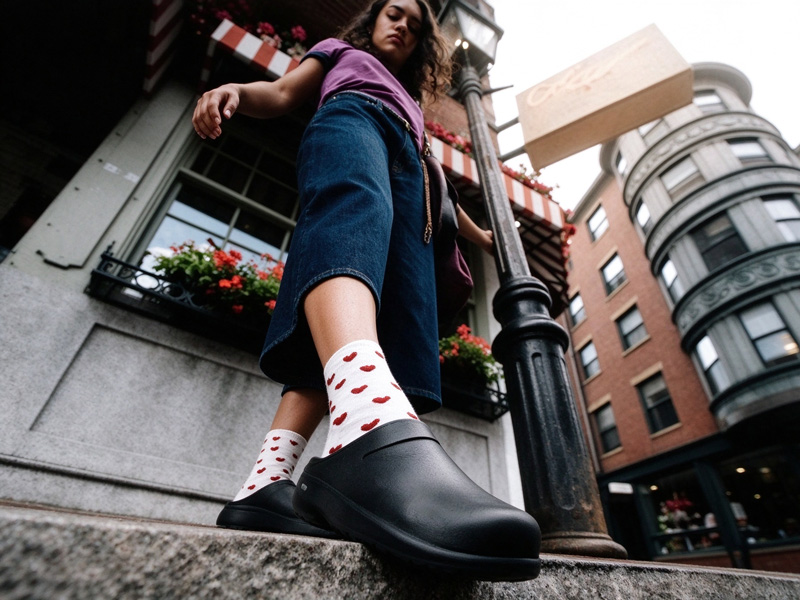
Beneath the slogan sits the engineering claim — a proprietary foam, marked with the symbol that turns a material into intellectual property, promising to absorb impact and reduce stress on feet, knees, and the lower back. Trademarking the foam is claims discipline aimed at the buyer burned by comfort marketing: the symbol says the compound was engineered rather than sourced, the named benefits — joints, not just soles — widen the audience beyond runners, and the technology gives a sandal the spec sheet of a medical device. The foam is the moat, printed on the footbed, and the footbed is the billboard.
Testimonials From Two Worlds
The review wall sorts its voices by occupation — a nurse finishing a twelve-hour shift, an athlete recovering from a long run, another nurse, a pickleball player, a tennis regular — the professions mixing on the same page without hierarchy. Publishing the dual audience widens the market to the household rather than the individual: the runner buys for herself, then buys for the nurse in her life, and the store that serves both the marathoner and the hospital worker has doubled its addressable feet without changing the product. The wall is the market map, and the map has two hemispheres.
Pink Beneath Every Purchase
The giving program rides every transaction — a portion of each purchase funds breast cancer research and patient care, a commitment the store has maintained for years and announces without fanfare. Tying the product to a cause this specifically builds loyalty in the buyer grown cynical of cause marketing: the cause is named, the beneficiary is named, and the shoes on the nurse's feet are the receipt. The pink is not a campaign; it is a cost of goods that returns as goodwill, and goodwill is the only currency that never devalues.

The Marathon's Last Street
The brand's physical marketing appears at the exact spot where runners are most broken and most suggestible — the final stretch of Boylston Street, where the store has run pop-ups for years, letting finishers slide into recovery sandals meters from the finish line. Owning the recovery moment at the marathon captures the perfect customer at her perfect moment: the feet are destroyed, the endorphins are generous, and the sandal that saves the walk to the hotel owns the next year's training cycle. The pop-up is the conversion funnel, and the funnel is the most emotional street in running.
From Pop-Up to Mall
After fourteen years of direct-to-consumer and wholesale, the brand opened its first permanent stores in 2025 — three locations in high-traffic shopping centers, chosen for foot traffic and sized for experience. Moving from pop-ups to permanent retail serves the customer who must feel the foam before she believes it: the store is a try-on station for the entire brand, the staff are fitters rather than clerks, and the mall location says the product has crossed from niche recovery gear to household name. The mall is the foam's final proof — the proof you can park next to.
The Three-Channel Engine
The business runs three channels without apology — direct online, the everything store, and a wholesale network, with international momentum the copy attributes to a market that values recovery as much as effort. Meeting the customer wherever she shops treats the channels as one journey: the research happens on the direct site, the impulse at the marketplace, the trial at the mall, and the brand never pretends one cannibalizes another. The channels are the recovery plan for the business itself — each one rests the others, and the whole thing keeps moving.