Nomad, the leather way: fourteen years of cases that age like stories
Official homepage: https://nomadgoods.com
Phone-accessory stores usually chase the new phone. Nomad designs for the third year of ownership. The Santa Barbara company — founded in 2012 when three friends put a USB cable inside something the size of a credit card and asked the internet for fifty thousand dollars — has spent fourteen years building one of the most coherent catalogs in premium accessories: vegetable-tanned Horween leather cases that scuff before they shine, a Find My wallet that charges on any Qi pad, and Apple Watch straps named after places. The Shopify storefront sells the whole carry, and its founders' names are still on the about page — a continuity the industry's acquisition carousel rarely preserves. I went through the Kickstarter origins, the leather doctrine, and the warranty fine print. Here is the store across its dimensions.
A Credit Card That Charged Phones
The origin is crowdfunding's early mythology. Noah Dentzel, Brian Hahn, and Adam Miller launched the ChargeCard on Kickstarter on July 18, 2012 — a super-slim USB cable shaped like a credit card, designed for wallets and emergencies. The fifty-thousand-dollar goal tripled to $161,897, the first units shipped that March, and the coverage arrived from the institutions that mattered: a New York Times small-ideas essay, a Forbes gift guide, CNN, Mashable, HuffPost. The ChargeKey and NomadPlus followed, and the company that began by hiding cables in wallets now hides magnets in leather — but the founding instinct, tools that disappear into everyday carry, never changed.
Santa Barbara by Way of Spain
The founders' path explains the product sensibility. Dentzel studied government, economics, and human geography at Dartmouth before cutting his teeth as a product manager at Tuenti, the Spanish social network — a European minimalism that shows in every Nomad render — and the company settled in Santa Barbara rather than San Francisco, a distance that reads in the unhurried product cadence. Fourteen years in, the co-founders still answer interviews about leading through hard times personally, and the homepage carries Dentzel's open thank-you to the community as its anniversary note.
The Horween Doctrine
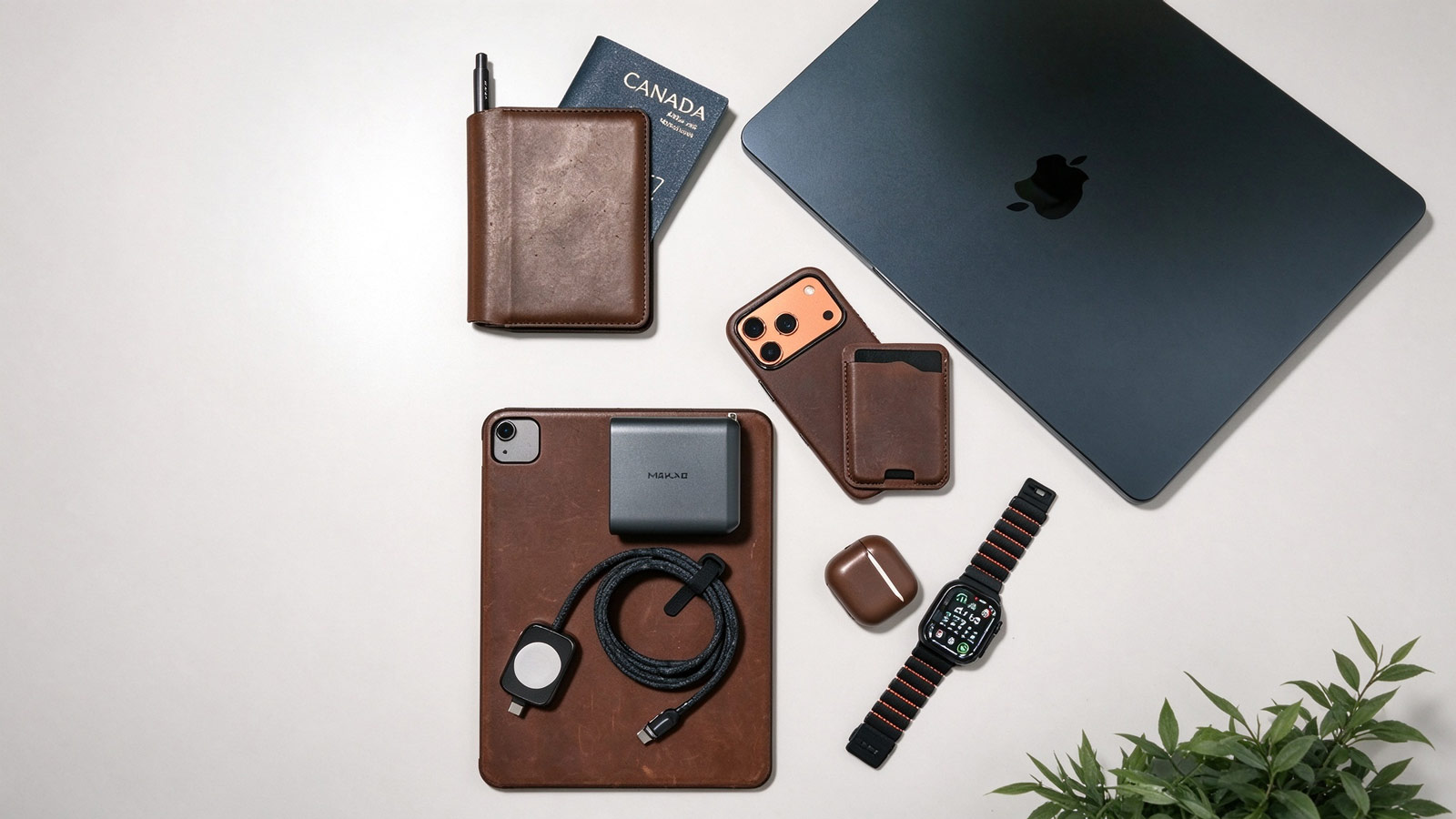
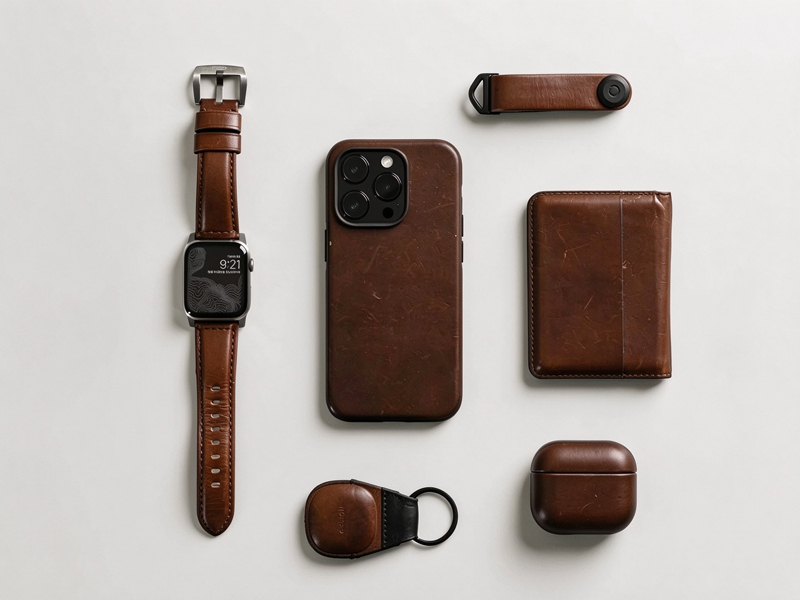
The material philosophy is the brand's spine and its honest caveat. Nomad builds flagship cases from Horween leather — the Chicago tannery operating since 1905, where hides are vegetable-tanned for up to two months entirely by hand. The leather is minimally treated, which means it arrives honest: it scuffs, marks, and darkens with the oils of your hands before it buffs into the lustrous patina that owners photograph like trophies. The product pages say so plainly — if you want a perfect finish, this is not the case for you — and offer the proprietary Nomad Leather alternative for buyers who prefer uniform color to lived-in character. That candor is rare in a category that airbrushes its materials, and it is why the leather community treats Nomad as a reference standard.
The Full Carry
The current catalog spans the everyday-carry map. Cases split into Modern — TPU bumpers visible at the edges, eight-foot drop rating, grippy ribs — and Traditional, which wraps leather around every edge for the seamless heritage look with recycled-aluminum buttons and a sapphire crystal camera control. The Rugged line claims fifteen-foot drops; the Mag Back answers the iPhone Air's thinness with a microsuction leather plate that peels off residue-free. Magnets run strong — eleven hundred grams of pull on Pro Max cases, full Qi2 alignment. Around the phones: Sport, Rocky Point, and Stratos watch bands, bifold and card wallets, a passport wallet, the Find My Tracking Card with five months of battery and wireless charging, the eighty-dollar Leather Mag Wallet that locates itself in Apple's app and recharges on any pad, plus cables and stands.
Two Years, Spelled Out
The ownership terms sit in the middle of the category's warranty ladder. A two-year manufacturer's warranty covers defects in materials and workmanship; claims resolve as replacement when stock exists, store credit when it does not, with the replacement order's shipping refunded. The thirty-day return window is standard with one old-school wrinkle: a five-dollar restocking fee on US refunds, original shipping never refunded, and items bought from unauthorized resellers — the gray-market Amazon listings included — carry no warranty at all. It is a premium brand's contract with premium-brand confidence: fair, legible, and unapologetic.
The PPE Month
The leadership record deserves its own paragraph. When the pandemic gutted accessory demand in April 2020, Nomad converted its operations to personal protective equipment production — and recorded the busiest month in company history doing it. The pivot, later the subject of a leadership podcast episode, demonstrated the operational flexibility that fourteen years of self-ownership buys, and it deepened the Santa Barbara team's identity beyond the product catalog.
The Honest Ledger
The critique file is what a premium leather brand should expect. Prices sit at the top of every roundup: cases run fifty to eighty dollars, the Find My wallet eighty, and the review consensus is that you are paying for materials and patience — the patina arrives, but only after the scuffs. The two-year warranty, generous by electronics standards, looks modest beside competitors offering a decade or more on cases. Scuff-averse buyers should take the product page's warning literally or buy the Nomad Leather finish. The unauthorized-reseller clause means the cheapest listing is rarely the safe one. And the five-dollar restocking fee, however small, is the kind of line a fourteen-year-old brand could afford to delete.
Worn In
Nomad is the anti-disposable accessory house: a Kickstarter garage project that became an institution without selling, a leather doctrine honest enough to warn you about its own flaws, and a carry system — case, wallet, strap, tracker — designed to look better in year three than year one. Buy the Traditional case in Horween if you want the full patina education, the Rugged if your phone meets pavement, and the Tracking Card if you lose wallets more often than phones; buy it all direct, because the gray market voids the warranty. Some things are worth paying for twice — the second time is in the wear.