Quad lock, locked in: the mount that survives motogp, NASCAR, and your commute
Official homepage: https://quadlockcase.com
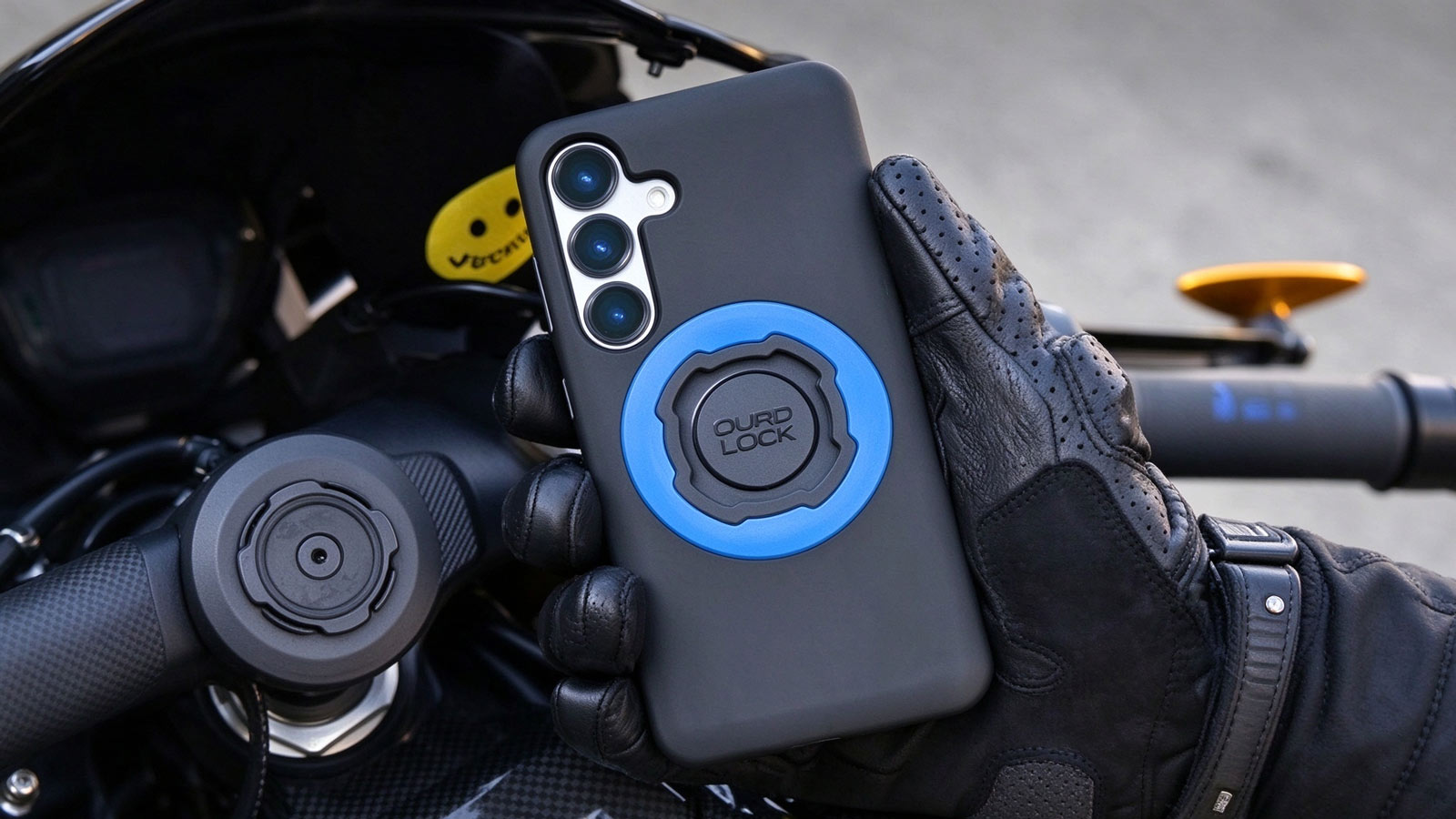
Phone stores usually sell the phone. Quad Lock sells the moment you stop worrying about it. The Australian company — the consumer face of Annex Products, operating from Melbourne — makes the mounting system that cyclists, motorcyclists, and increasingly half of the racing world uses to bolt a phone to things that vibrate, lean, and occasionally crash: a patented dual-stage twist lock with four case tabs, a blue lever, and a catalog of mounts that covers handlebars, windscreens, running arms, office walls, and yes, showers. When Formula One driver Oscar Piastri, MotoGP rider Pedro Acosta, NASCAR champion Shane van Gisbergen, motocross legend Ricky Carmichael, and the Quad Lock Honda Supercross team all run the same blue-ringed hardware as a Barcelona fruit vendor with eleven mounts in his shop, you are looking at a rare product that genuinely crosses from professional racing to daily utility. I went through the lock mechanism, the vibration engineering, and the dispatch complaints. Here is the store across its dimensions.
Four Tabs and a Blue Lever
The mechanism is the whole product. Every Quad Lock case carries four molded tabs on its back; every mount carries the matching receiver. Seat the phone and twist the blue lever a quarter-turn — the dual-stage lock engages with a click that owners describe as the single most satisfying sound in their gear bags — and the phone is held in compression, releasable only by reversing the lever. No magnets to weaken, no springs to fatigue, no cradle arms to snap. The system's entire reputation rests on that click surviving years of fuel-vibration, potholes, and crashes, and the unprompted review record — decade-long multi-device loyalty, zero-vibration trucking testimonials, dirt-bike crashes with the phone intact — suggests it does.
Melbourne to the Podium
The credibility wall is unusually institutional. The press bar carries the New York Times, Wall Street Journal, The Verge, Forbes, CyclingTips, road.cc, and BikeRadar; the ambassador bar carries Oscar Piastri's McLaren helmet, Shane van Gisbergen's race suit, the Trackhouse NASCAR pit crew, Pedro Acosta's leathers, Ricky Carmichael, Dakar rider Dan Sanders, rally and adventure-TV regulars, and the factory Quad Lock Honda Supercross team. This is not celebrity gifting — it is the racing world's actual toolkit, which is precisely why a fruit shop in Barcelona can rattle off eleven mounts across bike, scooter, van, desk, and shower in a five-star review. The system works at two hundred kilometers per hour on the handlebar of a MotoGP bike and at two kilometers per hour behind a market stall, and the brand has spent fifteen years proving both.
The Vibration Dampener Chapter
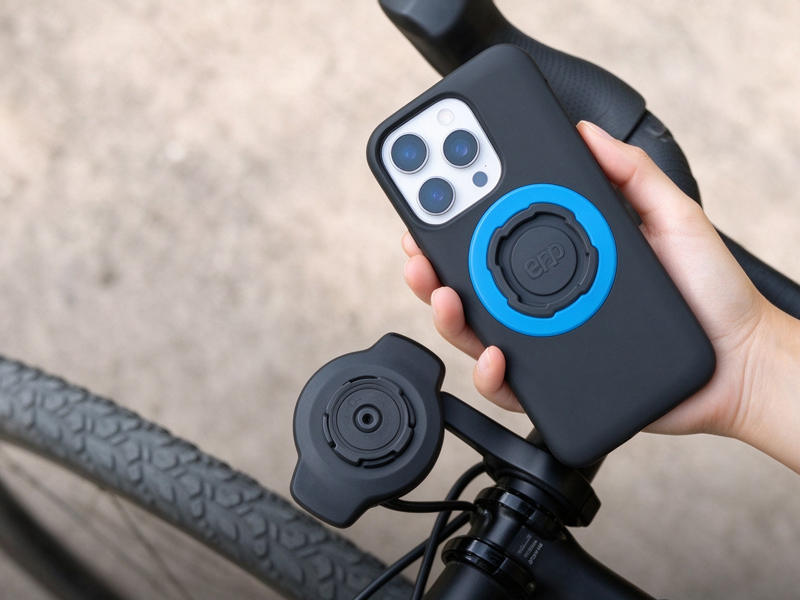
The engineering chapter that separates Quad Lock from every mounting competitor is the one most buyers learn about the expensive way. Modern smartphone cameras use optical image stabilization — delicate floating lens elements — and high-frequency motorcycle vibration destroys them. Apple eventually acknowledged the failure mode; Quad Lock engineered the answer first. The Vibration Dampener, twenty dollars, sandwiches a dual-chassis suspension with precision silicone grommets between mount and phone, cutting more than ninety percent of the high-frequency energy that kills stabilizers. Developed with automotive and defense vibration specialists and field-tested by thousands of riders, it ships with a published blacklist of the worst-offending motorcycles — BMW's R1200GS, Harley-Davidson cruisers, KTM's entire range — where the company says mount without one at your own risk. It is the rare accessory that pays for itself the first time it saves a fourteen-hundred-dollar camera module.
Every Vehicle, One System
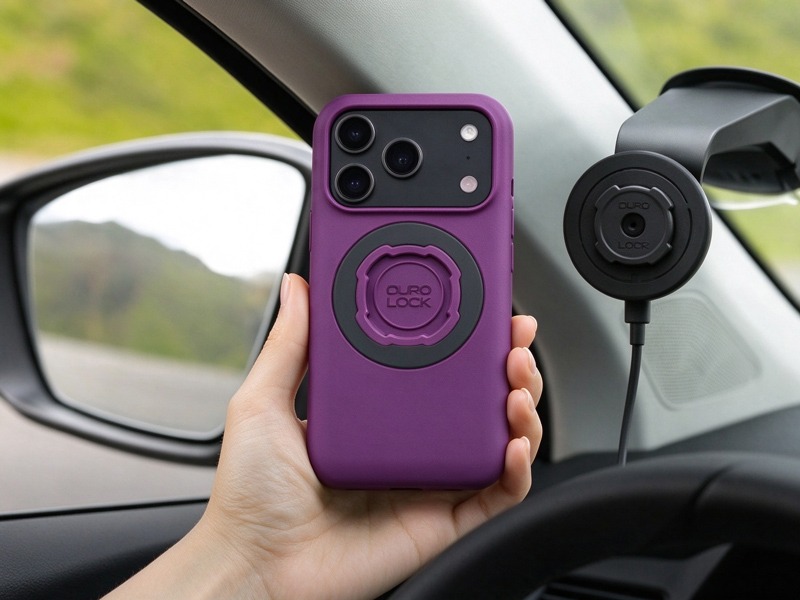
The catalog's genius is taxonomic: one locking interface, every context. Motorcycle mounts span handlebar clamps, fork-stem fittings, mirror perch adapters, and brake-reservoir mounts; the car range runs suction windscreen, vent, and adhesive dash; the bicycle line splits road and mountain; and the long tail covers running armbands, desk stands, wall plates, golf buggies, boat rails, and the shower-suction mount. Around the hardware sit the Poncho weather cover in clear TPU, the Weatherproof Wireless Charging Head for riders who navigate all day, and newer entries like a wireless CarPlay adapter. Reviewers configure complete setups between fifty and one hundred twenty dollars depending on vehicle and options — and the moment you own one mount, every future vehicle accessory is a twenty-dollar head swap.
The Ownership Math
The purchase math has two honest edges. On value: the system gets cheaper with every phone you keep in it, because mounts transfer and only the case changes — though that case-per-phone cost is exactly what one reviewer wished were thirty percent lower. On terms: the thirty-day money-back window puts return shipping on the customer with a trackable-service warning above seventy-five dollars, and the one-year warranty runs through authorized resellers only, with repair-or-exchange resolutions that carry their own ninety-day coverage. Fair, standard, and worth reading before the Amazon gray market tempts you.
The Dispatch Ledger
The complaint file is operational, not structural. Multiple Trustpilot reviewers report deliveries stretching past the two-to-four-day estimate into nine or more, with one same-day-dispatch promise broken on an order placed before the stated cutoff — the company's system recorded the order a day later than the customer's receipt, and the thread ends unresolved after four days. A desk-mount buyer with a wireless charging head was told the head was really only meant for car use — despite being sold as a desk-mount option — and deflected toward power-supply blame across multiple tested bricks; a CarPlay-adapter buyer received a return label that was, in effect, just an address. Against this sit the redemptions: a warranty claim resolved in one day with a new case shipped, a wrongly-sent case replaced for free with the wrong one kept, and the Barcelona vendor who has bought nothing else since 2016. The brand replies to every review with named accountability, which blunts the pattern without erasing it.
Who Needs a Lock This Serious
The audience sorts itself. If your phone rides a motorcycle, this is the default answer — the vibration dampener alone justifies the ecosystem. If you cycle, the out-front mount is the category's benchmark. If you merely drive and charge, the same-day-dispatch caveats and premium pricing mean the cheaper competitors deserve a look, and if you only want a case, Quad Lock sells those too but its drop-rating honesty is thinner than its mount reputation. Buy the mount that matches your life, add the dampener if an engine is involved, and order two weeks early.
Locked and Loaded
Quad Lock is fifteen years of engineering discipline wearing a racing livery: a lock mechanism trusted by Formula One drivers and fruit vendors alike, a vibration dampener that solved a problem phone makers eventually had to acknowledge, and a mount taxonomy that turns one purchase into a lifetime system. You pay premium money for a one-year warranty, occasionally optimistic shipping, and customer service that sometimes argues with physics — and you receive, in exchange, the only mount system the professionals never second-guess. Twist, click, ride.