Ezyroller, ground level: the snake-motion ride-on that grows with its rider
Official homepage: https://ezyroller.com
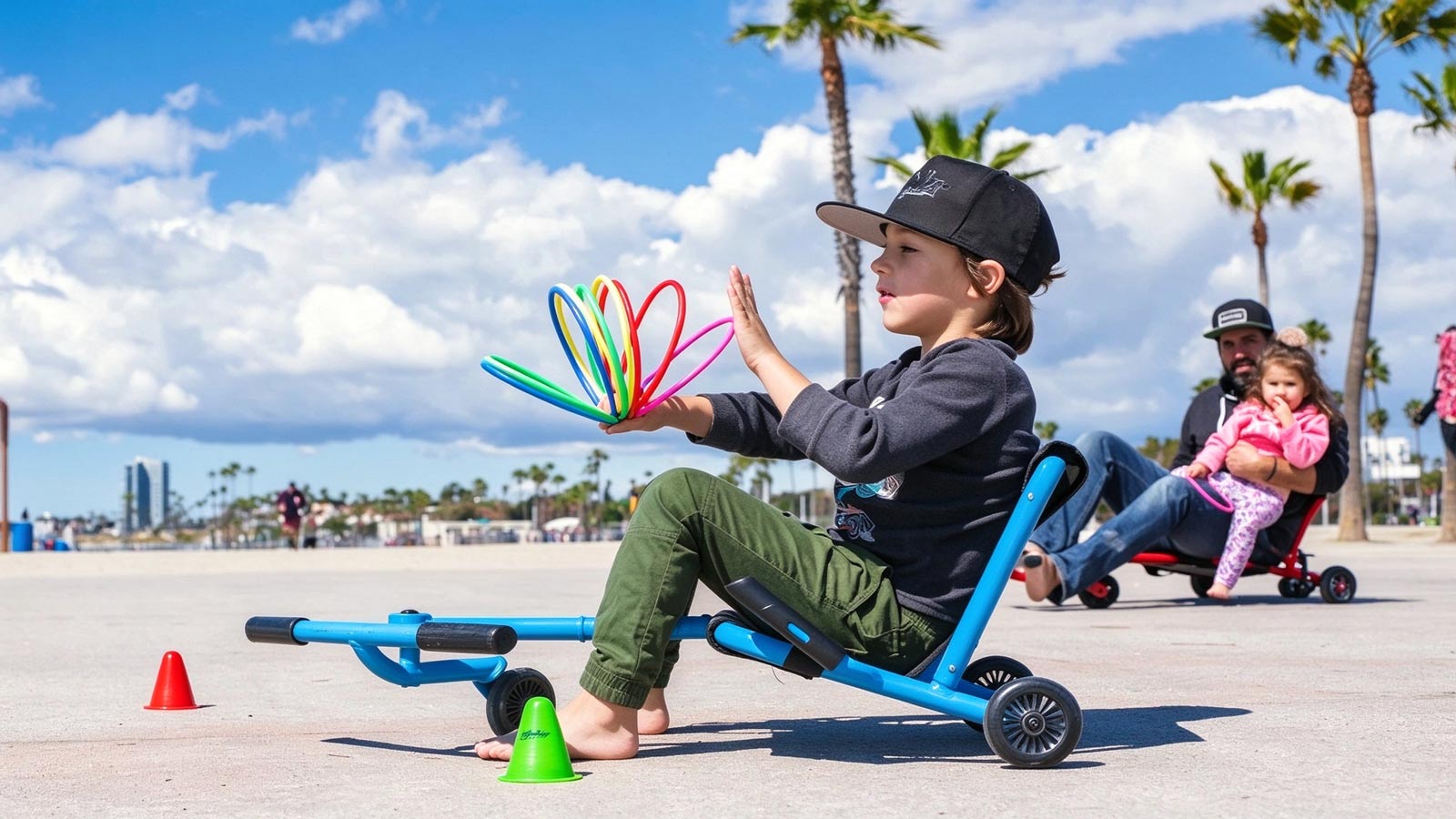
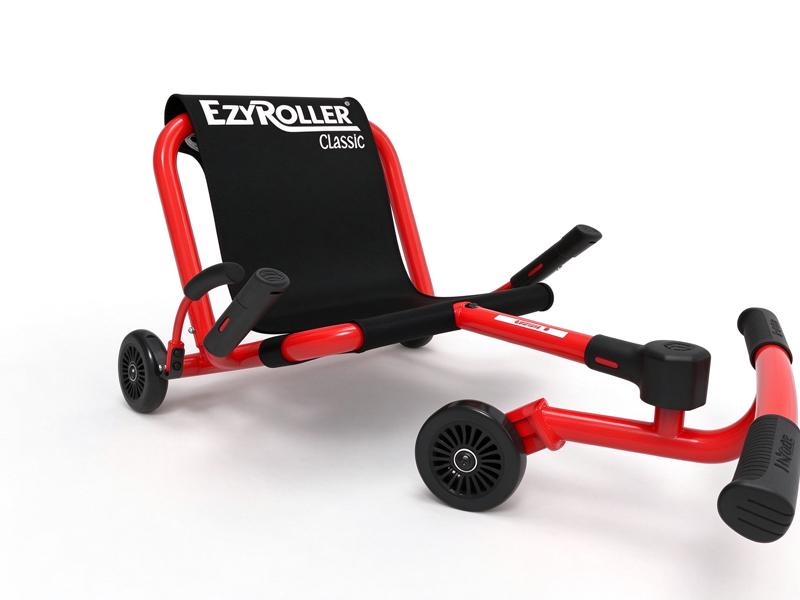
Outdoor stores usually sell speed or height. EzyRoller sells a motion — a low, sweeping, serpentine glide that children describe as flying and physiotherapists recognize as the most efficient full-body workout in the toy aisle. The Auckland company's ride-on looks like a luge that lost its hill: a steel-tube frame, a sling seat inches off the pavement, two wheels in front and one behind, and no pedals, no chain, no battery anywhere on it. Propulsion comes from cambering — the rider alternately pressing their feet left and right against the front bar, converting a wiggle into forward momentum exactly the way a snake converts lateral undulation into straight-line speed. You sit. You sway. The driveway turns into a river. Founded twenty years ago by parents who watched their two-year-old ignite on a rival's ride-on and decided they could engineer something better, the company has since shipped hundreds of thousands of units through a single Shopify storefront and a physical-education channel that treats it as standard equipment. I went through the physics, the growth rods, and the wheel ledger. Here is the store across its dimensions.
A Two-Year-Old on a Driveway Started This Company
The origin is told on the store's own about page in the founders' voice, and it deserves retelling. Twenty years ago, their two-year-old son climbed onto a small ride-on toy and cruised the driveway in a continuous curving motion, hands pushing side to side on a bar — no chain, no battery, pure cambering. The parents were captivated, then critical: every ride-on using that ingenious motion was designed for tiny children, with seats and frames that would not survive a determined eight-year-old, let alone appeal to one. They spent a solid year testing and tinkering, each prototype put through its paces by what they call the toughest toy critics in the world — their three boys, the neighbors' kids, their friends, and their friends' friends, all riding up and down the driveway. The flagship that emerged — the EzyRoller Classic — won a toy-industry innovation award at launch in 2007 and has barely changed since, which its makers cite as proof the driveway testing worked the first time.
The Physics of Cambering, Explained Without a Single Equation
The mechanism is the product's entire personality. Cambering — also called snakeboard or RipStik motion — translates lateral force into forward roll through a geometry trick: each sideways push angles the front wheels against the ground, and the road pushes back diagonally, forward as well as sideways. Alternate the pushes and the diagonal components add while the lateral components cancel. The result is a vehicle that accelerates from a standstill with no pedaling, carves turns by leaning, and stops with a hand brake on the equipped models. Reviewers have used the same images for two decades: a fish through water, a snake on land, a luge with an engine made of legs. The low center of gravity makes it nearly impossible to tip, which is why the product moved from toy stores into physical-education catalogs — the national health-and-PE association's marketplace lists it alongside equipment sold to school districts — and why summer camps buy them by the dozen.
Extension Rods Turn One Purchase Into a Decade
The growth story is the purchase argument. Every Classic ships with interchangeable extension rods that lengthen the foot bar through three positions — effectively small, medium, and large riders on one frame. The rated envelope runs from about age four to fourteen, or up to roughly five feet tall and one hundred fifty-four pounds; the company's larger Pro-X and Drifter Pro-X models extend the promise to teenagers and adults at two hundred pounds, with the Drifter's freewheeling rear wheel enabling controlled slides. Parents consistently describe the economics in the reviews: a single purchase serving a four-year-old and a twelve-year-old is a rarity in a category where most ride-ons are outgrown inside two birthdays. The steel tube frame, the welded joints, and the deliberately overbuilt seat are engineered for what the company calls the most rigorous play — preschool fleets and summer-camp fleets being the testing regime most brands never face.
From Auckland Driveways to American Gym Classrooms
The distribution arc mirrors the product's ambition. Born in New Zealand, where the company still maintains its home operation, EzyRoller built its American presence through specialty toy stores — an early trade profile quoted a New Jersey retailer calling it the most innovative ride-on she stocked — and then through the institutional channel that most toy companies never reach: physical-education suppliers, school-fundraising catalogs, and adaptive-PE programs that value its stability and hands-free posture. The direct storefront now anchors the brand, with Amazon carrying the Classic at a 4.7-star average across more than seven thousand reviews — a review mass most ride-on categories never accumulate.
The Wheel Ledger: Twenty-Dollar Replacements and Thin Tires
The honest ledger concentrates on consumables. The wheels are the wear point, and the unprompted record is specific: replacement wheels cost twenty dollars each, and at least one long-term owner on an Australian review platform ran the arithmetic and declared the replacement cost unsustainable — a complaint aimed not at the wheels' existence but at the price of keeping a heavily used machine rolling. The tires are narrow by design, which trades durability for the low rolling resistance that makes the cambering glide feel effortless, and they wear fastest on rough asphalt and concrete. The honest guidance the community converges on: the Classic will outlast three cheaper ride-ons, but it is not a zero-maintenance heirloom — budget for wheels the way you budget for skateboard decks.
Fifty States Minus Two, and No Canada at All
The shipping map is the store's sharpest edge. The policy pages restrict orders to the forty-eight contiguous United States — no Alaska, no Hawaii, no Puerto Rico, and no Canada, the last of which surprises northern buyers who discover the brand through its New Zealand identity. The restriction is logistical rather than ideological, but it belongs in every buying decision for anyone outside the lower forty-eight, who must route through the separate New Zealand operation or international resellers.
What the Review Record Says After Nineteen Years
The accumulated verdict across nearly two decades of coverage is remarkably stable. Professional and parent reviewers repeat the same findings: assembly takes minutes, the learning curve is measured in seconds, the motion hooks children who ignore bicycles, and the build quality justifies the price premium over the licensed-character ride-ons at the big-box store. The National Parenting Center's seal praised the ten-minute assembly and the sturdiness; trade coverage at launch highlighted the awe-inspiring physics. The criticisms repeat with equal discipline: the wheel economics above, the deliberate absence of pedals meaning it will never outrun a bicycle on open pavement, and the seat ergonomics for tall adults on the Pro models being an acquired taste. Nothing in the file suggests drift — the same toy, the same reviews, year after year.
Buy the Classic, Order Spare Wheels, Watch Them Grow
EzyRoller is the rare outdoor store whose product philosophy fits on a bumper sticker: build one motion so well that a two-year-old and a twelve-year-old fight over it. Buy the Classic for ages four to fourteen with the extension rods doing the growing, the Mini for the two-to-five crowd, and the Drifter Pro-X if an adult in the household intends to participate seriously; add spare wheels to the first order and accept the forty-eight-state map as a fact of the brand's geography. The company has spent twenty years proving that the most durable feature a toy can have is a motion children never outgrow — and that the joy business, as it calls itself, is the one worth being in.