Lumin, steady state: the korean formula and the billing clock
Official homepage: https://luminskin.com
Men's grooming stores usually sell a routine. Lumin sells a conversion: take the free trial kit, feel the charcoal cleanser, and — if the funnel works as designed — never think about buying skincare again because a refill arrives every two months before you notice anything is empty. The Los Angeles company, founded in 2018 by two friends who learned skincare from one's sister's Korean beauty shelf, built the model that the modern men's category runs on: quiz-driven personalization, a near-free trial, a subscription that converts half its takers, and formulation credibility imported from Seoul. It scaled with venture backing into forty countries and hundreds of thousands of customers within its first year, earned Rolling Stone's best-overall moisturizer twice, and landed on Target and Walmart shelves — and it also collected fourteen and a half thousand Trustpilot reviews at a 3.3 average, dominated by one word: enrolled. I went through the Korean lineage, the trial math, and the guarantee's fine print. Here is the store across its dimensions.
A Sister's Skincare Shelf and Two Guy Friends
The origin is charmingly unauthorized. Richard Hong struggled with acne and aging signs and had no idea where to start; his sister, steeped in Korean beauty, built him a personalized regimen from her products. His friends saw his skin and wanted in. Hong and Darwish Gani founded Lumin that summer of 2018 under the Pangaea Holdings umbrella — a brand group built for internationally flavored direct-to-consumer plays — with formulas developed alongside skincare experts in South Korea. The founding pitch was educational as much as cosmetic: existing brands were failing to teach men what skincare even was, and a man cannot ask for eye cream for dark circles he does not know he is allowed to treat. Gani's framing stuck: skincare as an extension of the gym-and-nutrition self-improvement habit, priced fairly.
Formulated in Seoul, Marketed to the Uninitiated
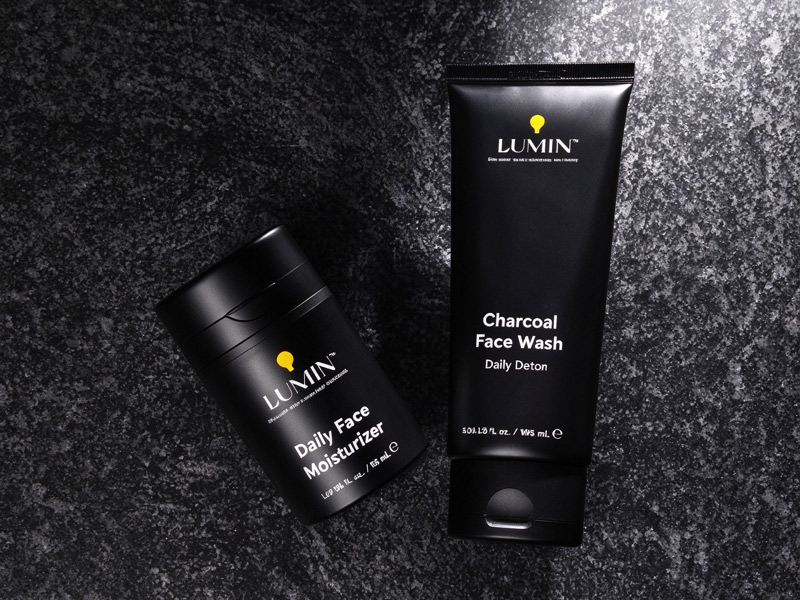
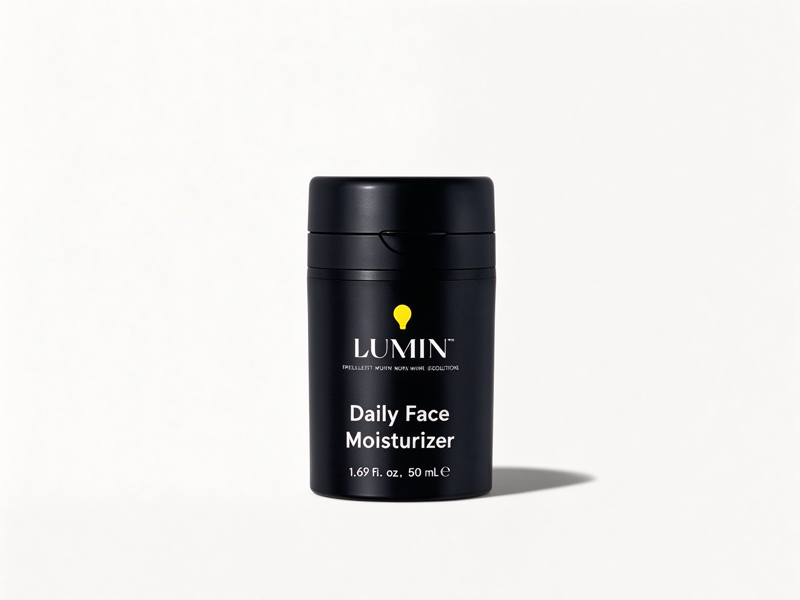
The product physics carry genuine K-beauty DNA, and independent deep-dives confirm the formulations are more sophisticated than the marketing implies. The charcoal cleanser runs an amino-acid surfactant base — genuinely gentler than the harsh sulfate charcoal washes it competes with — while the moisturizer leans on niacinamide, ginger root, licorice extract, and meadowfoam seed oil, and the anti-fatigue eye patches deploy a triple-hyaluronic-acid stack with caffeine, centella, and ectoin, ingredients rarely seen at men's-market prices. One detailed ingredient review flags the trade: the formulas lean on essential oils for the signature scent, which is a point against the truly sensitive-skinned, and the verdict for that cohort is a basic fragrance-free alternative. The black-and-yellow packaging, the moonwalk-adjacent campaign imagery, and the step-by-step simplicity remain aimed squarely at the beginner — which is, after all, the point.
The Free Trial That Converts Half Its Takers
The funnel mechanics are unusually well documented because the founders discuss them openly. Eighty percent of customers arrive as subscribers; roughly half of everyone who takes the free trial converts to the paid plan; one-time purchasers are the smallest segment of the base. The trial asks about seven dollars for shipping, the quiz runs about fourteen questions, and thirty days later the first full-size box ships — a shipment the confirmation email describes as three times the trial size, on a bimonthly rhythm, cancellable before the next charge. Refills carry twenty percent off; the hair and body lines, added in 2020 with ten-to-fifteen-dollar keratin shampoos and aloe body washes, followed the same bimonthly logic. Backers include Gradient Ventures, Base10 Partners, and the founders of Thrive Market, TicketMonster, and BarkBox — the consumer-brand pedigree shows in every screen of the funnel.
Rolling Stone's Best Overall, Twice Over
The editorial ceiling is real. Rolling Stone's product editors named the Ultra-Hydrating Moisturizing Balm the best men's moisturizer in their 2020 essentials and again in their 2023 update — meadowfoam-seed oil for barrier repair, apple extract for vitamin C, a finish with no white streaks — with the backstory noting the Korean and Japanese formulation expertise. Vanity Fair and Vogue have carried the brand; The Modest Man called it the next generation of men's skin and hair care; the dermatology-review corner of the internet gives the ingredient decks genuine respect. The storefront's testimonial wall runs seven countries deep — a skeptic converted in Edmonton, a Colorado convert reporting that the cleanser strips oil completely while the moisturizer replaces exactly what he needs.
Fourteen Thousand Reviews and a Three-Point-Three
The unprompted ledger is the industry's standard split, at scale. The positive column is product-led: skin clearing, pores refining, texture evening, with customer service singled out by name — a March 2026 reviewer describes an agent named Rachel refunding a cancelled subscription seventy-seven minutes after drop-off, first class every step. The negative column is billing-led and convergent across years: the free trial that enrolled a buyer who insists he never subscribed; an eighty-dollar charge the month after a trial kit; a cancellation emailed ten minutes after renewal refused because the order had processed; a refusal that does not count as a return; no prepaid label provided; no reminder before the refill ships; overpriced creams that do not match ten-pound high-street alternatives. The company replies to nearly every entry with the same unbending paragraph — terms presented multiple times, a mandatory checkbox, full disclosure before payment — which is factually responsive and experientially beside the point, and occasionally catches the wrong company entirely, as when a scar-stick complaint received a polite note that Lumin sells no such product.
The Guarantee That Skips the Trial You Started With
The written policy resolves the tension in the company's favor. The thirty-day satisfaction guarantee refunds the product cost only — excluding shipping, customs, and any additional fees — and it applies exclusively to first-time full-size orders. Free-trial orders and their renewals are explicitly ineligible: the exact orders through which the funnel acquires nearly all of its subscribers sit outside the guarantee the marketing implies. Unopened orders may be shipped back to a warehouse for a full refund; refused or returned-to-sender parcels earn only a partial one; cancellation is self-service and must precede the next charge, which is the entire mechanism the complaint file revolves around. The thirty-day clock, the bimonthly rhythm, and the first-time-only guarantee form a policy triangle designed for conversion rather than comfort.
Essential Oils and the Sensitive-Skin Caveat
The product-side caveat is specific: the aromatic experience is built partly on essential oils, which the detailed reviews advise against for rosacea, eczema, or essential-oil-sensitive buyers — a meaningful share of the men most likely to be shopping for gentle skincare in the first place. For everyone else, the actives are competent, the textures are light, and the two-step dynamic duo genuinely is two steps, which for the target beginner is the entire selling point.
Try the Trial, Cancel Early, Praise the Charcoal
Lumin is the grooming store that industrialized the Korean-formula-meets-subscription-funnel playbook: real Seoul formulation credibility, a Rolling Stone-certified moisturizer, venture-scale growth, and a billing clock that the record shows too many customers discover after it chimes. Try the trial — the charcoal cleanser earns its reputation; cancel on day twenty whether you love it or not, because rejoining is one click and unwinding a processed refill is an email chain; buy single products if the rhythm makes you nervous; and treat the essential-oil scent as a dealbreaker if your skin already flinches at fragranced anything. The formula is the real thing. The funnel is, too.