Leaf's open-blade counter: skincare-first shaves, magnetic loads, monstera refill boxes, dermaplaner cousins too
Official homepage: https://leafshave.com
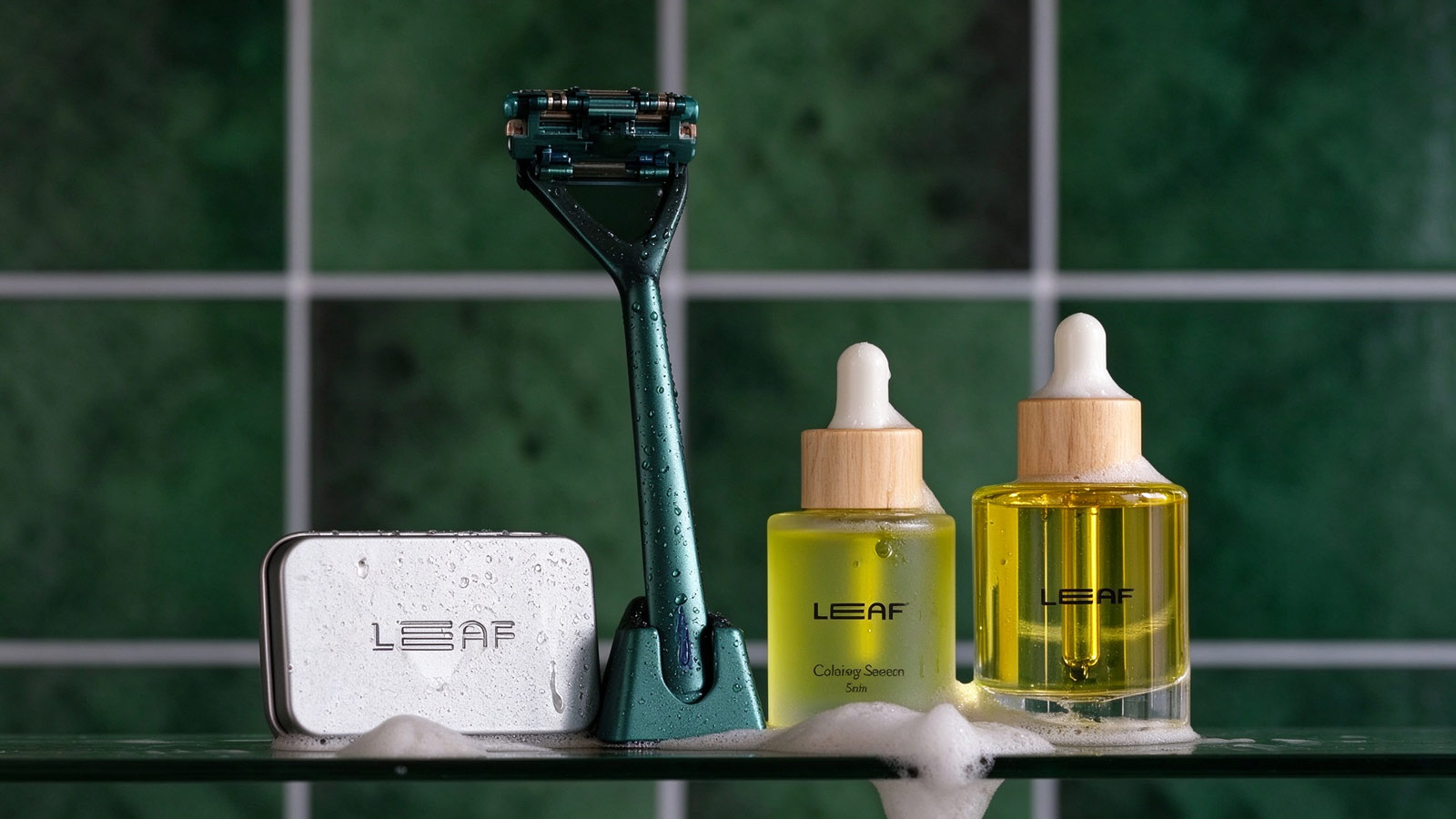
Men's-grooming stores usually sell the razor as hardware — a handle, a cartridge, a subscription. Leaf sells the razor as skincare, and organizes the entire store around the reordering: the homepage's thesis is printed in three steps — prepare your razor, your skin comes first, enjoy your shave — with the skin, not the blade, holding the middle position. I browsed with a decade of cartridge fatigue and a curiosity about why anyone would go back to loading their own blades. Here is the counter, decision by decision.
Door Policy: Skin Before Steel
The store's founding reframe is a single phrase — shaving as skincare — printed above the product grid where a brand would hang a slogan. Reframing the category away from hardware toward dermis targets the customer treating his face as a finish line: the razor stops being the product and becomes the tool, the shave oil and calming serum become the products, and the purchase is judged by how the skin feels an hour later rather than how the handle looks on the sink. The reorder, not the handle, is the business — and the store says so before naming a single blade.
Engineering Wearing a Shave
The flagship's product page reads like a spec sheet — a pivoting head that follows contours without surrendering control, individually guarded blades loaded magnetically, prep fins that exfoliate and lift hair before the edge arrives, a deep-groove grip with an optional silicone sleeve. Publishing the engineering as a checklist addresses the cartridge convert's fear of the open blade: every fear — nicks, pressure, control — is answered by a named mechanism, and the mechanisms are named like features rather than apologies. The razor does not ask for trust; it itemizes the reasons, and the list is the sales pitch.

A Second Door Called Branch
Below the flagship sits a newer, smaller razor — a compact all-metal head tuned for tight spots, positioned as the entry point rather than a budget compromise. Running a two-razor ladder targets the hesitant: the flagship claims the face, the branch claims the beginner and the traveler, and both share the same blade ecosystem, so the customer who starts small graduates into the same refill economy rather than defecting to a rival. The second razor is a bridge, not a discount — and the bridge leads to the same refill bank.
A Dermaplaner Across the Aisle
The catalog crosses the aisle — a facial dermaplaner built on the same steel philosophy, with its own zero-waste refills in the same botanical illustration. Extending into women's facial care follows the blade rather than the gender: the customer who buys the flagship for her partner finds the same engineering for her own routine, and the media wall — a men's health title beside a women's fashion glossy — quietly confirms the dual address. One factory, two aisles, zero apology, and a household that buys twice.

Refills in Botanical Boxes
The consumables arrive in fifty-count boxes wrapped in monstera leaves, the blades cheap enough to change weekly without guilt. Packaging refills as design objects rather than commodities targets the subscription-fatigued: the box is too handsome to hide, the count generous enough to feel stocked rather than subscribed, and the zero-waste claim gives the disposal a destination. The refill, in this store, is not a chore; it is the brand arriving in the mail again, prettier than the appliance it feeds.
A Media Wall That Crosses Aisles
The press logos run from a men's health magazine to a women's fashion title to a business paper's buying column — six outlets with nothing in common except that they all covered the razor. Stacking cross-demographic proof targets the household purchaser rather than the end user: whoever holds the card — wife, partner, self — finds a publication she recognizes, and the breadth argues the brand has survived multiple juries. The wall sells to the buyer, not the shaver, and the buyer is who the store needs.
Three Steps That Teach the Conversion
The homepage closes with a numbered lesson — prepare, protect, enjoy — each step linked to its shelf. Ending with pedagogy rather than promotion targets the lifetime cartridge user who has never touched an open blade: the steps demystify the loading, the prep, the technique, and by the third step the razor has stopped being intimidating and started being a skill worth learning. The lesson is the conversion funnel, and the store teaches it in three sentences before asking for a dollar.