Kuvings' four-liter hopper: nine-hundred-six patents, twenty-year motors, award timelines, counterfeit walls, since 1978
Official homepage: https://kuvingsusa.com
Juicer stores usually sell you a lifestyle — green juice on marble counters, celery stalks arranged like sculpture. Kuvings sells you a factory. The storefront's about page reads like a corporate registry, forty-seven years of manufacturing history, over nine hundred registered intellectual property rights across ninety-five countries, exports to ninety-two nations — and the product line follows the pedigree: heavy vertical juicers with four-liter hoppers and twenty-year motor warranties, built in the company's own Korean plants. I browsed with a drawer of dead juicers and a respect for any brand that leads with its patent count. Here is the counter, decision by decision.
Door Policy: A Name Built From Two Languages
The brand name is a merger — the German word for kitchen joined to the idea of living well — and the store tells the etymology before the price. Explaining the word first borrows German engineering credibility for a Korean manufacturer: the customer who cannot pronounce the name learns it was designed as a philosophy, not a convenience, and the forty-seven-year corporate history underneath gives the borrowed credibility somewhere to land. The name is the thesis; the factory is the proof.
The Patent Count on the Front Page
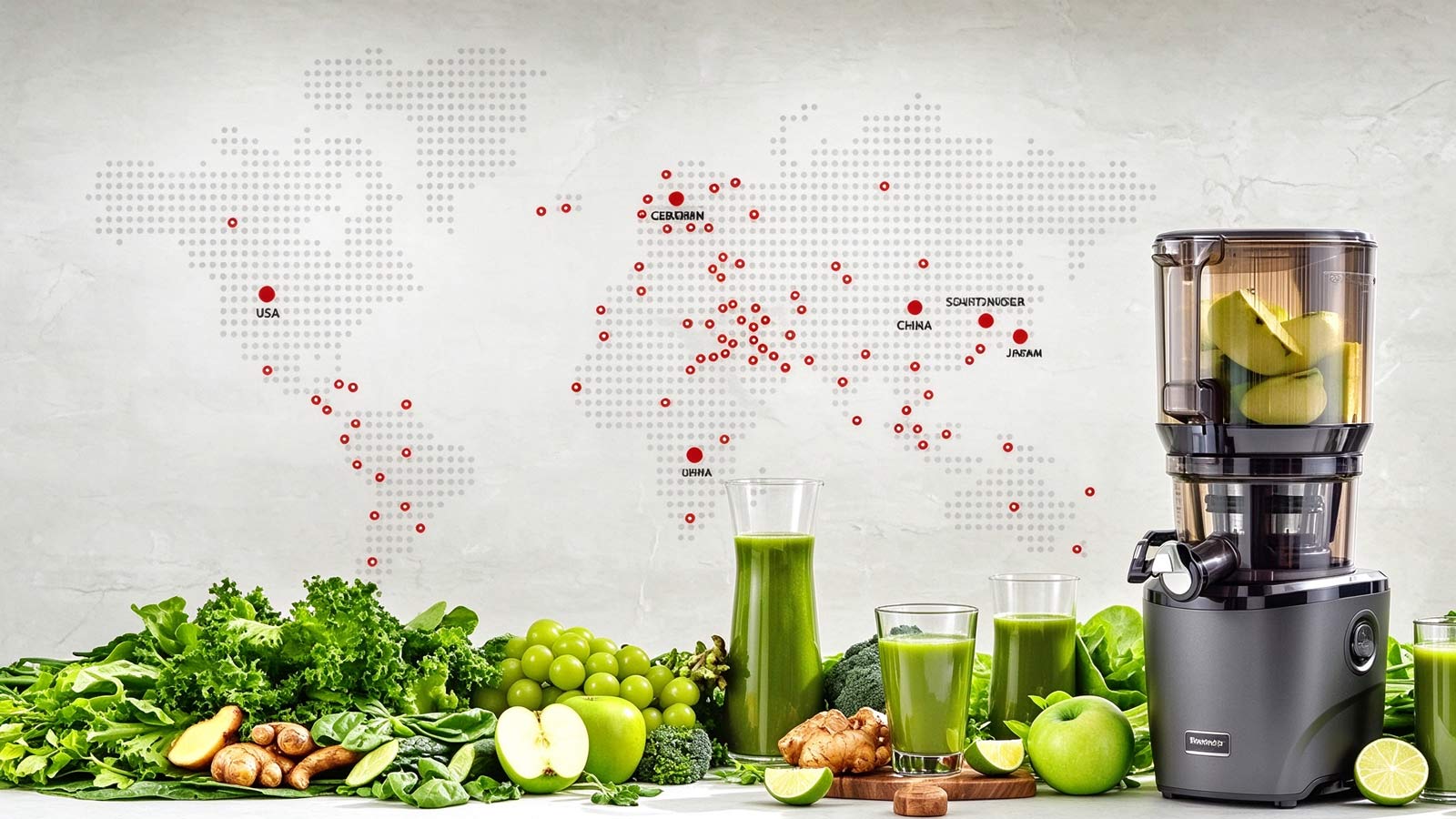
Among the first figures on the about page sits a number most brands would bury in an investor deck — over nine hundred patents, utility models, designs, and trademarks across ninety-five countries, as of this year. Publishing the intellectual property count as marketing copy answers the resemblance question before it is asked: the juicer market is crowded with lookalikes, and the wall of numbers says the hopper, the auger geometry, the whole slow press were patented here first and defended for decades. The count is a fence, and the store builds it in public.

Four Liters of Hands-Off
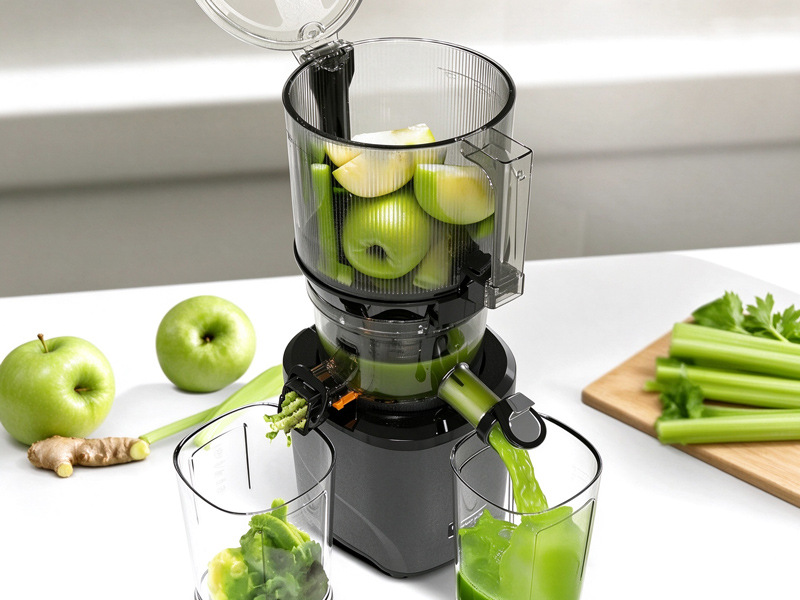
The flagship's defining feature is capacity — a hopper the store describes as the world's largest, four liters, so whole produce drops in and the machine works unattended until the batch is done. Building the biggest hopper in the category is a time-back decision aimed at the serious juicer: the hobbyist feeds piece by piece, the family batching a week's juice loads once and walks away, and hands-off operation quietly separates the machine from every competitor whose appliance demands a babysitter. The hopper is the feature rivals cannot copy without admitting where it came from.
An Award Timeline, Not a Wall
The about page files design credentials as a dated ledger — a kitchen innovation award this year, a red dot the year before, good housekeeping citations two years back, stretching to the company's first international prizes. Keeping awards as a timeline rather than a logo wall proves the design pipeline is still running: the customer can watch the streak accumulate year over year, and one German kitchen award repeating across multiple years out-argues any single trophy. The ledger is the argument; the trophies are exhibits.
The Twenty-Year Motor Clause
Beneath the flagship's price sits a warranty that reads like a typo — twenty years on the motor. Staking a motor across two decades prices the machine by decade rather than by year: the hesitant buyer is invited to divide the premium by twenty, the number claims the motor will outlive the kitchen trends that sold it, and the clause converts a purchase into the last juicer decision of her adult life. A warranty this long is not a service policy; it is a statement of intent, printed in the fine print where statements of intent are rarely found.
The Counterfeit Roster
The store keeps a page instructing customers to buy only from the official site or named authorized dealers — a public inventory of legitimate channels for the United States and Canada. Maintaining the anti-counterfeit roster protects the channel and doubles as trust copy: a brand worried enough about knockoffs to publish a roster is telling the careful buyer the gray market exists and the company knows exactly where. The page also quietly explains why the direct store's price is the real price, and why the marketplace listing below it is not.
Parts, Fresh Drops, and the Long Calendar
The parts collection lists citrus attachments with hundreds of reviews, and the homepage announces fresh drops — new models, updated chassis, the company's first dehydrators — on a rolling schedule. Running parts and new categories side by side serves both customer types from the same shelf: the five-year owner keeps finding attachments that make her machine new, while the first-time visitor sees a brand still shipping firsts after nearly fifty years. Longevity and novelty, kept in the same aisle, argue for each other.