Kan jam's backboard: trash-can genesis, league-licensed buckets, dealer doors, one flying disc forever

Official homepage: https://www.kanjam.com
Outdoor-game stores usually widen until they sell every lawn game invented. Kan Jam narrowed to one — a flying disc, two plastic cans, and the eternal argument over whether the deflection counted — and then spent two decades defending that single idea against every trend the category produced. I browsed with a July afternoon available and a weakness for games whose rules fit on an index card. Here is the counter, decision by decision.
Door Policy: One Game, Done Officially
The homepage does not open with a catalog grid; it opens with the classic set — black cans, yellow disc — and the claim that this is the number one outdoor party game, asserted without hedging. Leading with a single game rather than a range behaves like a monopoly: when the customer searches for this game, there is no comparison shopping because the brand owns the name, the equipment, and the rules in the public's mind. The store sells the definitive version of the thing itself, and the thing itself is the entire inventory.
A Basement Origin Worn Proudly
The about page dates the company to 2006 and admits the first units were assembled late at night in the founders' basements — a detail most brands would sand away, kept here front and center. Publishing the humble origin aims at the game's actual spirit: Kan Jam was never a boardroom invention but a backyard escalation of throwing discs at garbage cans, and the basement confession tells the buyer the people selling the game still remember why it is fun. Twenty years on, the origin story is the marketing department.
The License Rack as Tailgate Strategy
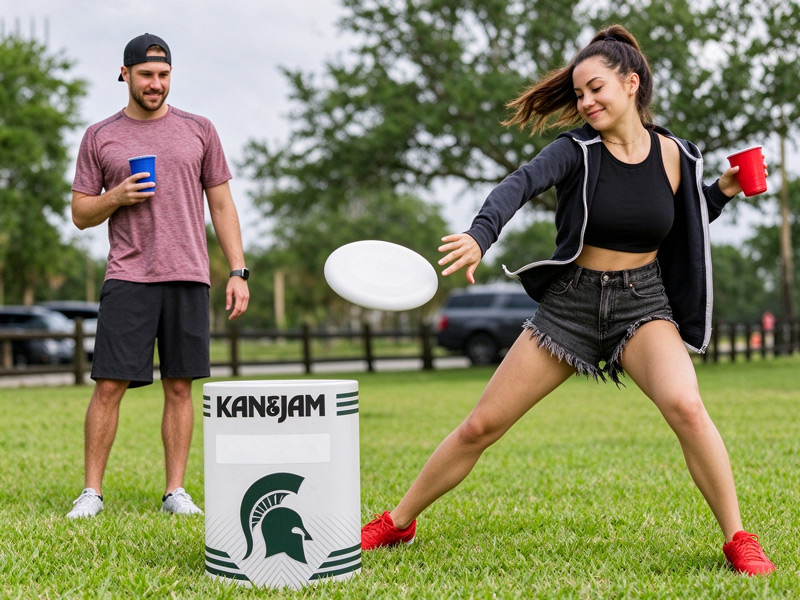
Scrolled past the classic set sits the store's most distinctive shelf — officially licensed editions bearing the colors and marks of the major leagues and college programs, so a fan can buy the game wearing her team's identity. Licensing the cans by team converts a generic lawn game into a fan object: the tailgate is the game's natural habitat, the tailgate is tribal, and a can wearing the alma mater's logo out-sells a plain can to exactly the audience most likely to play. The license is the upsell, and the tailgate is the showroom.
Dealer Doors Instead of a Direct Moat
The product cards carry two buttons — one for the big-box chain, one for the everything store — rather than a single add-to-cart. Routing shoppers to retail partners from the brand's own homepage trades margin for ubiquity and concedes the checkout in exchange for the aisle: the site works as the game's official showroom, the mass retailers as its fulfillment arm. The store sells the game by telling you where to buy it, which no DTC playbook would recommend and no lawn-game brand could argue with.
Born in the USA, Tested on Lawns
The about page stamps a distressed flag graphic with the founding year and the declaration that products are designed, tested, and many manufactured in the United States. Claiming domestic provenance aims at the gift buyer: lawn games live hard lives — hit by discs, sat on by coolers, left in rain — and American manufacture suggests the cans survive the season, which for a product whose reputation is durability is the only claim that matters. The flag is a warranty.
Variants That Stay on Theme
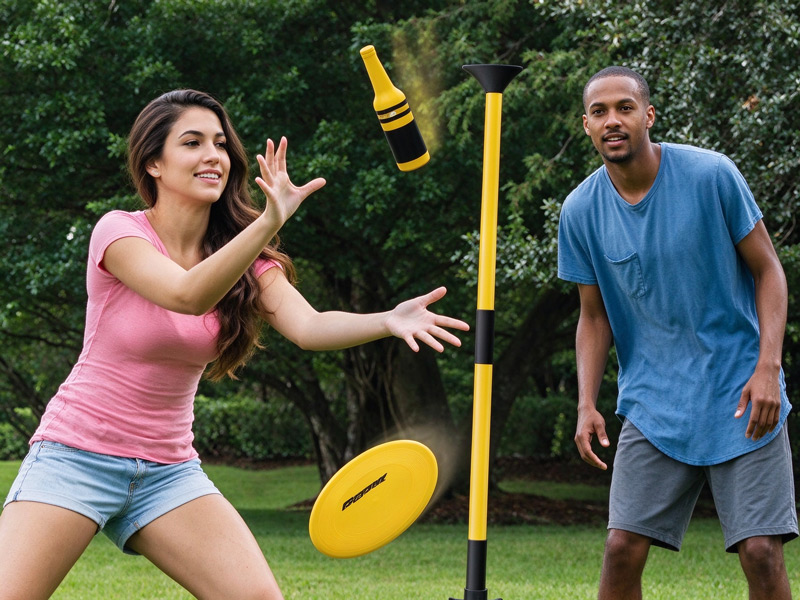
The product family extends without leaving the disc — a travel set that packs flat, a bottle-smashing target game, a disc-golf net for backyard practice. Expanding by variation rather than by new games keeps the brand's two constants — the disc and the target — and tests them in a new setting: the beach bag, the picnic table, the putting green. The customer who owns the classic set understands the variants instantly, which is the entire point of a brand extension. The disc is the through-line; the can is the stage.
The Disc Remains Constant
Underneath the variants sits the discipline: one yellow disc, the same weight and grip, sold across every set the company makes. Standardizing the projectile across the entire catalog doubles as quality control and branding — the disc is the one component every player touches on every throw, and keeping it identical across twenty years means the backyard champion's muscle memory transfers to the tailgate set, the travel set, and the licensed set without adjustment. The game survives because the disc never changes, and the store sells twenty years of the same throw.