Is lovevery worth the hype? a montessori toy store reviewed across every dimension
Official homepage: https://lovevery.com
Educational-toy stores usually organize by subject — science here, art there, a coding corner somewhere in the back. Lovevery organizes by something the rest of the industry largely ignores: the week your child happens to be in. Founded by Jessica Rolph — who previously built Happy Family Organics — and Roderick Morris, and launched from Boise, Idaho in 2017, Lovevery is a Certified B Corporation that has served more than a million families, passed $1 billion in lifetime sales in 2025, and become the name parents drop when they want "Montessori" without the research degree. I spent time across the storefront, its pricing tables, and its review ecosystem. Here is the store across every dimension that matters.
The Shelf Philosophy: Stages, Not Subjects
The storefront's core bet is that a child's developmental stage matters more than any product category. Its flagship Play Kits program covers birth to age five, with each kit mapped to a narrow developmental window — some kits address a span of just two months, because the company argues (with neurodevelopment research behind it) that a seven-month-old and a ten-month-old are effectively different customers. Every kit combines stage-based playthings, a children's book, and a research-backed play guide explaining not just what to do but what the behavior means. The result reads less like a toy catalog and more like a curriculum you subscribe to — which is either exactly what an exhausted new parent wants, or more structure than play needs, depending on your household.
What Lands in the Box: Materials and the Play Guide
A typical Play Kit carries seven to ten items, and the materials list reads like an eco-brand's wish sheet: FSC-certified wood, organic cotton, OEKO-TEX-certified fabrics, handcrafted felt, recycled paper, soy-based inks, water-based paints, and bio-based plastics, shipped in efficient packaging with carbon-neutral delivery. The build quality is a genuine differentiator — these are heirloom-grade materials rather than subscription-box filler, and the secondhand market confirms it: complete kits routinely resell for 50 to 70 percent of retail. The Play Gym, the company's first product and still its standalone bestseller, converts from a high-contrast newborn mat into a toddler play fort, which is the kind of lifespan most baby gear never approaches.
The Price of Certainty
Here is the dimension that decides everything. Play Kits run $80 to $120 per kit for younger stages and currently list at $132 per kit for the birth-to-five program, with a new kit arriving every two to three months depending on the child's stage. Over a full year that lands somewhere between $450 and $550 — real money for a toy budget, and roughly triple the per-item cost of mainstream equivalents from Hape or PlanToys. What you are paying for is curation, sequencing, and the play guides, not exotic materials; independent teardowns of the kits have repeatedly noted comparable build quality to premium standalone brands. The honest math: Lovevery is worth it if the decision fatigue it removes is your pain point, and poor value if you enjoy curating a shelf yourself.
Beyond the Subscription: The Flagship Shelf
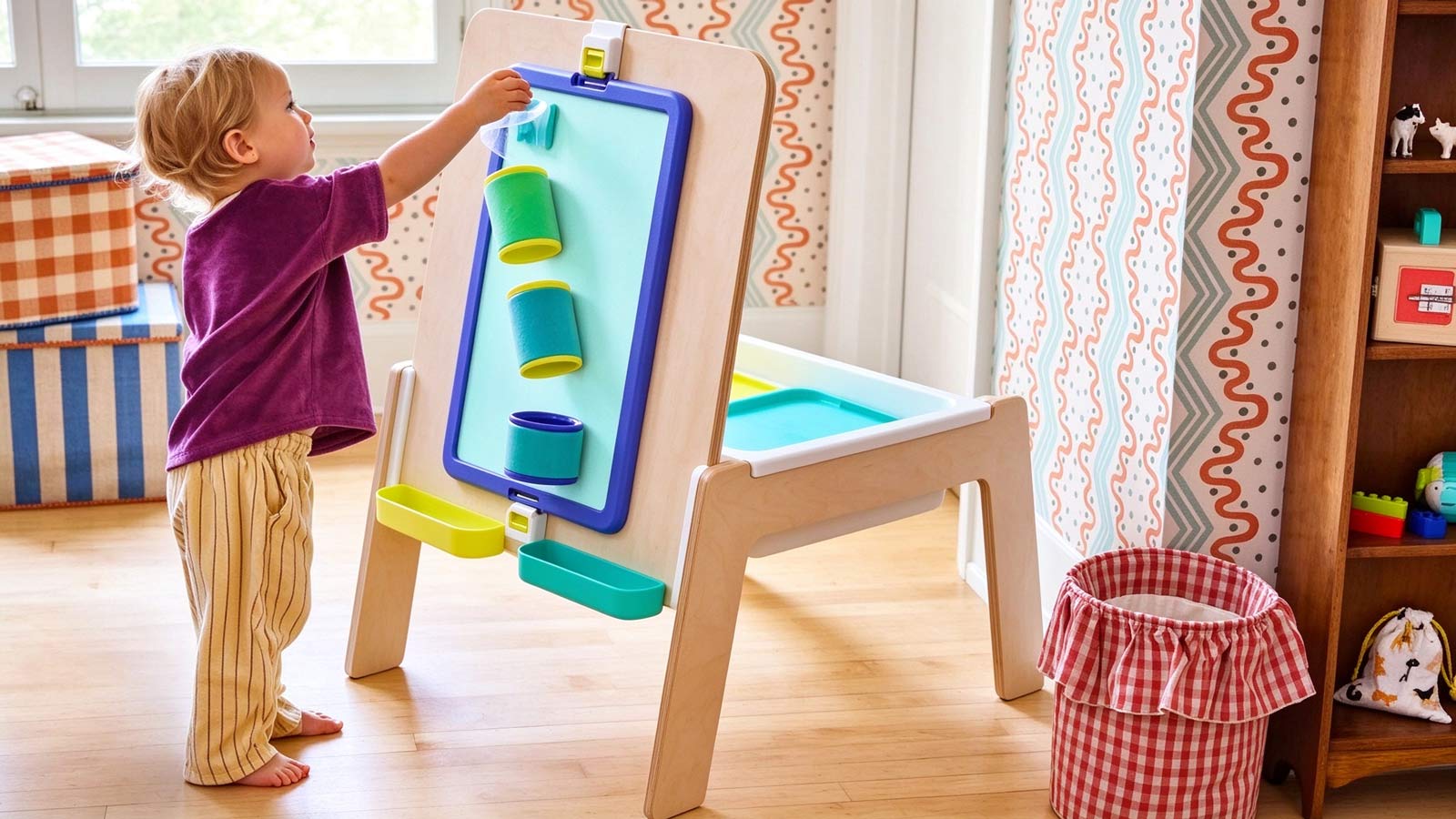
The subscription is the engine, but the storefront around it has quietly become a full early-learning department store. The Play Gym sits around $140 to $165. There is a Block Set, a $119 Music Set with real tuned instruments, the $29-per-delivery Early Reader Club book subscription, the Reading Skill Set at $155 per part or $420 complete, and — new for 2026 — a Math Skill Set proven in a six-week family study to lift early numeracy scores. Every Play Kit subscriber also gets the Lovevery App free, a resource the company values at $12 a month, extending the relationship between box deliveries.
The Website: Calm by Design
The store's design language matches its product philosophy: muted palettes, generous whitespace, no flashing countdown timers. Navigation runs stage-first, a quiz routes undecided parents to the right kit, and the education content — blog, podcast, milestone library — is woven into shopping rather than bolted on. Checkout is standard express-pay fare, and the subscription management page does allow skipping or cancelling a delivery without calling anyone.
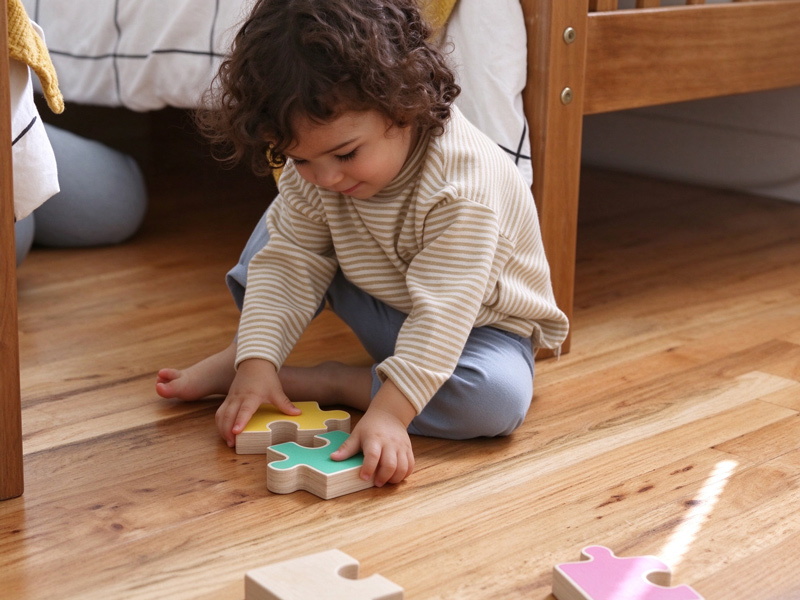
Shipping, Coverage, and the Delivery Reality
The flagship site serves the U.S. and Canada, while the brand operates dedicated storefronts across more than thirty global markets — Australia, Singapore, the U.K. and Europe among them. Delivery runs on the kit cadence rather than a fixed monthly rhythm, so "late" means relative to your child's age window, not the calendar. Independent reviews surface occasional carrier delays and missing-item reports, generally resolved with reshipments, but the volume of complaints is low against a base of more than 350,000 active subscribers, one in five of whom sits outside the United States.
Cancellation, Returns, and Support
Policy-wise, Lovevery checks the right boxes: a 30-day return window and the freedom to skip or cancel a kit from the account page. In practice, a consistent minority of reviewers describe cancellation friction and slow support responses — the gap between the policy page and the queue, familiar to any fast-scaling DTC brand. The pattern is common enough to plan around: cancel early in the billing window, keep the confirmation email, and the exit is clean.
Final Verdict
Lovevery is the most thoroughly engineered answer to a specific question — "what does my child need right now, and why?" — that educational toy retail has produced. You pay a steep premium for curation and certainty, delivered through genuinely sustainable materials and a stage-mapped system that holds up from birth to kindergarten. If your household values research-backed guidance and heirloom-grade goods, the hype holds.