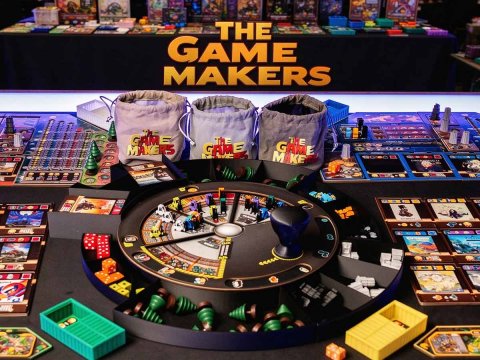
Inside darrington press's studio: daggerheart guilds, sponsored bards, free adventures, macmillan bridges worldwide
Official homepage: https://darringtonpress.com
Board-game stores usually open on their best seller. Darrington Press opens on its programming — the homepage when I visited was less a shop than a studio lot, carrying Q&As with sponsored actual-play troupes, announcements of a new dark-fantasy miniseries, and countdowns to an expansion launch. I browsed as a viewer who has watched more hours of this company's shows than I have played its games, which turned out to be the point. Here is the counter, decision by decision.
Door Policy: The Show Is the Shelf
Most publishers treat actual play as marketing; this store treats it as the main aisle. The front page runs interviews with sponsored bards, episode announcements for mini-series, and countdowns to expansion launches — the games are present, but they arrive through the stories. Running the store as a studio backlot is a distribution decision built on an asset no competitor can copy: millions of viewers have already watched hundreds of hours of the flagship game played beautifully, so the product page's hardest job — showing the game in action — was finished years ago by the cast. The door sells what the audience has already seen.
One System, Layered Like a Franchise
The flagship role-playing game is merchandised like a universe: a core set with rulebook and nearly three hundred cards, a first expansion adding classes and transformation mechanics, and a wave of class packs — nine in the first series — that let a player buy her specific character's journey from level one to ten. Splitting a role-playing game into core, expansion, and class-pack tiers mirrors how television sells seasons and spin-offs: the core set is the premiere, the expansion is season two, each class pack is a character study, and every purchase doubles as a vote for which stories get funded next. The SKU ladder is the narrative ladder.

The Guild and the Map, Equal Doors
The navigation carries two doors — become a guild member, and locate a store — and together they describe the channel strategy. The Guild is the loyalty layer, the retail network is the physical layer, and a public store locator with open hours keeps local shops visibly inside the brand rather than beneath it. Treating game stores as guildhalls converts the hobby's entire infrastructure into the brand's delivery system, and the dual-door navigation announces that membership and retail are the same community seen from two sides.
Small Games Between Epics
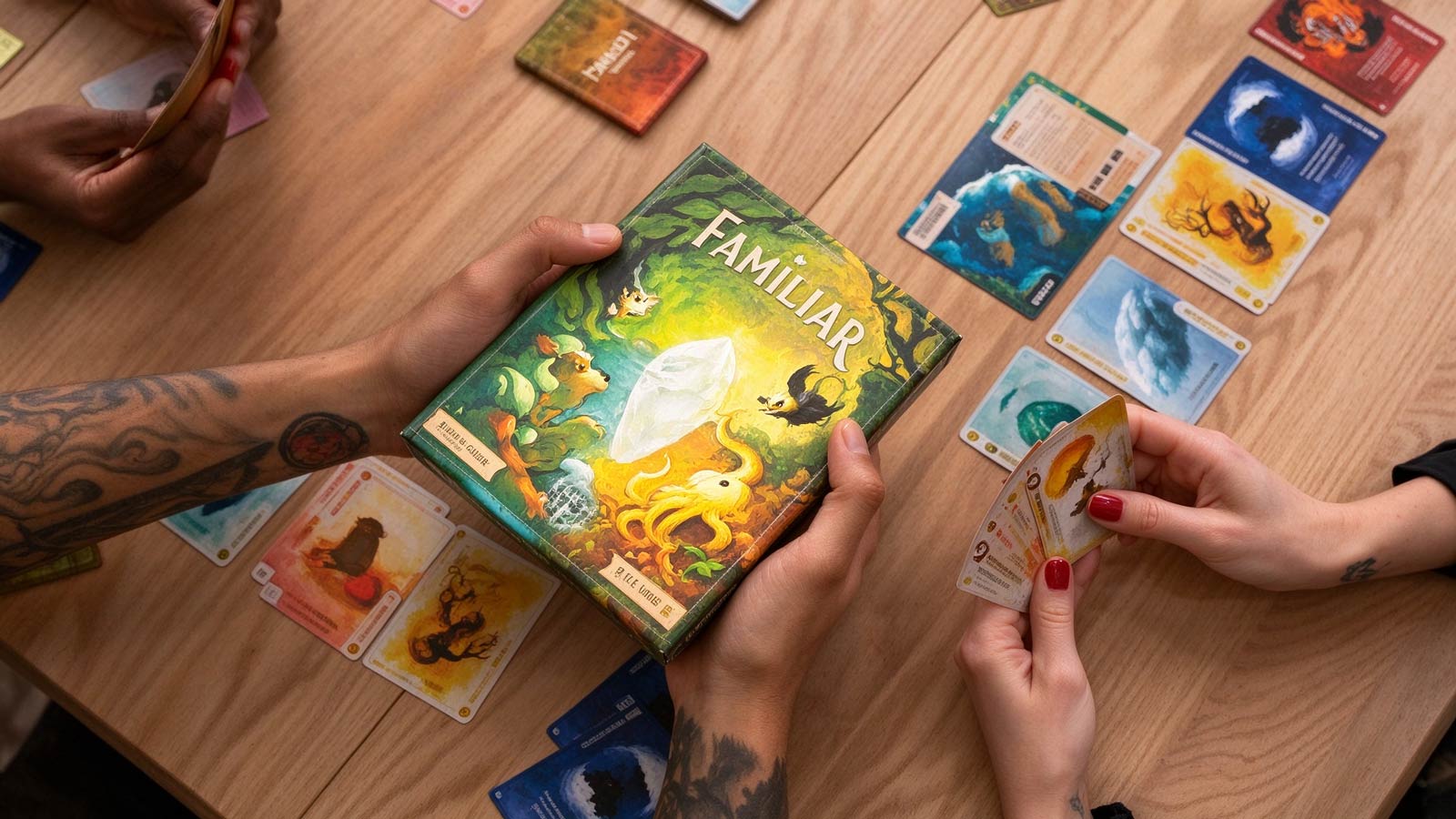
For all the flagship's weight, the catalog makes room for pocket-sized designs — a heist card game, a queen's-deadline social deduction title, a storytelling duel. Publishing small, quick games beside the epic system keeps the studio releasing between flagship launches: the audience trained to check in weekly for episodes gets a reason to check the store just as often, and a fifteen-dollar card game rides the same fandom as a sixty-dollar core set without pretending to be its equal. The small boxes are the weekly episodes between seasons.
Art Books as Canon
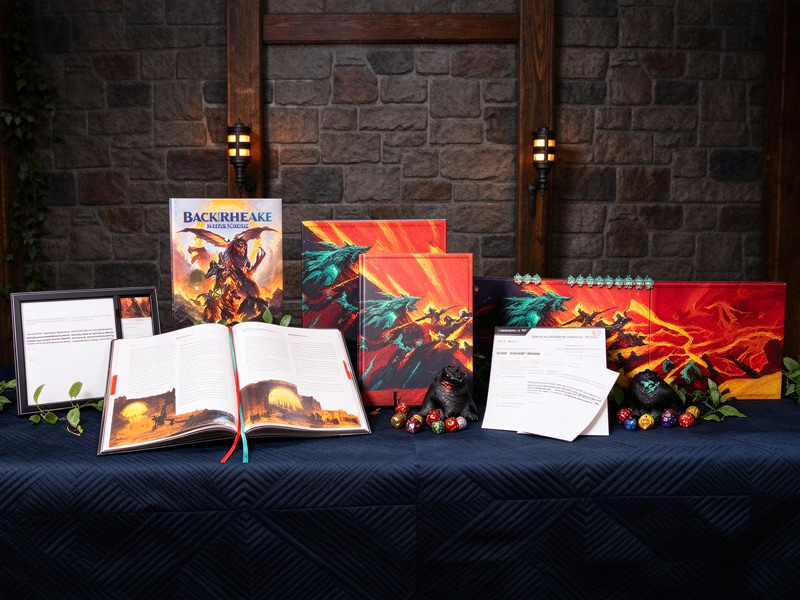
Two thick volumes of campaign-chronicle art sit in the catalog — the illustrated history of the company's most famous campaign. Publishing the backstory as an art book converts a decade of improvised play into a canonical artifact, and it sells to the segment of the audience that will never roll dice but has memorized the episodes. The art book is the merchandise of pure fandom, priced like a museum catalog and justified entirely by devotion — the product for the watcher, not the player.
Free Adventures as the Funnel
The company maintains a downloads page of free material — a printable adventure, fresh character sheets for the new classes, campaign-frame handouts. Giving away complete starter content targets the curious viewer rather than the committed gamer: the person who watched the miniseries and wondered whether she could play gets a zero-cost on-ramp, and the free adventure is calibrated so that finishing it requires exactly the cards in the core set. The funnel's end is printed on the funnel, and the downloads page is the widest door in the building.
The Macmillan Bridge to Everywhere Else
A distribution partnership with a major trade publisher carries the physical core set into ordinary bookstores, while limited editions and Guild-store exclusives stay within the company's own walls. Splitting the map this way — mass distribution for the base game, exclusivity for the devoted — lets the brand be everywhere and special at once, and it quietly explains why the store can afford to give its front page to bards instead of bestsellers. The mass channel sells the show's ticket; the direct channel sells the season pass.