Goldieblox store review: are girls' engineering toys worth it? what to check
Official homepage: https://goldieblox.com
Educational-toy stores usually sell skills in disguise — the coding kit, the chemistry set, the puzzle. GoldieBlox sells a disruption: the storefront's founding story opens with a confession that the company became infamous for storming the pink aisle, the toy-store ghetto where girls' products went to lose their ambition. I browsed with a niece who owns seventeen dolls and zero tools, and a curiosity about whether the aisle ever got rebuilt. Here is the counter, decision by decision.
Door Policy: The Aisle as the Enemy
The brand's origin story names its villain — the pink aisle — the sea of princess merchandise that taught girls to wait rather than build. Naming the aisle is mission positioning aimed at the parent who has watched her daughter's ambition shrink in the toy store: the aisle says the problem was structural, the disruption says the structure can be crossed, and the store has converted a retail layout into an argument for engineering. The aisle is the enemy; the enemy is a shelf; and the shelf is where the story begins, and the beginning is the first act of crossing it.
The Book That Builds
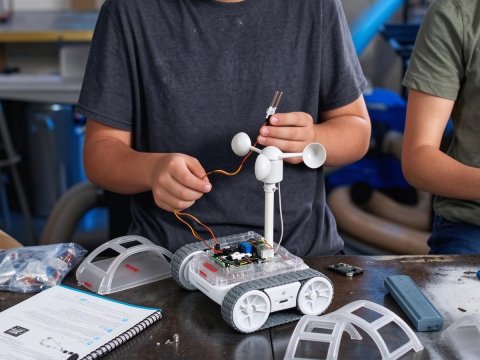
The founding product refuses to choose between story and mechanism — a picture book about a girl inventor paired with the parts to build the machine the story describes, the child reading and building in the same sitting. Pairing narrative with construction is pedagogy aimed at the reader who would not touch a STEM kit: the book says the engineering is part of the story, the building says the story is true, and the store has smuggled the machine into the chapter book. The story is the Trojan horse; the horse is full of axles; and the axles are the point, and the point is that the reader never noticed the smuggling because the story was too good to put down.
A Founder Who Quit Twice
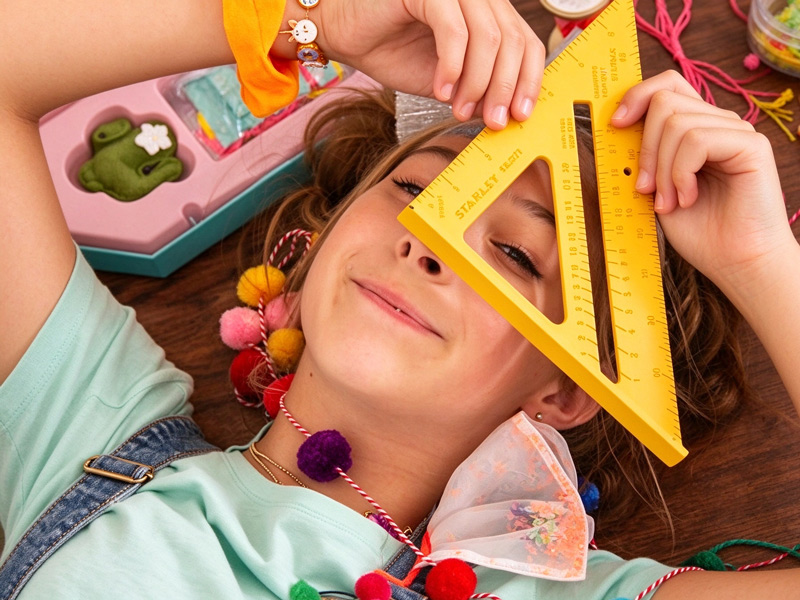
The about page carries an unusual résumé — engineering and product design at Stanford, then a string of departures: the branding agency, the jewelry company, the quarter-life crisis, the six months of volunteering in rural India, and finally the living-room prototypes that became the company. Publishing the wandering is founder credibility aimed at the customer who suspects toy founders of never having made anything: the Stanford says the engineering is real, the crises say the conviction was earned, and the store has made the founder's restlessness the reason to trust her restlessness's end. The résumé is the pitch; the pitch is honest; and the honesty is the engineering's first proof, and the proof is that the founder kept quitting until the work matched the conviction.
The Kickstarter That Blew Up
The origin story includes the numbers — a crowdfunding campaign that raised a quarter-million, then a viral video that sent half a million more to the Shopify store in the weeks after. Publishing the explosion is demand validation aimed at the skeptical parent: the quarter-million says the idea was wanted, the half-million after says the wanting survived the campaign, and the store has converted its launch trauma into its credibility. The virality is the proof; the proof is other people's money; and other people's money is the only kind that cannot be faked, and the faking is what the proof was published to prevent.
Interchangeable as a Philosophy
The construction sets share a system — the parts across seventeen-plus kits connect to each other, the axles from one fitting the pegboards of another, the collection growing into a single machine shop. Designing for interchange is a platform decision aimed at the grandparent buying the second kit: the compatibility says the new box extends the old, the system says the investment compounds, and the store has made the collection the retention mechanism. The interchange is the moat; the moat is made of pegboards; and the pegboards are why the third birthday gift is already decided, and the deciding happens in the toy aisle the brand was founded to disrupt.
The Shirt That Says It
The merchandise carries the thesis on cotton — more than just a princess — the phrase printed across tees and tool belts, the slogan wearable by the child and the parent alike. Putting the mission on a shirt is values merchandising aimed at the family that wants the message outside the playroom: the shirt says the belief is portable, the tool belt says the belief is practical, and the store has made the merch the megaphone. The shirt is the banner; the banner is worn; and the wearing is the advertising the aisle never saw coming, and the coming is the point the banner was printed to make.
Fifteen Years, Then the Waitlist
When I visited, the storefront was not a store at all — it was a countdown. Fifteen years in, the construction toys were announced as returning in the coming year, the page asking visitors to join the waitlist rather than the cart, the reimagined kits promised to a new generation. Choosing the waitlist over the sale is relaunch scarcity aimed at the nostalgic parent who owned the originals: the waitlist says the return is an event, the reimagining says the originals earned a sequel, and the store has converted its absence into anticipation. The waitlist is the store; the store is coming; and the coming is the campaign, and the campaign is why the absence is worth more than the presence was.
The Studio That Curates Screens
Beneath the waitlist sits a content studio — recommendations for safe children's channels, lists of videos that will not fry young brains, the toy company teaching parents to manage the screen it is not selling. Curating other people's content is trust expansion aimed at the screen-anxious parent: the curation says the brand's concern extends past its own SKU, the brain-fry line says the concern is specific, and the store has positioned itself as the adult in the room of children's media. The curation is the care; the care is rare; and the rarity is why the waitlist fills, and the filling is the trust made countable.