Flair, under the hood: the $500 lever machine that out-shot a $1,500 Breville
Official homepage: https://flairespresso.com
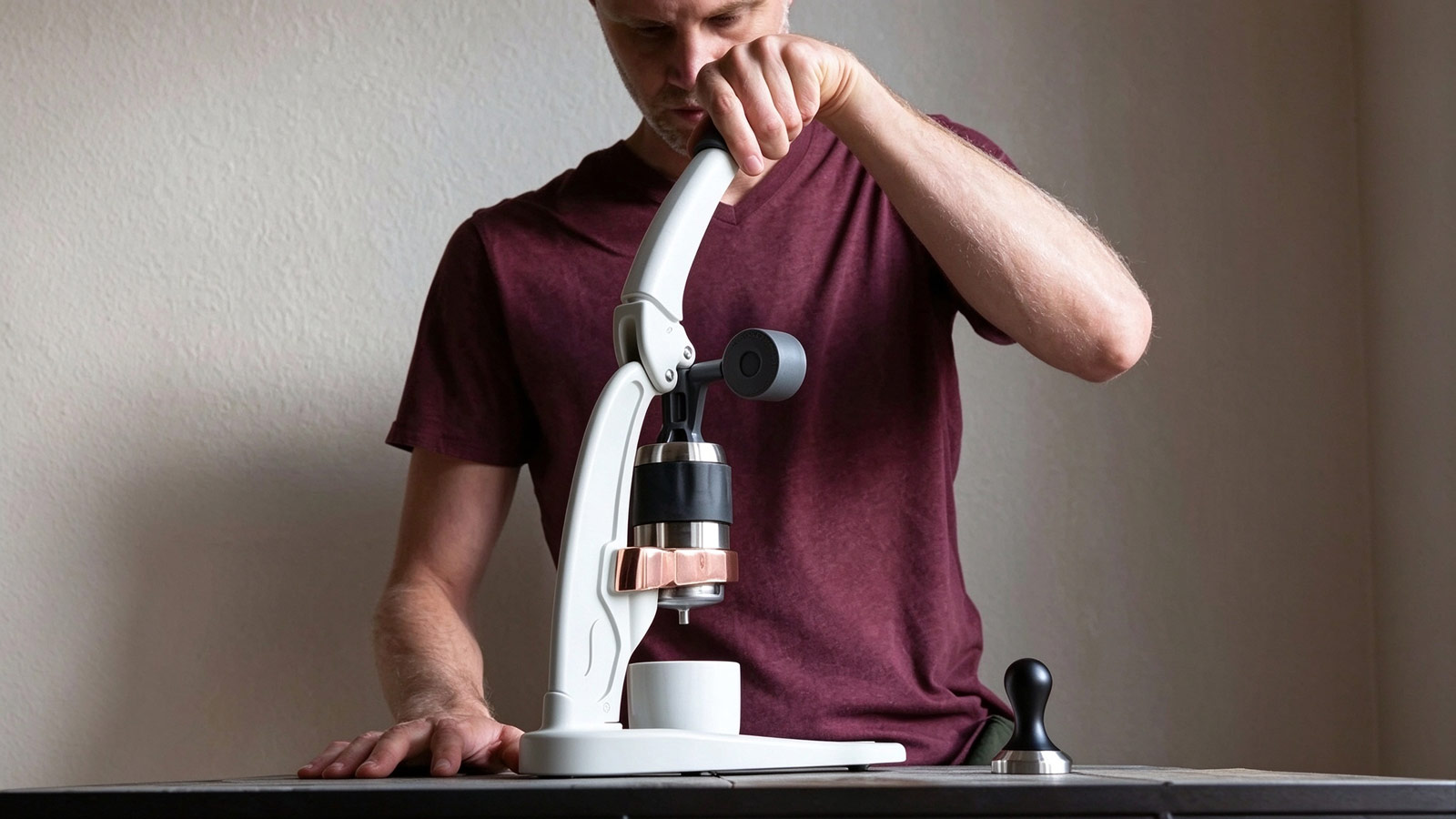
Espresso stores usually sell electricity. Flair sells the argument that electricity is the problem. The California company's manifesto fits on one line — levers are better than buttons — and it backs the claim with a line of completely manual espresso machines whose only power source is your arm. In an industry where five thousand dollars buys a prosumer machine with pressure profiling and ten thousand buys a commercial lever group, Flair ships the same physics in a five-hundred-dollar countertop device that needs nothing but a kettle, a burr grinder, and the willingness to learn a lever. The most quoted test in the category backs the audacity: in blind tastings run by the web's most respected espresso reviewer, the Flair 58 repeatedly beat a $1,500 dual-boiler Breville. I went through the physics, the ladder, and the warranty record. Here is the store across its dimensions.
Levers Beat Buttons
The physics argument deserves precision, because it is the entire product. Pump machines push water at constant nine bars; lever machines generate declining pressure that eases off as the extraction finishes, which espresso professionals have long credited with producing sweeter, less bitter shots — the same reason commercial lever groups and $20,000 pressure-profiling machines exist. Flair's direct-lever design gives the home barista full control of that pressure curve with nothing but a weighted lever arm and a gauge. No pump to fail, no boiler to descale, no electronics beyond the 58 family's preheat controller. The brand's copy says it plainly: come handcraft your espresso with us.
Blind Taste Tests Don't Lie
The credibility peak is a CoffeeGeek review that awarded the Flair 58 a 9.5 out of 10, deducting points only for the budget feel of the electrics package and reserving its highest praise for the performance: the machine, it concluded, is capable of making the best espresso you will ever taste in your life, but it is not for everyone. The reviewer ran blind tastings against a $1,500 Breville Dual Boiler pulled by an experienced home barista and a flipped scenario with himself pulling: the Flair took the majority of wins and ties, matching or beating a machine three times its price on pure cup quality. Value versus cost scored a perfect ten, and the service and warranty rating of nine came with a note the brand quotes everywhere: Flair really backs this product, and tries to make upgrades backwards compatible.
The Ladder From $160 to $699
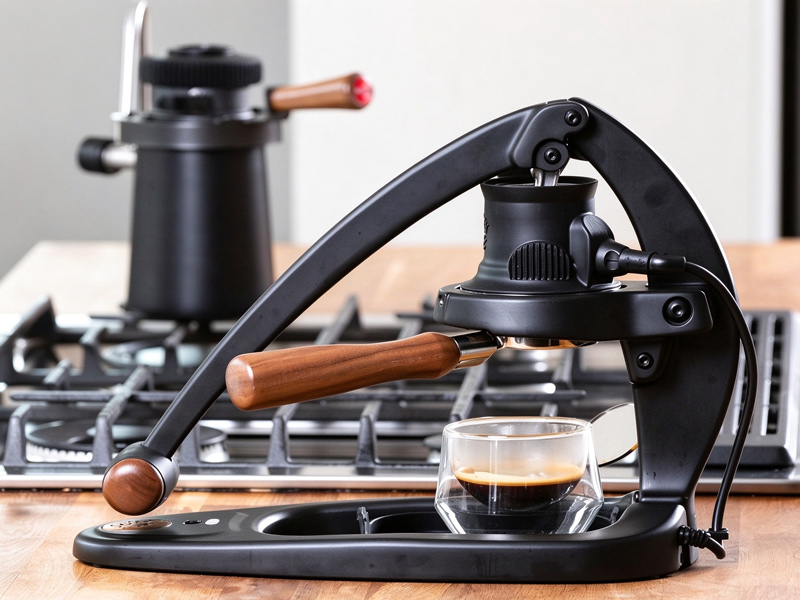
The catalog is a clean price ladder. The Classic, around one hundred sixty dollars, is the entry point: full manual lever, slight learning curve, café-quality potential, one-year warranty. The Neo Flex slides under three hundred dollars for beginners who want a pressure gauge and forgiving flow. The Pro 2, at three hundred to seven hundred depending on bundle, adds cast aluminum mass, stainless steel throughout, and a three-year warranty in a package still light enough to travel. The 58 line is the flagship family: the standard 58 at five hundred eighty dollars delivers the 58-millimeter commercial portafilter, a preheat controller, a flow-through valve for easy refills, and the pressure gauge; the 58 Plus 2 at six hundred ninety-nine tops the line with walnut portafilter and tamper, an articulating magnetic shot mirror, three preheat levels for different roasts, three filter baskets, a puck screen, and a five-year limited warranty, with free United States shipping and installment payments at checkout. The 58-millimeter basket matters more than it sounds: it accepts the entire aftermarket ecosystem of tampers, baskets, and distribution tools built for café machines.
What the Lever Actually Buys
The honest dimension list from the professional reviews: the preheated reservoir buys temperature stability that manual machines historically lacked; the 90-milliliter reservoir and 16-to-20-gram dose produce up to 55 milliliters of yield; the entire brew path on the 58 family is stainless steel, with no plastic touching water or coffee; and the machine breaks down for travel or off-grid use, since only the preheat controller needs power — detach it and brew anywhere. Against a Breville Dual Boiler you give up back-to-back shots, integrated milk steaming, and one-button convenience; against a lever machine like a La Pavoni you gain temperature control and lose nothing in cup quality, at a third of the price.
The Learning Curve, Priced In
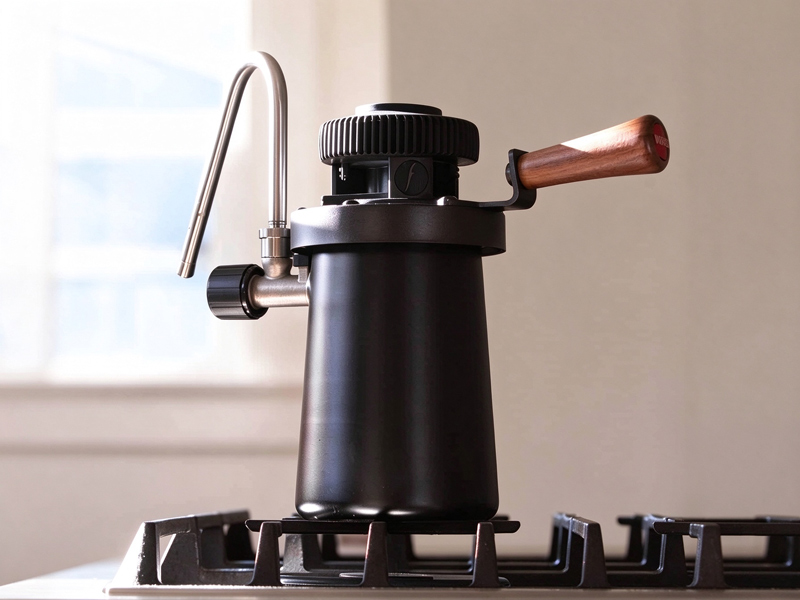
Here is the honest ledger, and every reviewer states it in the same register. There is a learning curve: initial setup difficulties appear in the complaint record alongside defective-hardware reports, and the machine rewards patience the first ten shots. The preheat ritual adds minutes to every session; the 58 family lacks a temperature gauge, leaving users to learn the three-level preheat by taste; the diffusion puck demands careful cleaning or it clogs; and the workflow is inherently single-shot — entertaining guests means repeating the cycle. Milk is a separate purchase: the Wizard stovetop steamer does café-quality microfoam per owners, but nothing is integrated. None of this is hidden; all of it is the tuition.
The Warranty Web
The ownership safety net is tiered by model — one year on the Neo, three on the Pro 2, five on the 58 family, covering functional defects with a separate six-month materials clause — and the unprompted record shows it working as designed. Trustpilot holds a 4.4 Excellent average with the pattern reviewers describe: a Neo that broke twice in its first year was replaced both times with no fight; a defective unit out of the box was resolved promptly; and named staff members sign their replies, including the support agent one owner credits with keeping his workflow barely interrupted. The backwards-compatibility policy means last year's machine accepts this year's upgrades, which the resale market notices — used 58s reportedly retain three-quarters of their value.
The Return Ledger
The exit terms are fair with teeth. Returns run thirty days with refunds minus a prepaid-label deduction — sixteen dollars on standard models, twenty-two on the 58 family — and items coming back missing parts or in non-original condition face restocking fees. It is a company that assumes most buyers keep the machine, and the data agrees.
The Perfect Pull
Flair Espresso is the rare store where the physics lecture and the purchase price occupy the same sentence: declining-pressure lever shots for the cost of a mid-range pump machine, blind-test wins against machines three times the price, a five-year warranty on the flagship, and the only espresso maker that fits in a backpack. Buy the Classic if you are curious, the 58 if you are committed, and the Wizard if lattes matter; accept the learning curve as the tuition it is. The lever is better than the button. The tests keep proving it.