Cold-pressed patience at nama: fifteen-year promises, j-trio tables, hands-free hoppers, plant milk
Official homepage: https://namawell.com
Kitchen-appliance stores usually sell you a machine. Nama sells you a slower relationship with produce — the door says “a kitchen made for more plants,” and the whole catalog, juicers, a blender combo, a plant-milk maker, bottles and attachments, behaves like one lifestyle rather than several products. I browsed with a juicer graveyard in the cabinet and a weakness for companies that name their engineering. Here is the counter, decision by decision.
Door Policy: Plants Before Products
The homepage leads with a thesis — real-food routines, more plants, recipes and guides — and only then with the machines that enable it. Leading with the lifestyle rather than the appliance widens the audience from juicing enthusiasts to anyone who has considered oat milk, and it converts one hardware purchase into membership in a practice. The four trust counters beneath — twenty thousand five-star reviews, a fifteen-year warranty, a thirty-day guarantee, worldwide shipping — hang as a single strip, the way a workshop pins its guarantees where every customer must pass.
Three Letters Resolved by One Table
The lineup speaks in initials — J1, J2, J3, plus the C2 combo — and one comparison table resolves them: a column for daily compact use, one for everyday juicers of every level, one for juice-and-smoothie enthusiasts, with yields, weights, and heights aligned row by row. Handing the choice to a table rather than a crown keeps any model from being declared best; the shopper self-selects by life instead of spec anxiety, and returns shrink because the buyer chose her own tier.
A Fifteen-Year Warranty Shelved Like a Spec
Fifteen years, all parts, printed beside a thirty-day money-back guarantee. In a category where two years is the polite ceiling, a decade-and-a-half promise reads as a build-quality claim the company is willing to underwrite. It prices Nama out of the disposable-appliance comparison set entirely, and the warranty becomes the loudest spec on the page without a single rpm being mentioned.
Engineering Wearing Its Trademarks
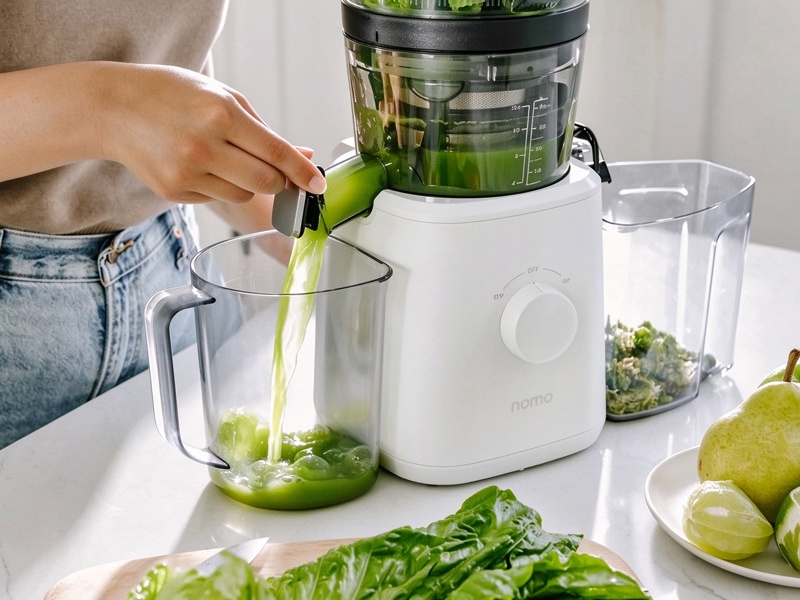
The technology arrives with named, trademarked processes — a pure-press mechanism, true-taste extraction, a slow auger pressing produce against thousands of micro-perforations. Trademarked process names turn a slow motor into something the shopper can repeat at a dinner party, and they reframe the price: generic juicers are hardware, while a patented process is a method the customer has now heard of.
The Hopper That Walks Away
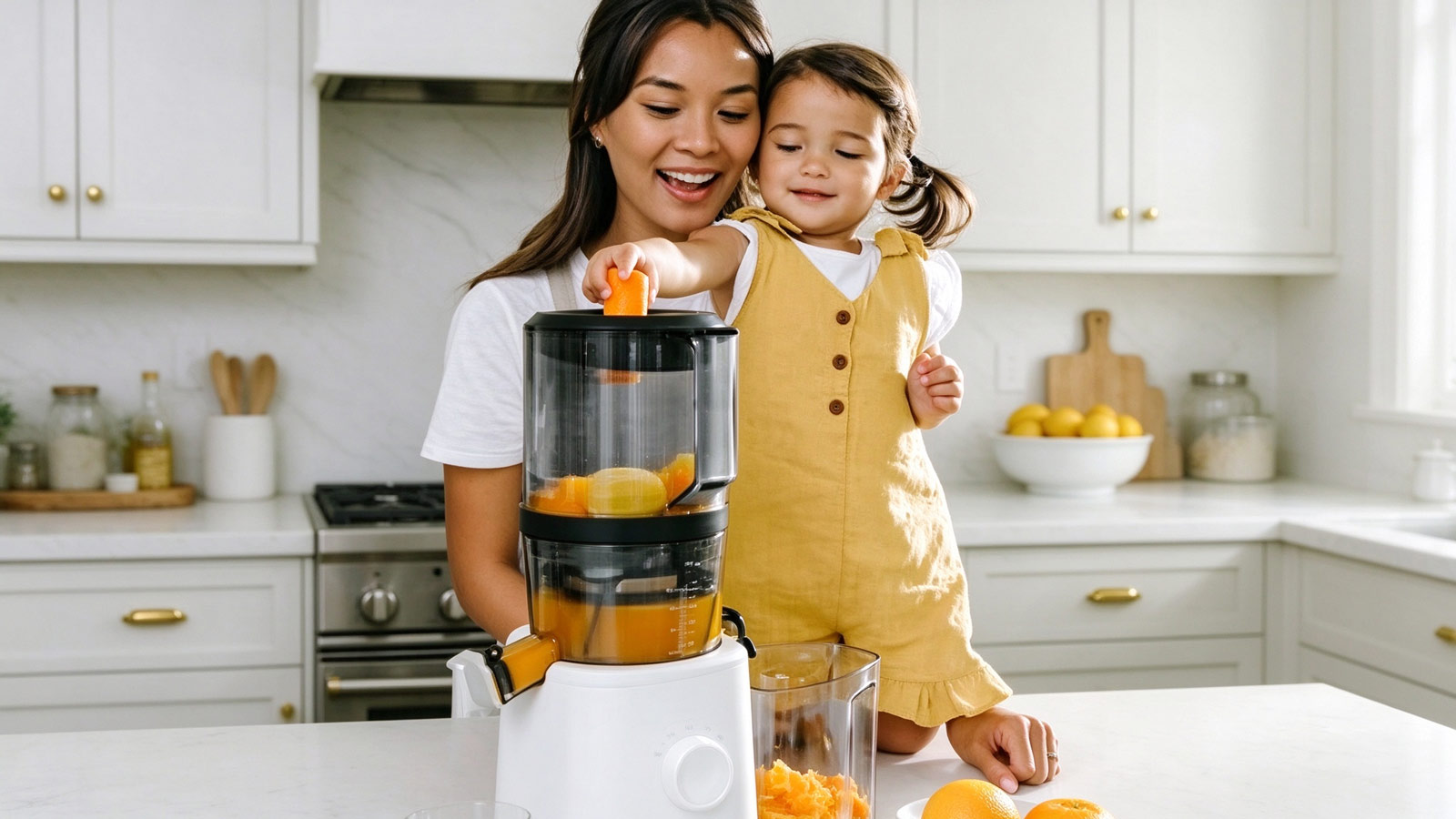
The J2’s signature feature is time, not torque — a wide hopper that swallows whole produce and lets the owner load a recipe and leave. Demo videos make the point without narration: fill, switch on, walk away, return to finished juice. Selling absence as the feature answers the real objection to juicing, which was never health but the standing.
A Calendar That Keeps the Machine Employed
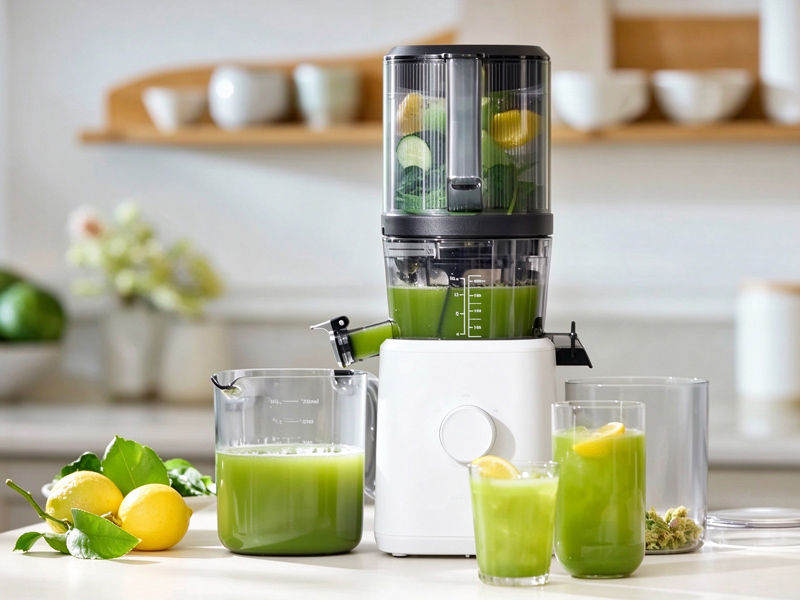
The editorial shelf runs on seasons — autumn greens, fall creamers, a guide to juicing through the cold months — beside recipes for plant milks and wellness shots. Seasonal content keeps the machine on the counter relevant, because the store keeps handing it new jobs, and each article doubles as a use case for the accessory rack one click away. Content here works as an employment agency for hardware already sold.
The Retail Wall, Drawn in Ink
An authorized-retailers page states the perimeter plainly: no physical retail, a select set of online partners, the flagship store as the fullest shelf. Drawing the boundary publicly protects the map and the warranty at once — a fifteen-year promise needs controlled channels to stay honest — and it tells shoppers where the fake listings live, a service most manufacturers quietly skip.