Chip theory games in motion: the poker-chip publisher betting everything on feel
Official homepage: https://chiptheorygames.com
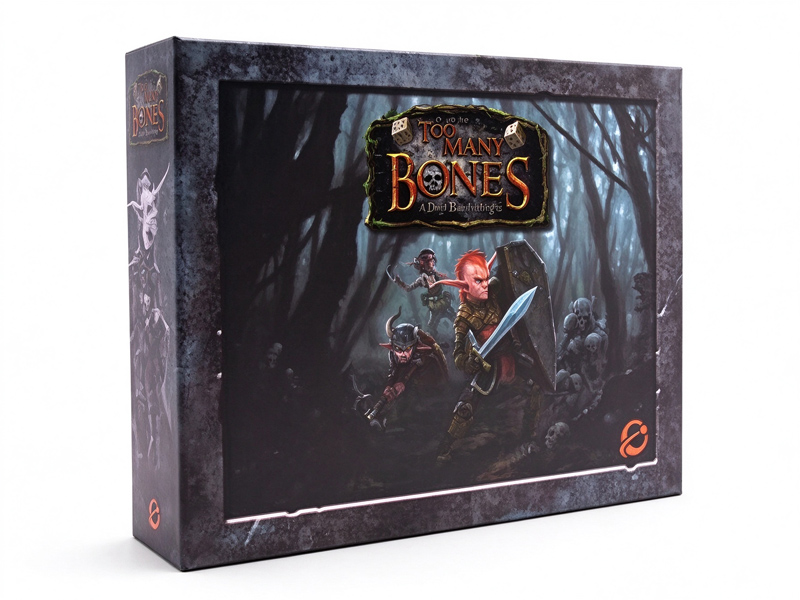
Board game stores usually ask you to imagine value. Chip Theory Games ships it in a box heavy enough to prove it. The Plymouth, Minnesota studio — run by brothers Josh and Adam Carlson, with a staff of about eleven — has spent a decade building tabletop games the way a machine shop builds tools: poker chips instead of cardboard tokens, neoprene mats instead of folded boards, PVC cards instead of paper, and box inserts engineered with cavities for expansions that do not exist yet. The result is a catalog with some of the most devoted owners in the hobby and some of its most intimidating price tags — a tension the company itself names openly. I went through the component doctrine, the crowdfunding ladder, and the return-policy fine print. Here is the store across its dimensions.
Two Brothers, One Machine Shop in Plymouth
The origin is Kickstarter's golden age done right. After three Hoplomachus titles built a devoted solo-gaming following — the series became famous as reviewer Ricky Royal's favorite solo system — the brothers launched Too Many Bones in March 2016 and raised over a quarter-million dollars. Every major title since has followed the same ladder of escalating success, from Undertow through Cloudspire and into the more recent 20 Strong solo-deck line. In 2024 the studio acquired Manny Trembley's Neon Knight Games to diversify into mid-weight, teachable, retail-friendly designs, and in 2026 it partnered with Awaken Realms on a trilogy of 20 Strong decks — clear signals that the flagship formula has ceiling the founders intend to outgrow.
Poker Chips Instead of Cardboard
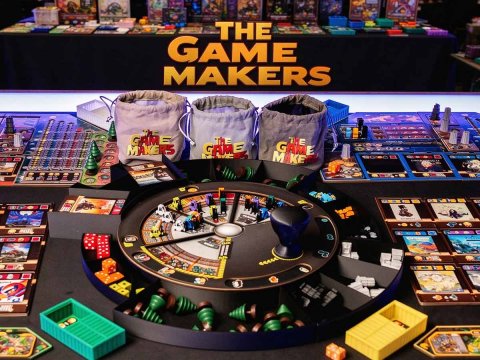
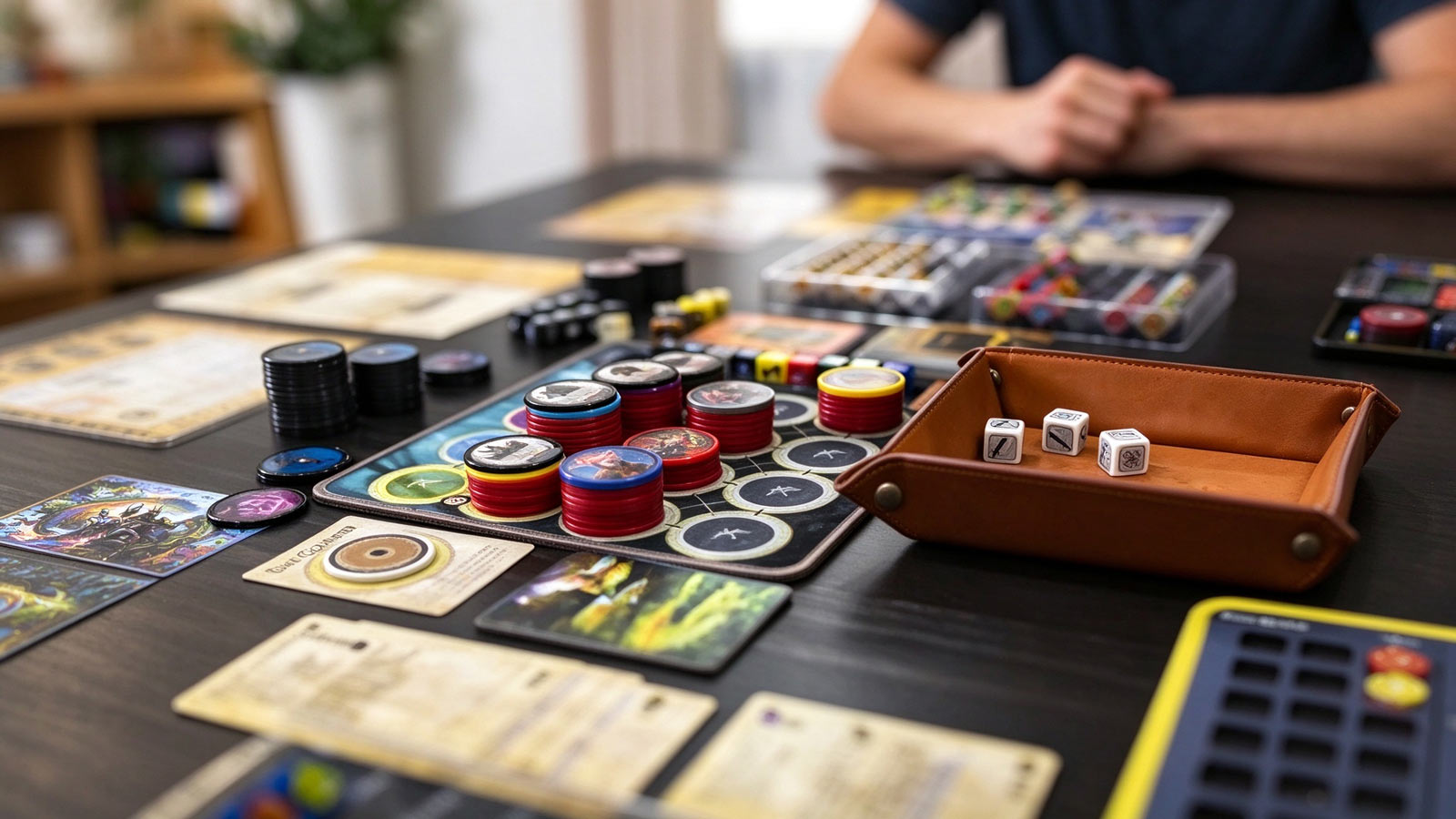
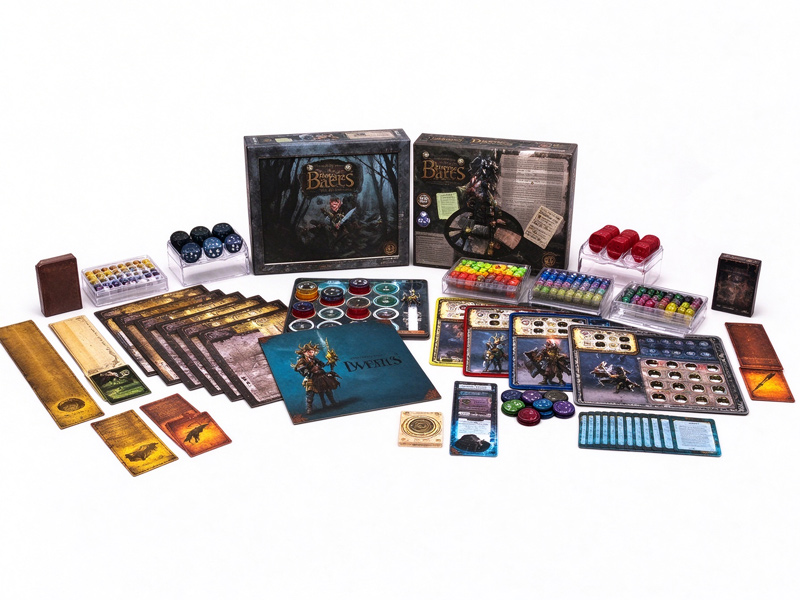
The doctrine deserves precision, because it is the entire brand. In-game units are 11.5-gram poker chips topped with water-resistant foil stickers — durable enough to shuffle like casino chips, legible across a table, and utterly unlike the cardboard standees the industry defaults to. Cards are PVC. Dice are custom heat-transfer printed; the Too Many Bones base box alone ships with more than 135 of them. Play surfaces are neoprene. And every insert is designed with expansion-shaped cavities, so owners never buy third-party organizers — a quiet lifetime-cost argument that reviewers treat as a design feature. The company's own description promises "fantastic customer service, detailed and transparent campaign updates, and free surprise upgrades whenever possible," and a decade of backer threads suggests it means it.
The Kickstarter Ladder and the Gamefound Move
The funding model has evolved without losing its transparency. Early campaigns ran on Kickstarter; the studio now runs on Gamefound, and its policy pages publish the fee mechanics plainly: full refunds within fourteen days of a campaign's end, then refunds minus roughly twelve percent in platform and processing fees until fulfillment lists lock. Updates are famously detailed — backers joke that Chip Theory's shipping threads are more transparent than some companies' earnings calls. The trade is time: crowdfunded games fulfill in waves, and late pledges wait their turn, which is the honest price of the model rather than a failure of it.
What the Register Actually Rings Up
The catalog is a steep price ladder anchored by the flagship. Too Many Bones sits at the top around a hundred and fifty dollars — the dice-builder RPG whose chips, dice, and neoprene justify every dollar for its owners. Hoplomachus offers gladiator tactics in several editions; Cloudspire translates MOBA lane logic to the table; Triplock is the compact gateway at a friendlier price. The newer 20 Strong decks and the Chip Theory Kids line open lower price points, and the Neon Knight acquisition promises genuinely mid-weight, minutes-to-teach designs with Trembley's signature art. A first purchase here is rarely casual, and the store does not pretend otherwise.
Returns, Replacements, and the Fine Print
The policy ledger is honest and specific. Defective components are replaced free with photo documentation through a support ticket, handled from the Minnesota office — the policy asks customers not to contact fulfillment partners directly. Damaged boxes get a review for store credit or refund, though replacement boxes are no longer offered. US returns run thirty days on unopened items, subject to a four-percent restocking fee and non-refundable return shipping, with refunds in about ten business days. One gracious touch stands out: buy an item and it goes on sale within fourteen days, and the difference comes back on request. EU and UK buyers get the statutory fourteen-day withdrawal window but pay their own return shipping and duties; everyone outside the US, UK, and EU is simply told returns are not logistically possible — a blunt line worth knowing before a big international order.
The Accessibility Tax
Here is the self-aware critique, in the CEO's own words: the company's bread and butter is "huge scope, dense rulesets and intimidating price tags." The components are heirloom-grade, but the games demand table space, setup patience, and rule-book commitment that price out the casual buyer — which is precisely why the studio is diversifying into 20 Strong, kids' titles, Wroth, and the Neon Knight line. If Chip Theory has a strategic weakness, it is that its masterpiece formula cannot scale beyond the hobby's deepest pockets, and the founders clearly know it.
The Cult Ledger
The independent record is a love story with footnotes. Hoplomachus remains the solo-gaming community's reference point, Too Many Bones tops best-of lists years after release, and the complaint file is strikingly thin for a company shipping thousands of heavy boxes worldwide — the recurring grumbles are crowdfunding wait times, the four-percent return fee, and shipping weight, not product failures. A lone Board Game Geek thread asks "not too impressed, anyone else?" and the replies mostly defend the component math. For a premium publisher, that is about as clean a ledger as the hobby offers.
All In
Chip Theory Games is a bet that tabletop components should outlive the shelf they sit on — poker chips where cardboard would do, inserts shaped for games not yet announced, and a crowdfunding operation transparent enough to teach a finance class. You pay flagship prices for flagship heft, accept the crowdfunding clock, and accept that the learning curve comes with the territory. Buy Too Many Bones if you want the hobby's most luxurious dice game and will actually play it solo; buy Triplock if you want the doctrine at a gateway price; and believe the inserts when they tell you the expansions are coming.