Bombas store review: what to know before you buy running socks online
Official homepage: https://bombas.com
Running stores usually begin with the footstrike — the gait analysis, the drop measurement, the pronation charts. Bombas begins with a shelter: the founders learned that socks were the single most requested item at homeless shelters, and the store they built still prices every purchase against that fact, a decade and two hundred million donations later. I browsed with a sock drawer full of orphans whose mates vanished in the dryer, and a curiosity about what happens when a comfort brand treats charity as infrastructure rather than marketing. Here is the counter, decision by decision.
Door Policy: The Equation as the Logo
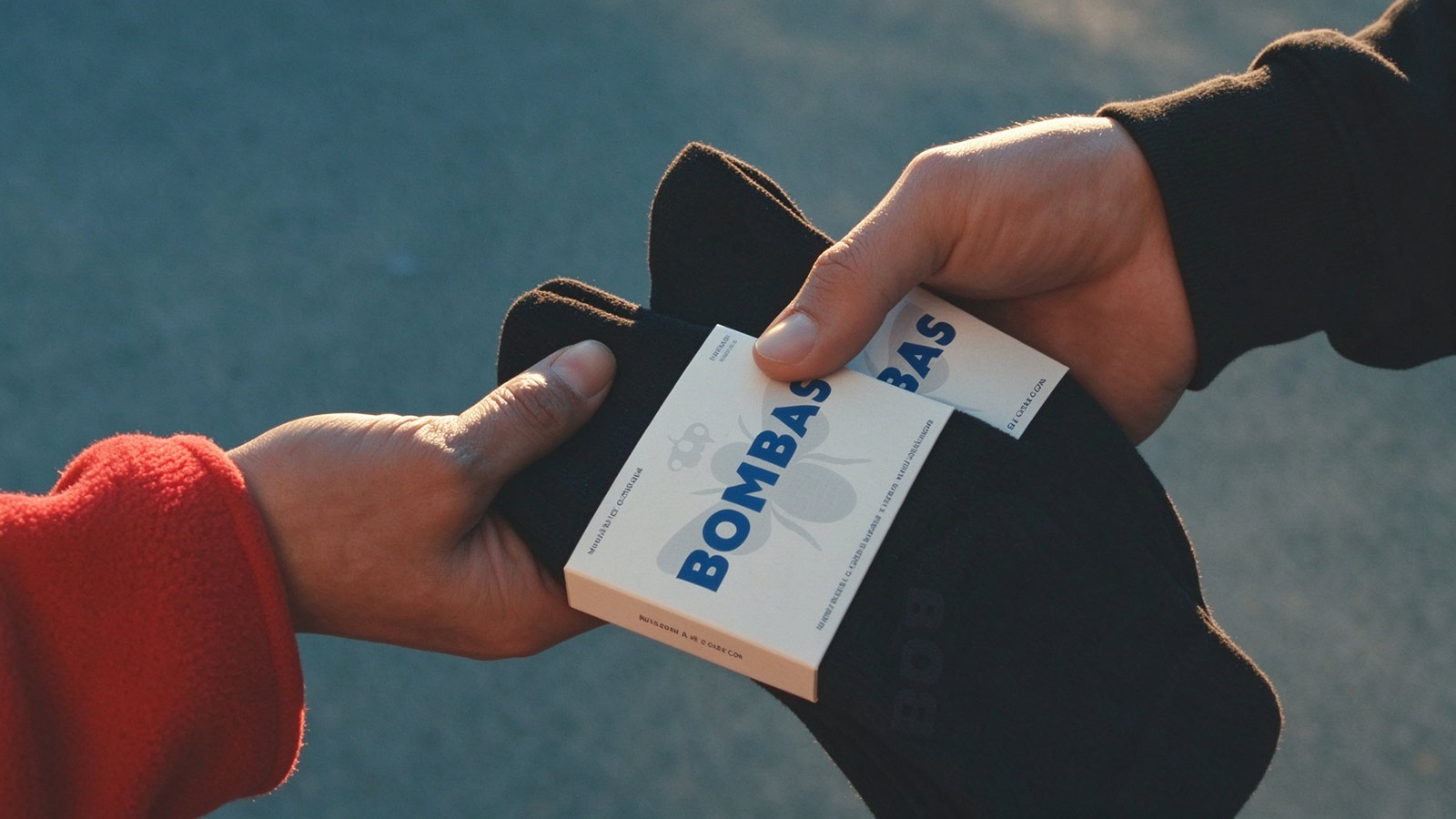
The storefront's most prominent graphic is not a logo but a sentence — one purchased, one donated — printed at the top of every page, in every email, on every package, without exception since the first day. Making the donation clause the visual anchor turns every transaction into a two-body event: the customer's feet and a stranger's, and the sentence is short enough to survive being repeated millions of times without wearing out. The equation is the logo, the mission, and the upsell in three words and a symbol — and it cannot be redesigned without losing the brand.
A Shark Tank Scars Story
The about page tells the origin with unusual candor — a crowdfunding launch, a television deal with a famous investor, and then the site crashing under the first wave of orders, twice. Publishing the crash builds credibility with the shopper comparing platforms: the founders admit the infrastructure failed, explain the migration that followed, and the current store's stability — no crashes during the biggest sale weekends, the copy notes — becomes the redemption arc. The scar is the proof of healing, and the healed scar is the strongest kind of proof.
The Honeycomb as Engineering
The product pages carry a small diagram of a honeycomb — the arch-support structure behind the comfort claim, alongside the seamless toe and the Y-stitched heel. Naming a structural feature gives the premium price a physical alibi: the honeycomb is testable, the toe seam is feelable, and the buyer burned by comfort claims gets something to verify rather than something to believe. The honeycomb is the patent the customer can feel through her shoe, and feeling is believing that survives the first wash.
Two Hundred Million Acts of Kindness
The giving page runs a counter — two hundred million donations and counting, routed through four thousand partner organizations, with a three-step diagram explaining how a purchase becomes a donation becomes a pair of socks on someone's feet. Publishing the mechanism rather than just the number converts abstract goodwill into a logistics network the customer can audit: the partners are named, the routing is shown, and the scale of the counter becomes evidence of infrastructure rather than rhetoric. The counter is the annual report, printed where the ads would go, and it never needs a copywriter.
A Guarantee with a Smile in the Name
The policy is called the Happiness Guarantee, and the copy promises to replace or refund anything that disappoints — worn socks, wrong sizes, lost mates — without a fight. Naming the warranty after an emotion rather than a legal standard lowers the customer's guard, and the store that will replace a worn sock has calculated that the loyalty is worth more than the thread. The happiness is the retention strategy, and the strategy works because nobody expects happiness to have a returns policy.
Sesame Street in the Sock Drawer
The children's line carries a familiar street's characters — Big Bird and Elmo on the cuffs, gripper soles for the toddlers, the same one-for-one equation applied to smaller feet. Licensing a beloved children's property is household acquisition: the child's first Bombas arrive before the parent's do, the characters make the donation lesson teachable, and the family that enters through Sesame Street stays for the adult socks. The street is the gateway; the drawer is the destination; the destination multiplies.
A Comfort Empire in Expansion
The catalog has quietly widened beyond the sock — underwear, tees, slippers, and a sport-specific line aimed at runners, with the same comfort vocabulary and the same donation clause riding along. Extending the chassis grows lifetime value: each new category is a reason to return, the donation keeps the return feeling virtuous, and the brand that began with one garment for one shelter now furnishes the whole dresser. The sock was the wedge; the drawer is the empire; the empire donates as it grows, which is the only empire-building that feels good.