At osmo's table: screen time without regret, one base forever, thirty thousand classrooms
Official homepage:https://www.playosmo.com
Educational-toy stores usually ask you to choose between a screen and a skill. Osmo refuses the choice — "Screen time you won't regret" on the door — and every dimension of its Shopify shop, from the reflector to the reviews, serves that redemption. I browsed it with a parent's guilt and a child's appetite. Here is the table, dimension by dimension.
The Reflector as the Entire Trick
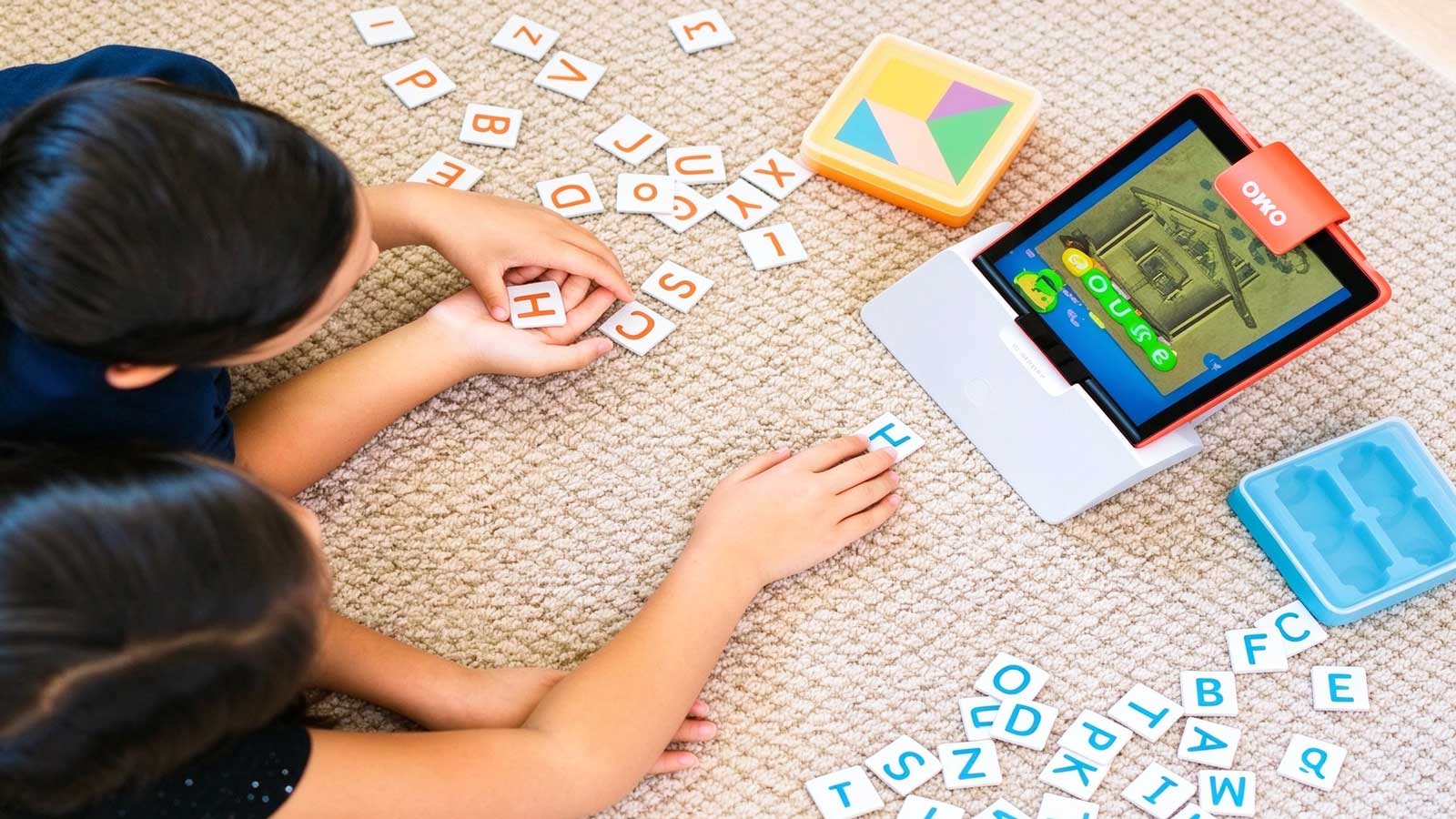
The how-it-works section takes three steps: put the device in the Base, play with physical pieces — draw, code, spell — and watch Osmo scan the table so the child's creations come alive on the screen. That red clip over the camera is the entire technology, presented without ceremony. The magic is in the geometry: the camera looks down, the hands stay up, and the screen becomes a mirror for the real world rather than a door out of it.
Busy Hands, Raised Eyes
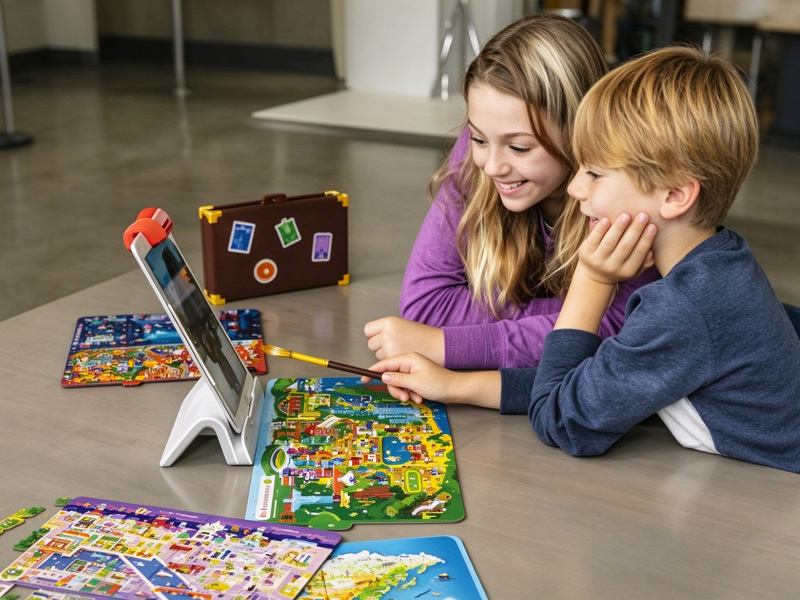
The copy keeps choosing physical verbs. "Hands busy, eyes up — hands on the pieces, eyes on the game. Less tapping, less swiping, no zoning out." A sister and brother lean over a detective map with a magnifying glass; two girls at a wooden table draw on a red-bordered board while a cartoon monster copies their lines on the iPad. The photography stages siblings sharing one screen, arguing over one map — social by design, because the play surface is the family table, not the tablet.
One Base, a Childhood of Games
The kit architecture is the commercial genius. "Every Starter Kit includes the Osmo Base — the only one you'll ever need. Add games as they grow." The reflector and stand are a one-time purchase; the games — letters, numbers, coding blocks, a detective agency with world maps — are cartridges of childhood. The store sells the hardware once and the curriculum forever, and the ages three-to-ten range lets the platform ride a child through most of elementary school.
The Tablet You Already Own
"Works with the iPad or Fire tablet you already have." The store refuses to sell you a screen, which removes the biggest objection in the category: that educational toys are just more plastic around more glass. The compatible-device list is the reassurance; the red reflector photographed on a well-worn family iPad is the proof.
Classrooms and Reviews as Twin Verdicts
The proof stacks in two registers. Institutional: "Loved in 30,000+ classrooms" and award-winning games kids ask to play. Marketplace: "4.7/5 from 20,000+ Amazon reviews," the Amazon logo visible, verified-purchase quotes doing the emotional work — a child engaged far longer than typical screen time, a parent setting it up while making dinner, a five-year-old who sat at the table for over two hours on Christmas Day. Teachers and tired parents both testify, and the store lets them.
The Honest Glare
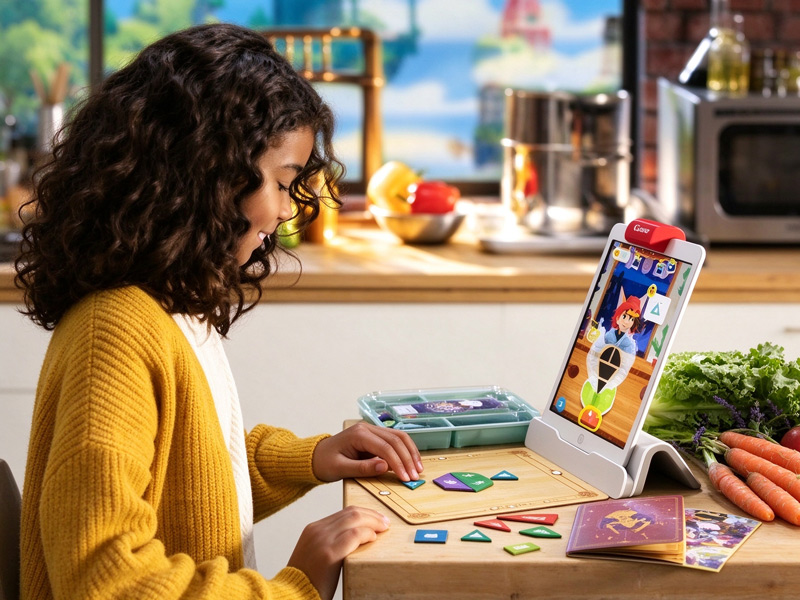
The reflector cannot solve the category's oldest argument: it is still screen time, however busy the hands, and the Base is useless without a compatible tablet in the house. Letter tiles migrate under sofas with the determination of all small pieces, and the ages ceiling means the platform graduates out of the family eventually. The store concedes none of this loudly — the photography keeps the children laughing, and the laughing is persuasive.
Hands Down
Dimension by dimension, Osmo runs on a redemption: no-regret screen time on the door, a red reflector as the entire trick, busy hands and raised eyes as the physical law, one base for a childhood of games, the tablet you already own as the entry price, classrooms and reviews as twin verdicts, and siblings arguing over a shared map as the unintended curriculum. If your household wants the tablet to teach without isolating, this shop clips the argument to the camera and lets the table do the rest. If your toy philosophy is screen-free in the absolute, the regret here is removed — but the screen is not.