Aarke's steel atelier: one metal, seven colors, magnesium refills, pro-glass upgrades, coffee architecture
Official homepage: https://aarke.com
Kitchen-appliance stores usually sell function — faster, hotter, more programs per dollar. Aarke sells a material: every object in the catalog, from the flagship carbonator to the kettle to the water purifier, is rendered in the same polished stainless steel, and the store photographs them like sculpture rather than equipment. I browsed with a counter full of mismatched black plastic and a weakness for brands that treat the kitchen as a gallery. Here is the counter, decision by decision.
Door Policy: One Metal as the Logo
The entire catalog obeys a single material law — mirror-polished steel, with black or glass appearing only where function demands it. Committing to one metal across every product behaves like a logo: the carbonator, the kettle, the purifier, and the coffee maker are recognizable as family before a word is read, and the material carries the premium argument — steel does not yellow, craze, or look tired after a decade. The door is held open by a finish, and the finish never needs a redesign cycle.
A Redesign Brief, Not an Invention
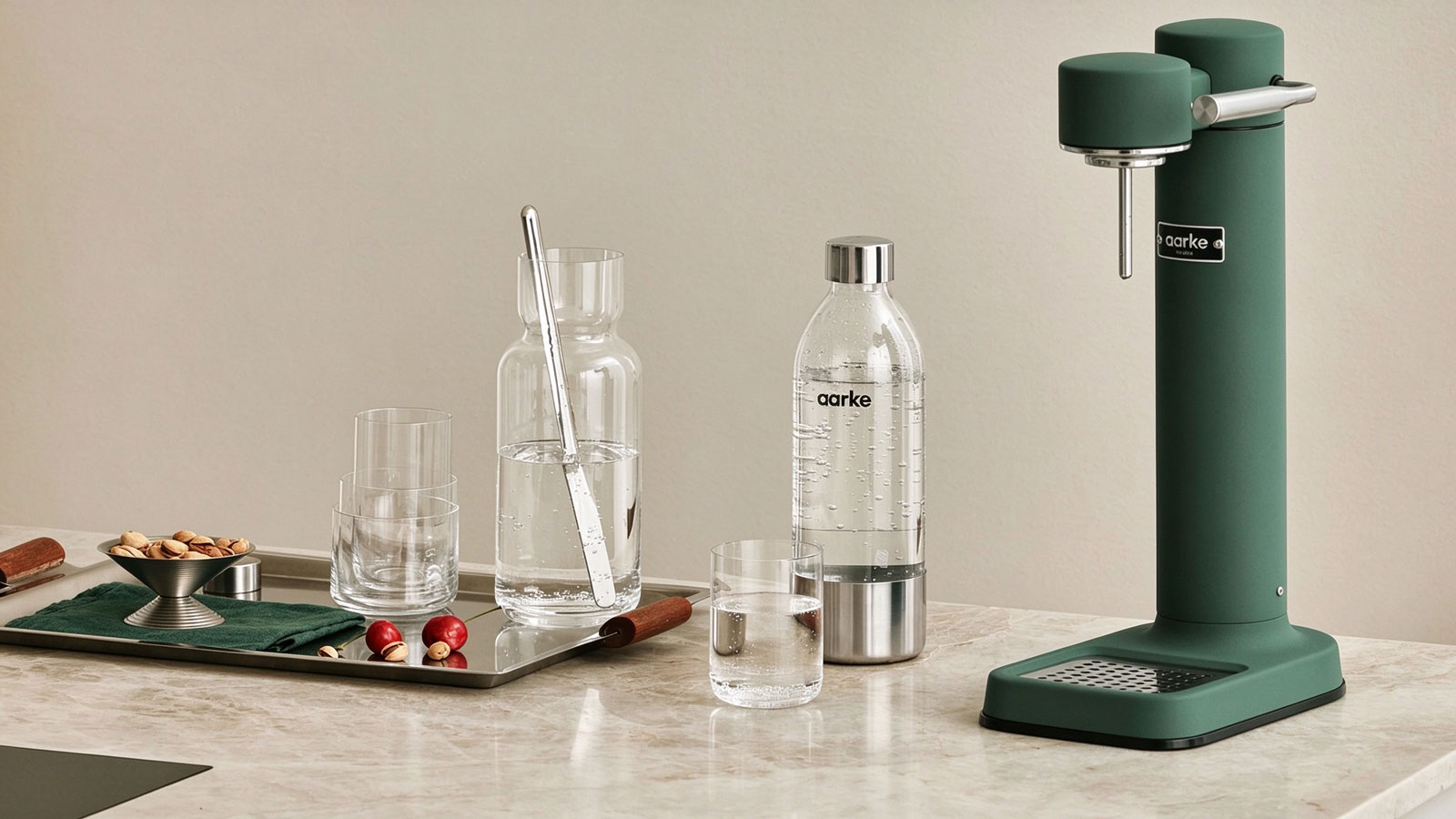
The flagship carbonator exists because of a specific grievance — the founders looked at the plastic-bottle clutter of home sparkling-water machines and decided the category deserved an appliance that belonged on the counter permanently. Framing the founding story as a redesign of an existing habit rather than an invention flatters the customer: she was not waiting for a new gadget, she was waiting for someone to fix the eyesore she already owned, and the machine's slim profile and lever pull read as the answer to a complaint she had never voiced. Fixing beats inventing, and the fix charges a premium.

The Pro Revision Closes Its Own Loop
Beside the original sits the upgraded version, whose key change is not power but the vessel — water carbonates directly in a glass bottle rather than a plastic one. Shipping a glass-bottle revision closes the loop the founding brief left open: the original eliminated supermarket bottle waste, the revision eliminates the remaining PET from the appliance, and the two-tier shelf lets the committed convert justify the upgrade as completing the argument rather than replacing a working machine. The second purchase is the first purchase, finished.
Seven Colors as a Slow Wardrobe
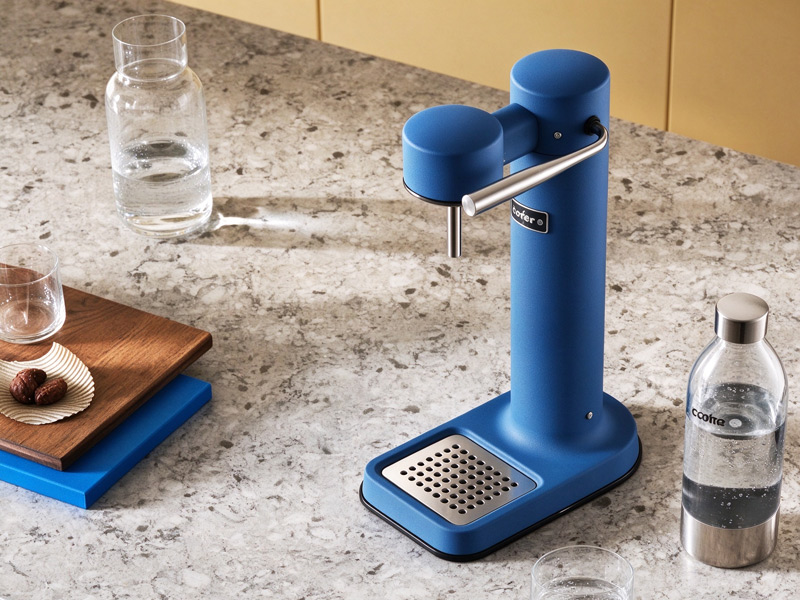
The carbonator arrives in a palette — steel, matte black, sand, matte white, and beyond — with color given nearly as much page space as specifications. Treating color as a primary attribute borrows from fashion: the machine will live visibly on the counter for years, so the finish becomes a decor decision worth deliberating, and the muted, architectural tones photograph like paint chips, turning the configurator into a design consultation. Color choice slows the purchase in the best way — deliberation feels like ownership.
Filtration on a Refill Rhythm
The water purifier pairs a steel pitcher with a small cylinder of granules — the copy names the mineral added back and sells replacement bags by subscription, months of use per refill. Building the purifier around a consumable executes razor-and-blade in the store's own register: the pitcher is the appliance, the granules are the rhythm, and the refill arrives on schedule so the customer stops thinking about water quality. The subscription is invisible because the steel pitcher is always full.
Coffee as the Price Ceiling
At the top of the ladder sits a drip coffee maker — a tall steel column with a glass carafe and one switch. Pricing a straightforward drip machine far above the category average works only when the object behaves like furniture: the column hides its mechanics, the single switch is the entire interface, and the silhouette makes neighboring appliances look like they are trying too hard. The coffee machine exists to establish where the ceiling is; everything beneath it suddenly looks reasonable.
A Water Bar, Sold Piece by Piece
Around the major appliances orbit the small steel — nesting glasses, a to-go bottle, a coffee press — each matching the finish of the machines they serve. Filling the margins with coordinated accessories follows the material logic to its end: the carbonator buyer takes the bottle for the commute and the glasses for the table, and every addition strengthens the same argument rather than diluting it. The catalog is a room, and the store sells it piece by piece.