Gurunanda, straight up: the yogi who sold oil pulling to walmart's masses
Official homepage: https://gurunanda.com
Oral-care stores usually begin with a dentist or a chemist. GuruNanda began in a toothbrush factory in New Delhi. Founder Puneet Nanda grew up around bristles and molds, studied medicine in Russia in the early nineties, returned to run the family brush business, and then moved to New York with almost nothing — he has said he walked eight to ten miles from Grand Central carrying his luggage because he could not afford a cab, feet bleeding by the end. From that walk he built Dr. Fresh into America's third-largest oral care company, whose Firefly brush became the country's number-one kids' toothbrush and whose portfolio — Binaca, Reach, Dr. Fresh — sold more than a billion units. Then came the collapse: eighteen-hour days, a nervous breakdown misdiagnosed as a heart attack, and a retreat into the Ayurvedic practice of oil pulling that healed him enough to write a New York Times bestselling yoga book. GuruNanda is the second act — ancient Indian wellness practice, manufactured in Los Angeles, priced for Walmart shoppers, and sold through a Shopify storefront alongside everything from whitening strips to essential-oil diffusers. I went through the empire, the prices, and the two very different review ledgers. Here is the store across its dimensions.
From a New Delhi Toothbrush Factory
The origin explains both the manufacturing confidence and the mission. Before selling a single product under the GuruNanda name, the company donated seven million toothbrushes to hospitals, cancer centers, and dental offices under a "no one left behind" ethos. Nanda holds more than a hundred US patents across his career, manufactures in-house in Los Angeles — rare vertical integration in an industry built on contract factories — and frames affordability as the hard part of the business: anyone can sell premium wellness to premium buyers, he argues; the underserved are the actual market.
Ancient Practice, Modern Retail Machine
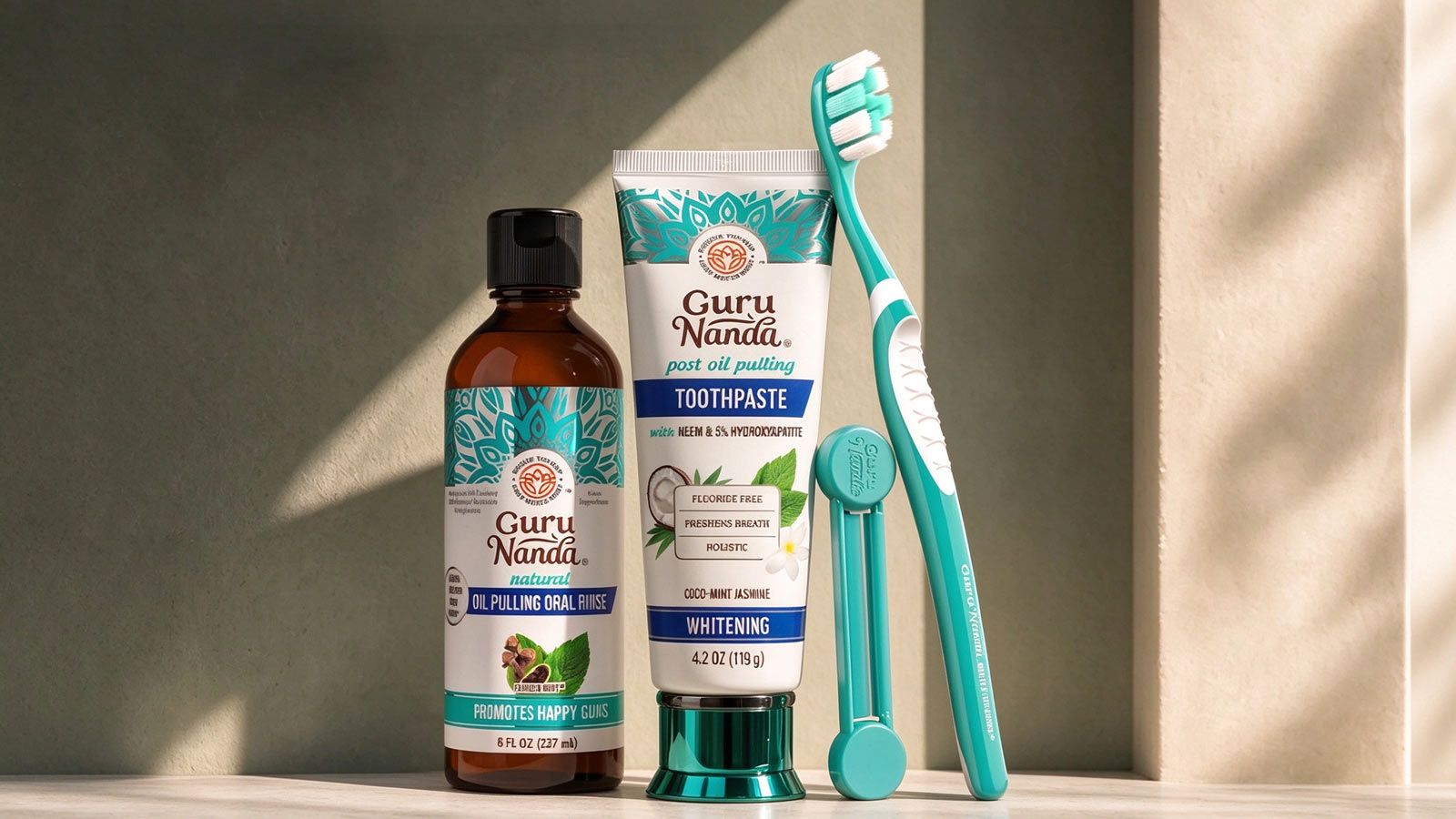
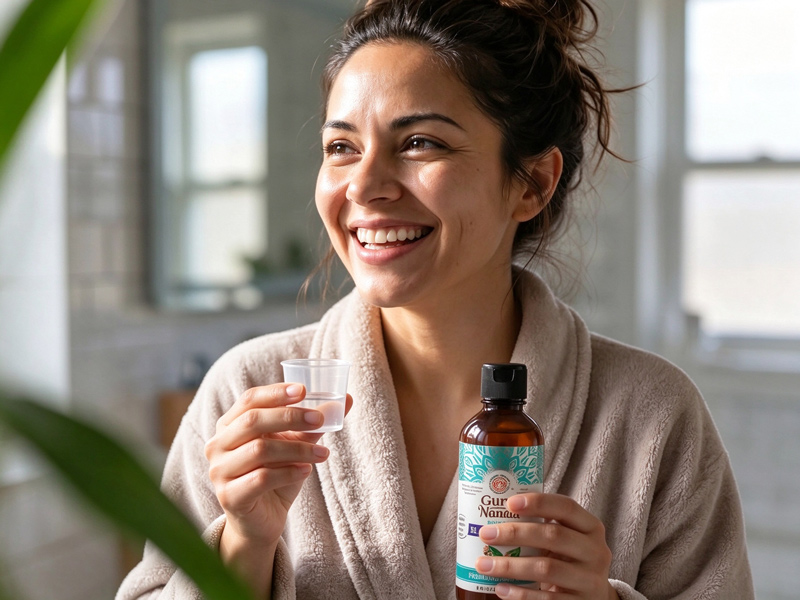
The positioning fuses five-thousand-year-old Ayurvedic practice with modern clinical framing: the flagship pulling oils — a cocomint blend fortified with vitamins D3, E, and K2, a cinnamon variant with neem and ashwagandha — claim the number-one oil-pulling brand slot in America, and Nielsen reportedly named GuruNanda the country's fastest-growing oral care brand. Distribution runs Walmart, Target, Costco, Amazon, and TikTok Shop simultaneously, a mass-retail omnipresence most wellness brands never approach. The formulas lean into the natural-positioning gaps: no fluoride, no SLS, no alcohol, hydroxyapatite toothpaste for the fluoride-averse.
The Everything Shelf at Impulse Prices
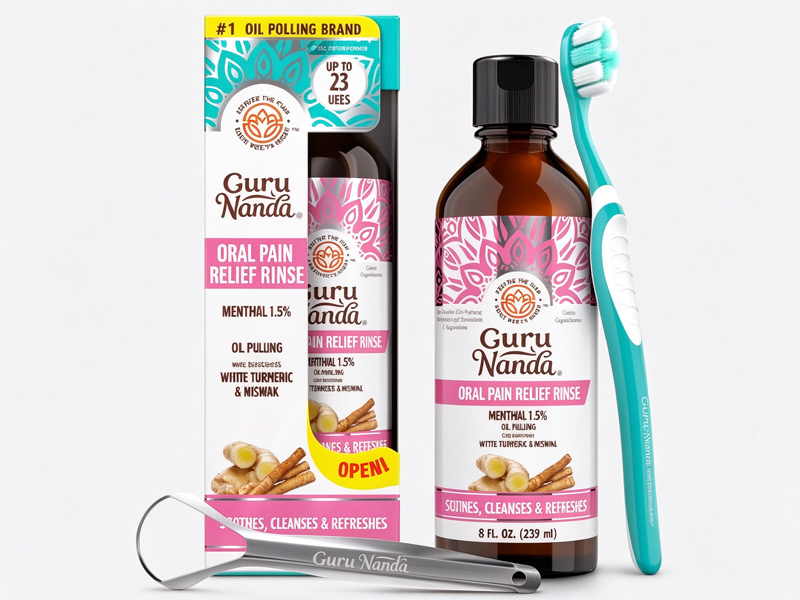
The storefront's breadth is its own statement. Oil pulling anchors the line, but the wall runs to whitening strips — the company's number-one seller — concentrated mouthwashes and dual-barrel oxyburst rinses, fluoride-free hydroxyapatite toothpastes, extra-soft brushes for receding gums, sonic toothbrush kits built for TikTok virality, a water flosser, kids' tongue scrapers at $4.99, and then the adjacencies: frankincense essential oils, halo diffusers, immunity drink mixes, nasal care. The basket economics are pure mass-market impulse — most items under thirty dollars, bundles pushing the average order to fifty or seventy-five dollars.
The Walmart Problem
Here is the tension every direct-store shopper should price-check. One Loox reviewer loved the cinnamon pulling oil enough to complain about it: twelve dollars at her local Walmart, versus twenty-nine dollars with shipping from the brand's own site. That math — retail undercutting direct on identical goods — runs through the complaint record, and it defines the store's real role: the direct channel exists for bundles, TikTok-exclusive kits, flavors and formats the big boxes skip, and the promotional cadence, not for everyday single-item purchases. Buy the staples where you buy your groceries; buy the kits and exclusives here.
Eighty-Three Percent Come Back
The company's proudest metric is its claimed 83 percent repeat rate, and the collected-review wall — nearly five thousand entries on the Loox widget — reads like a conversion funnel of testimonials: smokers and coffee drinkers lifting years of yellow in a week of strips, twelve-year oil-pulling veterans watching fluoride stains vanish in five months, bleeding gums healed, dental hygienists asking what changed at cleanings. The extra-soft brush earns a recurring niche devotion from the receding-gums crowd, and the kids' kits — brushes with two-minute timers, water flossers shaped like animals — generate the kind of parent enthusiasm that survives first use.
The Other Side of the Ledger
The unprompted record tells the harder story, and it is specific. Multiple reviewers report whitening-strip boxes arriving sealed but empty or containing five or six strips against fourteen promised — a quality-control failure that reads as systematic in the sample. Orders over one hundred dollars that never arrived, with emails ignored for months. Six-week delivery windows. Bottles arriving broken and leaking, photographed, and unanswered. A water flosser that died after its first charge. Refunds promised and never processed after tracked returns. The recurring word across both Trustpilot and PissedConsumer is not "scam" exactly — it is "unreachable": a customer-service moat described as an escape room, phone and email contact that goes unanswered, shipping charged even on orders that never ship. The products, most reviewers agree, are genuinely good. The operation around them, a meaningful minority report, does not match.
Mission Math
The final dimension is the one that keeps the ledger from tipping. Seven million donated brushes before the first sale, affordability as doctrine, Los Angeles manufacturing, a second Ernst & Young Entrepreneur of the Year award in 2025 — fourteen years after the first — and a founder who answers interviews with yoga philosophy. The brand's ambition is clearly national and mainstream, and the machinery of mass retail serves it. But the direct store inherits every weakness of a company built for volume: fulfillment hiccups and a support queue that drowns in TikTok-driven spikes.
The Last Swish
GuruNanda is a genuine American second act — a burned-out oral-care tycoon who rebuilt himself on an ancient practice and then scaled that practice to Walmart shelves with clinical framing and impulse pricing. The products earn their devoted following; the direct store earns its bundle-and-exclusive role; and the complaint record earns a warning: order what you cannot buy locally, keep the receipt, and give the shipping window two months of patience. Buy the strips where the box is full, the oil pulling where it is cheapest, and the brand's future products when the support queue catches up.