Supersmile, the original way: the bonding dentist who put whitening in a tube
Official homepage: https://www.supersmile.com
Oral-care stores usually launch with a Kickstarter and a marketing deck. Supersmile launched from a dentist's waiting room on Madison Avenue — a brand with thirty-nine years of continuous history, a founder who invented an entire dental specialty, and a retail pedigree that ran from Manhattan drugstores to Bloomingdale's beauty counter to QVC before direct-to-consumer was even a phrase. The company was founded in 1987 by Dr. Irwin Smigel, the man the Smithsonian-affiliated National Museum of Dentistry honored with a permanent exhibition as the Father of Aesthetic Dentistry, and his wife Lucia, who turned his $8-a-tube patient handouts into a global brand. The Shopify storefront today sells a complete clinical whitening system around one proprietary ingredient, and it does so with the calm of a company that has already outlasted most of its category's would-be disruptors. I went through the founder legend, the chemistry, and the counter. Here is the store across its dimensions.
The Waiting Room That Built a Brand
The origin story belongs in a business-school case study. When Dr. Smigel's practice began handing out his whitening paste to patients — produced in batches of five hundred tubes at eight dollars each, a tenfold premium over the drugstore tube — Lucia handled the arithmetic and the nerve. A Mademoiselle editor happened to be waiting for a friend, bought a tube, and published the address; sacks of mail orders with four-dollar bills attached followed, and the Smigels had to ask a lawyer what to do. Lucia then walked two blocks to Boyd's, the legendary drugstore across from Barney's, and talked her way onto its counter — the retailer called back within hours to reorder. A thousand drugstores followed, then a Bloomingdale's beauty-counter licensing deal with the founders of Epilady, and decades later a Guthy-Renker infomercial partnership that the family pointedly never let own a piece of the company.
The Man Who Invented the Smile
The scientific pedigree underneath is unusually literal. In 1967, Dr. Smigel invented the tooth-bonding technique that made modern cosmetic dentistry possible, and his Madison Avenue practice collected the era's defining smiles — Jennifer Lopez, Elizabeth Taylor, Bruce Willis, Jimmy Fallon. The problem he kept meeting in the chair was maintenance: bonded and veneered teeth stained like natural ones, and no product restored them safely. His 1983 answer became the category's first whitening toothpaste, and the company's 1987 launch formalized it. A decade before ADA terminology existed for the category, the Smithsonian was already treating his career as history.
Calprox, Explained
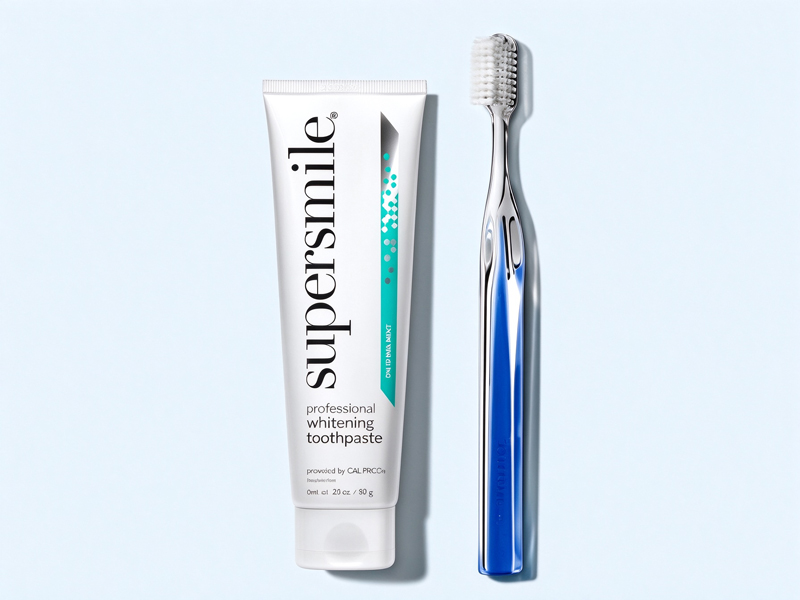
The chemistry is the brand's entire argument, and it is honest enough to state its limits. Calprox — encapsulated calcium peroxide blended with minerals — works by dissolving the protein pellicle, the invisible biofilm to which plaque, bacteria, and stains adhere, rather than scrubbing enamel with abrasives. Company clinicals claim two shades after a single brushing and up to nine in thirty days with the triple-concentration Extra White system, and the mechanism is notably safe for bonding, veneers, crowns, and dentures — the surfaces peroxide strips routinely ruin. The brand is candid about what it is not: not ADA-approved, though it notes its abrasiveness runs seventy-five percent below ADA limits, and Leaping Bunny-certified since 2020. In a category drowning in charcoal gimmicks, a mechanism this specific is the moat.
The Full Counter
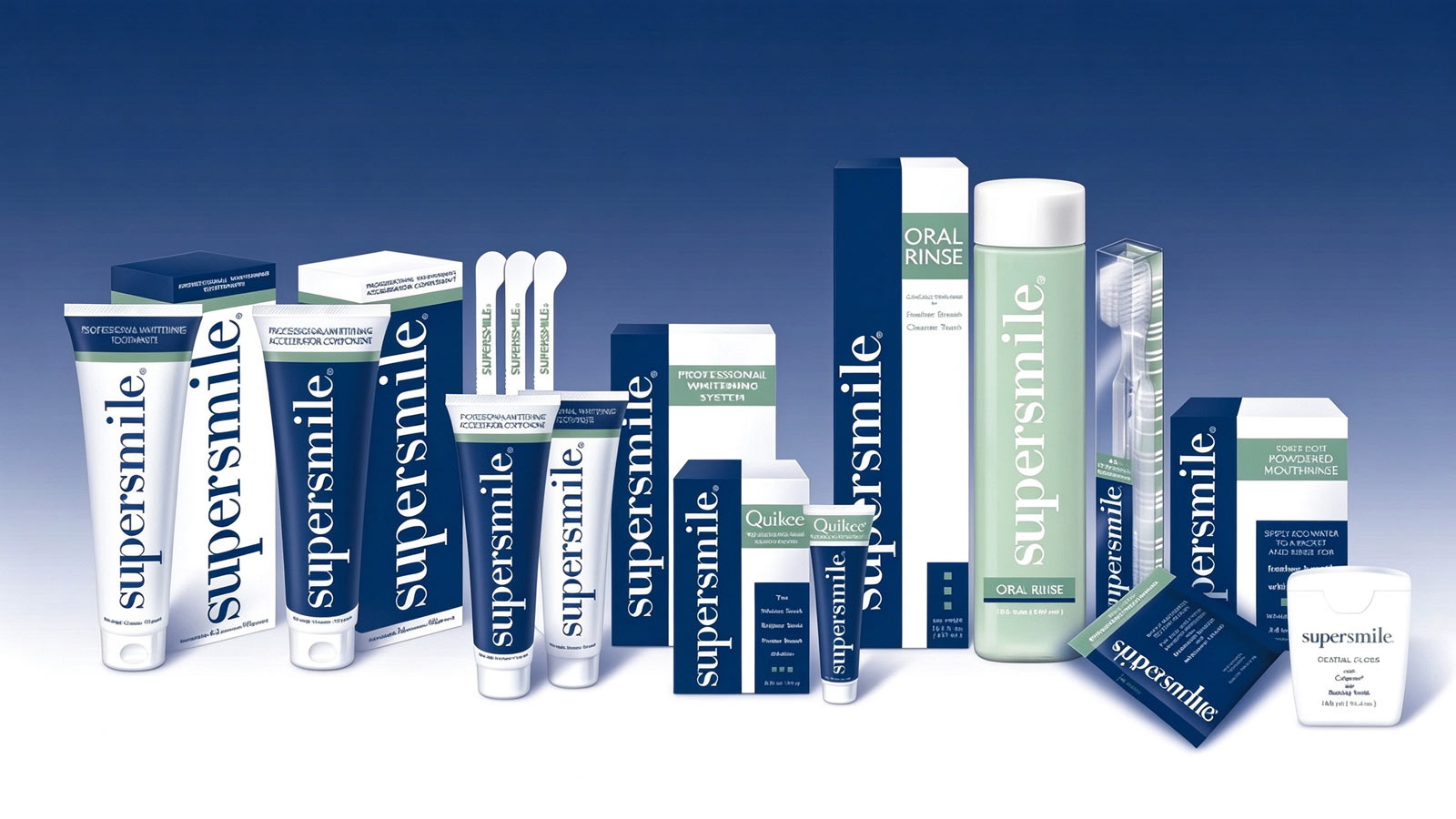
The catalog is a complete clinical ritual at prestige prices. The Professional Whitening Toothpaste runs twenty-one to twenty-five dollars for a three-month tube; the Accelerator pairs with it inside the eighty-five-dollar Professional Whitening System. The newest entry, a forty-five-dollar Whitening Powder launched in 2025, triples as rinse, brush powder, or booster — clinicals claim seventy-two percent stain removal in seven days alongside the paste. Around the systems sit the supporting cast: a twenty-dollar pre-rinse, a 45-degree ergonomic toothbrush at nine dollars, unwaxed floss at seven, on-the-go Quikee wipes, and a whitening gum at three-fifty with sixty-five percent xylitol that has quietly accumulated nearly a thousand four-and-a-half-star widget ratings. Everything is made in the USA, kosher, and free of silica, parabens, sulfates, SLS, and BPA.
From Bloomingdale's to Ulta
The retail ladder spans eras: the prestige beauty counters that carried it in the nineties gave way to Ulta, Dermstore, C.O. Bigelow, Blue Mercury, and international listings from Carrefour in the UAE to specialist distributors — a footprint that means the direct store competes with its own shelf space, as heritage brands always do. The phone-first customer service number, printed since the mail-order days, still anchors the support experience, and the family still runs the company — Lucia as chief executive, with the woman-led, family-owned framing now part of the brand's official identity.
The Family Continuity
The continuity extends beyond the founders' generation. A sister brand, Petsmile, adapts the Calprox formula for cats and dogs as the first and only toothpaste accepted by the Veterinary Oral Health Council — a quiet second act that extends the pellicle-dissolving science to a market with zero competition at its standard. For a family company, the diversification is characteristic: same chemistry, new species, same refusal to sell.
The Return Ledger and the Honest Fine Print
The policy is old-school strict: thirty days, unopened and in original packaging, shipping never refunded, return shipping at the customer's expense, with the right to refuse unreasonable quantities and to substitute equal-value products if stock runs out. Support runs phone-first through a toll-free number — a workflow that assumes customers prefer talking to forms, which at this brand's demographic age may be exactly right. The honest critiques: the premium over drugstore paste is several multiples, the ADA seal remains absent by choice or by history, and a thirty-nine-year-old brand's energy shows in a direct store that merchandises like a catalog rather than a content engine. None of this bothers the loyalists, who buy the mechanism and the heritage together.
The Two-Minute Verdict
Supersmile is the category's institutional memory: the bonding technique that built cosmetic dentistry, the pellicle chemistry that preceded the whitening boom, and a family that walked its product from a waiting room to Bloomingdale's to a Shopify checkout without ever selling the company. Buy the toothpaste for the mechanism, the system for the bonded or veneered teeth that strips will not touch, and the powder if you want the 2025 chapter. Heritage, here, is not a marketing posture — it is the product.