Brushing up on quip: where minimalist design meets a quietly relentless refill schedule
Official homepage:https://www.getquip.com
Oral care stores usually want to sell you a thing. Quip's store wants to sell you a rhythm. The New York brand built its name on a slim, design-forward electric toothbrush, and its Shopify shop is engineered with the same restraint as the product — every pixel nudging you toward a routine rather than a purchase. I browsed it the way I brush: twice daily, unhurried, paying attention to the small moves. Here is what that revealed.
A Toothbrush With a Lifecycle, Not a Price Tag
The first thing to understand about this shop is that the brush is bait. "Better together" — the section mid-homepage — invites you to build an electric toothbrush subscription and save, and the economics only make sense once you see the lifecycle: a $21.25 entry brush, then brush heads every three months, then floss, then paste, each replenishment arriving before you remember to order it. One verified buyer states the value proposition in a single sentence: they love the subscription because they never have to remember refills.
Every product page stages the choice plainly — one-time purchase beside subscribe-and-save, savings visible — and the whole architecture assumes your bathroom is a replenishment zone. You are not buying a toothbrush. You are enrolling a toothbrush in a payroll.
Design as Furniture for the Counter
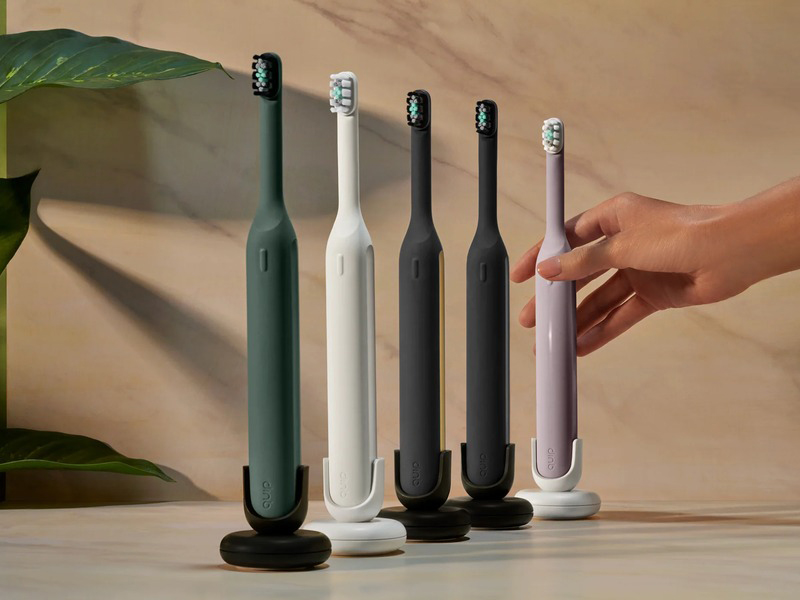
Quip's industrial design — matte metal handle, no charging wires, mounts to your mirror like a fixture — is merchandised as bathroom furniture. The bestseller grid presents the brushes the way a design store presents lamps, and the seasonal "40% off" tile for the newest sidekick stays polite: no countdown, no urgency theater. In a category prone to miracle-whitening hype, the store sells status through understatement. The brush is not a gadget; it is the quietest object on your counter, and the store wants you to notice that it never asks for attention.
The Rhetoric of Dental Credibility
"Dentist-Recommended" appears before any price on the homepage — a deliberate ordering that borrows clinical authority to lower your guard. Behind the slogan sits a How-To hub of brushing-habit guides that reads like patient education rather than SEO filler, and product pages carry an ADA-accepted badge on select pastes.
The layering matters: slogan for the skimmer, hub for the researcher, badge for the skeptic. Few personal-care stores bother to serve all three reading speeds, and the consistency across them is what makes the credibility feel earned rather than asserted.
The Politics of the $7 Shelf
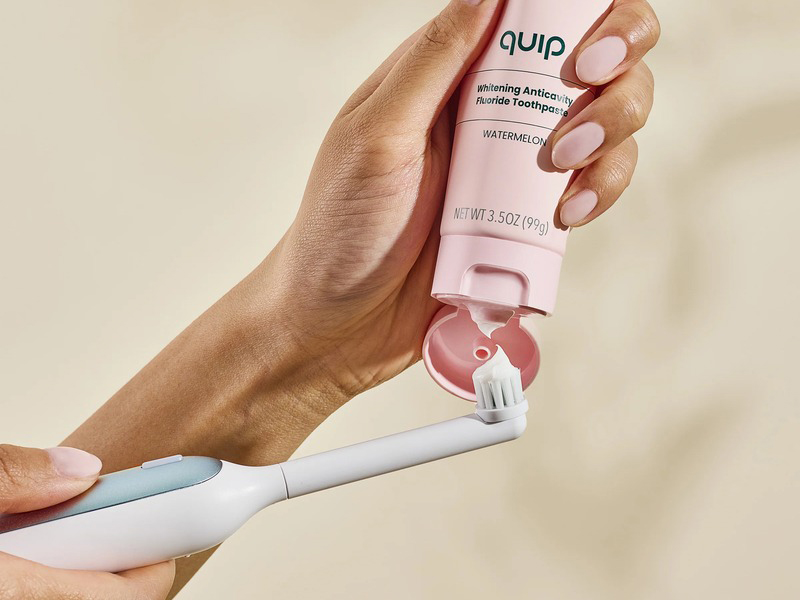
Look at the bottom of the pricing ladder and you find the real entry strategy: refills and accessories "starting at $7" — watermelon and mint pastes, travel covers, replacement heads — priced like impulse items beside a $75 flagship shown at $42. The anchors sit high and the rungs sit low, and the strikethrough originals do their persuasion without a single flashing banner.
This is how a premium brand recruits students and skeptics: let them in through the paste shelf, and let the brush follow. The flavors are not trivial; they are the cheapest possible argument that this brand is more pleasant than the drugstore default.
Reviews That Actually Floss
Scroll the homepage testimonials and something unusual surfaces: specificity. One reviewer upgrades from an older model and praises soft bristles against tight molars; another compares the sonic brush favorably to a famous rival whose name she politely masks; a third reports teeth "several shades lighter" after a week and says she cannot wait for her next dental appointment.
The collection is curated — every review glows — but the technical detail (refill cadence, hygienist appointments, bristle firmness) keeps it credible. This is the rare storefront where social proof carries engineering notes instead of adjectives.
What Silence Costs
Restraint has a price tag too. The catalog is narrow by design — brushes, a flosser, refills, paste — so anyone hunting kids' lines, specialty tools or real variety will hit the edges of the range quickly. The store's own educational depth is thinner than the How-To hub implies, and the one-time purchase path, while present, reads like the road less traveled by design.
Then there is the commitment itself: this store is optimized for people who want oral care on autopilot. Autopilot is convenient until you want to get off — and by then, as the model assumes, the refills are already on their way.
Final Thoughts
Quip's store is the rare shop whose entire business model can be read off its homepage in one glance: enroll the habit, not the hardware; anchor high, recruit low through the paste shelf; let verified customers carry the technical claims; and keep every surface calm enough to live in a bathroom. If you want a counter that restocks itself, this is one of the most coherent subscription plays in personal care. If you want choice and novelty, you will outgrow it — but the refills will already be on their way.