Bite toothpaste bits, born different: the TV producer who turned toothpaste into a tablet
Official homepage: https://bitetoothpastebits.com
Oral-care stores usually begin with a dentist or a chemist. Bite began with a TV producer's carry-on bag. Lindsay McCormick spent years traveling for film and television production, watching plastic toothpaste tubes pile up in hotel bathrooms, and doing the arithmetic that eventually became a company: roughly one billion plastic tubes end up in oceans and landfills every year, most of them technically unrecyclable because of the mixed materials inside. In 2017, while still working her production job, she began bootstrapping an alternative from her kitchen — a toothpaste tablet sold in a reusable glass jar, refilled by mail in compostable paper envelopes — and when the internet found it, the side hustle went viral and she went full-time. The company is now multimillion-dollar, the Shopify storefront carries a full plastic-free sink, and the platform's own editorial team has profiled the bootstrapping playbook. I went through the mission math, the refill mechanics, and the honest complaint file. Here is the store across its dimensions.
A Producer's Side Hustle Goes Viral
The origin explains the brand's production values. McCormick's television background — managing complex shoots under deadline — translated directly into product development discipline and a marketing instinct that made sustainability photographable: a glass jar with a typewriter-font label looks as good on a shelf as it does in an unboxing video. The bootstrap constraint, which she describes as a feature rather than a hardship, meant slow, deliberate growth: no outside money, no forced scaling, and a product line that expanded only when the last one could pay for it.
One Billion Tubes Against
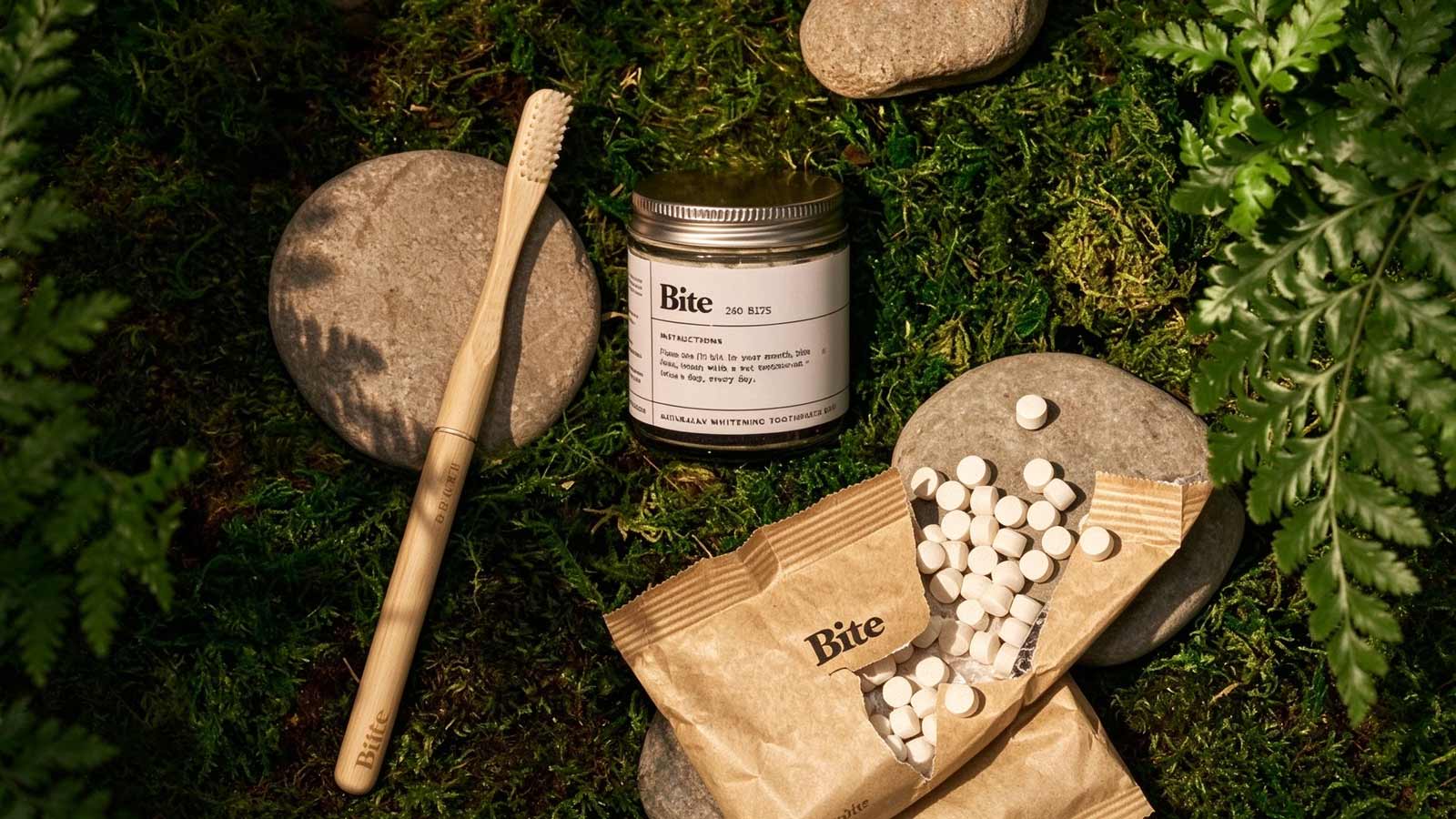
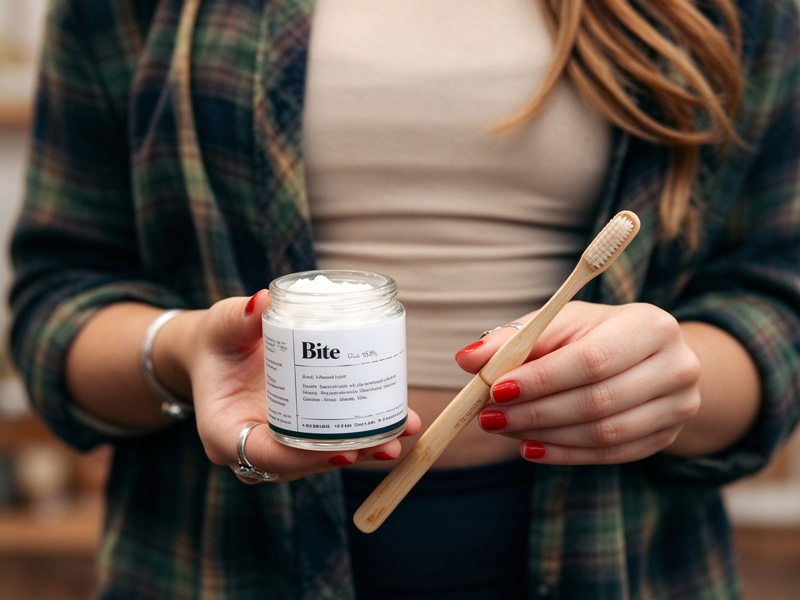
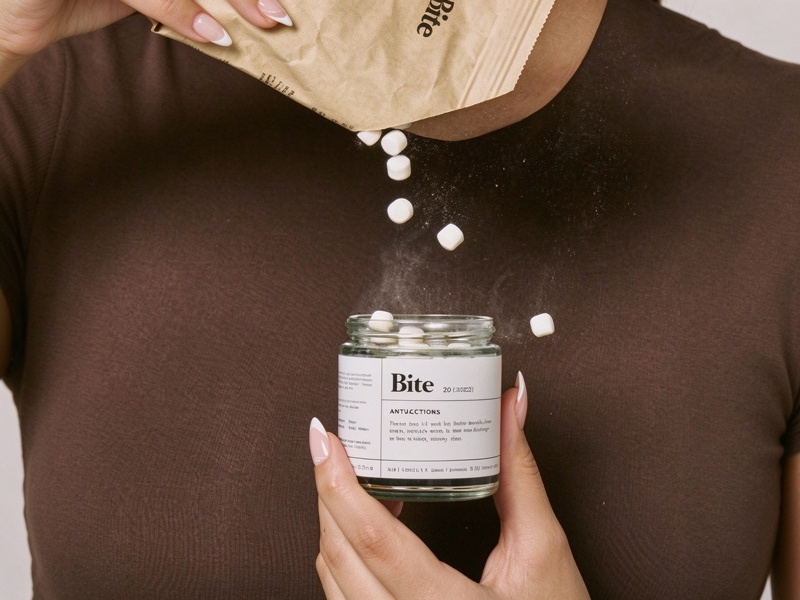
The mission is specific, and the mechanism matches it. A standard toothpaste tube is a laminated sandwich of plastic and aluminum that almost no municipal recycling system accepts; Bite's answer is a system, not just a product. The first order arrives in a reusable glass jar — 124 or 248 tablets, in your choice of mint fluoride or the naturally whitening charcoal variant. Every refill after that ships in a home-compostable paper envelope sized to drop through a mail slot, because the heaviest thing about toothpaste was always the water, and you already have a faucet. It is the rare sustainability pitch where the premium packaging is also the cheaper shipping unit.
The Full Sink
The catalog has grown well past the flagship tablet. Mouthwash Bits work the same way — bite, sip of water, thirty-second swish. Silver and gold travel tins hold a week's supply for carry-ons. A whitening gel pairs with a bamboo applicator pen. Bamboo toothbrushes with replaceable heads complete the plastic-free brush; plant-based floss comes in its own glass vial; a stainless-steel tongue scraper rounds out the ritual. Around oral care, the brand has extended into body care — deodorant and cleanser in the same low-waste grammar — turning a single-product idea into a routine brand.
The Ritual, Rewritten
Using a tablet takes three days of adjustment and then becomes invisible: place one Bit in your mouth, chew until it becomes a soft paste, brush with a wet toothbrush, and it foams as you go. The storefront teaches the ritual in four illustrated steps, and the adaptation notes from owners are consistent — the foam is real, the clean feeling is real, and the flavor intensity is gentler than the drugstore tube's menthol blast. Whether that gentleness reads as premium or underpowered is the brand's most repeated dividing line.
Subscription as Design
The business model is the refill. Subscriptions run on roughly a four-month cadence with subscriber pricing, and the packaging logic does real work: the glass jar arrives once, the envelopes forever, and the carbon math of shipping dry tablets instead of water-filled tubes is the brand's quiet structural advantage. Ecommerce reviewers single out the experience details — animated product pages, cart-level upsells that suggest the tin to go with the tablets — that make the store feel as considered as the product.
The Honest Ledger
The critique file, assembled from unprompted reviews. The mint intensity is the most common gripe: several owners report missing the icy after-freshness of conventional paste, which the brand's gentle formula deliberately avoids. The floss has its own entry — thick enough to snag and occasionally snap between tight teeth, and its slim glass vial shattered in at least one sink-side drop. Shipping runs slower than Prime because the brand batches deliveries to cut carbon, a trade it discloses and some customers still resent. And the fluoride question cuts both ways: the original formula was fluoride-free by philosophy, dentists pushed back, and the store now sells a fluoride version alongside — a rare visible course-correction that pleased half the audience and confused the rest. Add the price arithmetic — several times the per-ounce cost of drugstore paste — and the value case rests entirely on the waste math and the ritual.
Spit Take
Bite is what happens when a producer treats sustainability as a set-design problem: a jar worth photographing, a refill envelope worth bragging about, and a sink ritual that generates no plastic for the landfill. You pay a premium over the tube, wait a few extra days for delivery, and adapt to a gentler mint — in exchange for the only toothpaste system where the packaging improves the more you buy. Start with the 124-bit jar, subscribe only if the ritual sticks, and keep the floss vial away from tile floors.