Three days after graduation, a designer started rebuilding camping's worst gear
Official homepage: https://www.nemoequipment.com
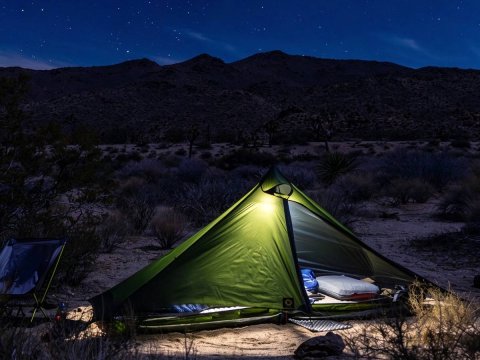
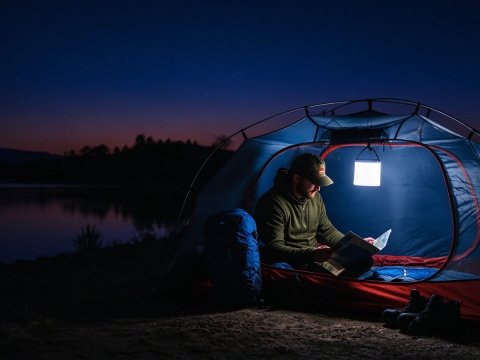
Every camping aisle has the same unexamined objects: mummy bags that assume humans sleep like cadavers, chairs that fight your spine, tents that sag as they dry. NEMO Equipment was founded in 2002 to question all of them. Cam Brensinger — a Rhode Island School of Design graduate who started the company days after finishing school, naming it New England Mountain Equipment after the region that trained him — brought an industrial designer's contempt for inherited shapes to a category that had stopped questioning its own. Two decades later, NEMO's Spoon-shaped bags, Stargaze reclining chairs, and OSMO-fabric tents have collected TIME and Popular Science best-invention honors, and the company still operates from Dover, New Hampshire under its founding designer. This review examines the store where camping gear gets redesigned instead of reissued.
Mount Washington's Misery Became a Design Brief
The founding story has a specific villain: a 2002 trip up New Hampshire's Mount Washington, where Brensinger watched conventional gear fail around him — and realized the failures were not accidents but design choices nobody had revisited. Rather than join an outdoor company and climb a corporate ladder, he founded NEMO with the explicit goal of building a lasting, iconic brand, setting up the first office in Nashua, New Hampshire before settling in Dover. The founding premise was heresy in an industry built on tradition: treat tents, bags, and pads as industrial-design problems with measurable human factors, not as heirlooms to be preserved. The first tent line arrived in 2004, and the recognition followed — multiple products named among the year's best inventions by TIME and Popular Science, the kind of mainstream design validation the outdoor industry rarely earns.
The Spoon Shape Assumes You Sleep Like a Person
NEMO's most copied idea is its simplest critique: the mummy bag. Traditional bags taper from shoulders to feet under the assumption that minimizing fabric beats everything else, which means side-sleepers spend the night fighting the bag's shape. NEMO's Spoon-shaped bags cut wider at the elbows and knees — room where a human body actually bends — while keeping weight competitive through body-mapped insulation. The shape sounds obvious in retrospect, which is the tell of a good design: it took someone treating a sleeping bag like a chair, a product category where ergonomics had long been mandatory, to ask why sleepers got less consideration than sitters. The Spoon line now anchors the brand's sleep offering alongside pads and quilts, and its language — built for the way you actually sleep — has become NEMO's house dialect.
The Stargaze Chair Turned Camp Seating Into a Hammock
If the Spoon bag is NEMO's philosophy in fabric, the Stargaze recliner is its philosophy in aluminum. Camp chairs had been static for a century — four legs, fabric sling, lumbar punishment — until NEMO engineered a suspended seat that swings gently and auto-reclines as the sitter leans back, mimicking a hammock's zero-pressure posture while keeping the portability of a folding chair. It weighs about nine pounds, supports three hundred, and packs small enough for car camping and overlanding; reviewers describe arriving at camp and calling dibs on it before anything else is unpacked. The chair earned NEMO some of its earliest best-invention attention, and it remains the product people buy first and evangelize loudest — the rare camp chair that gets described in the language of luxury rather than utility.
OSMO Fabric and the Endless Promise Extend the Design Ethic
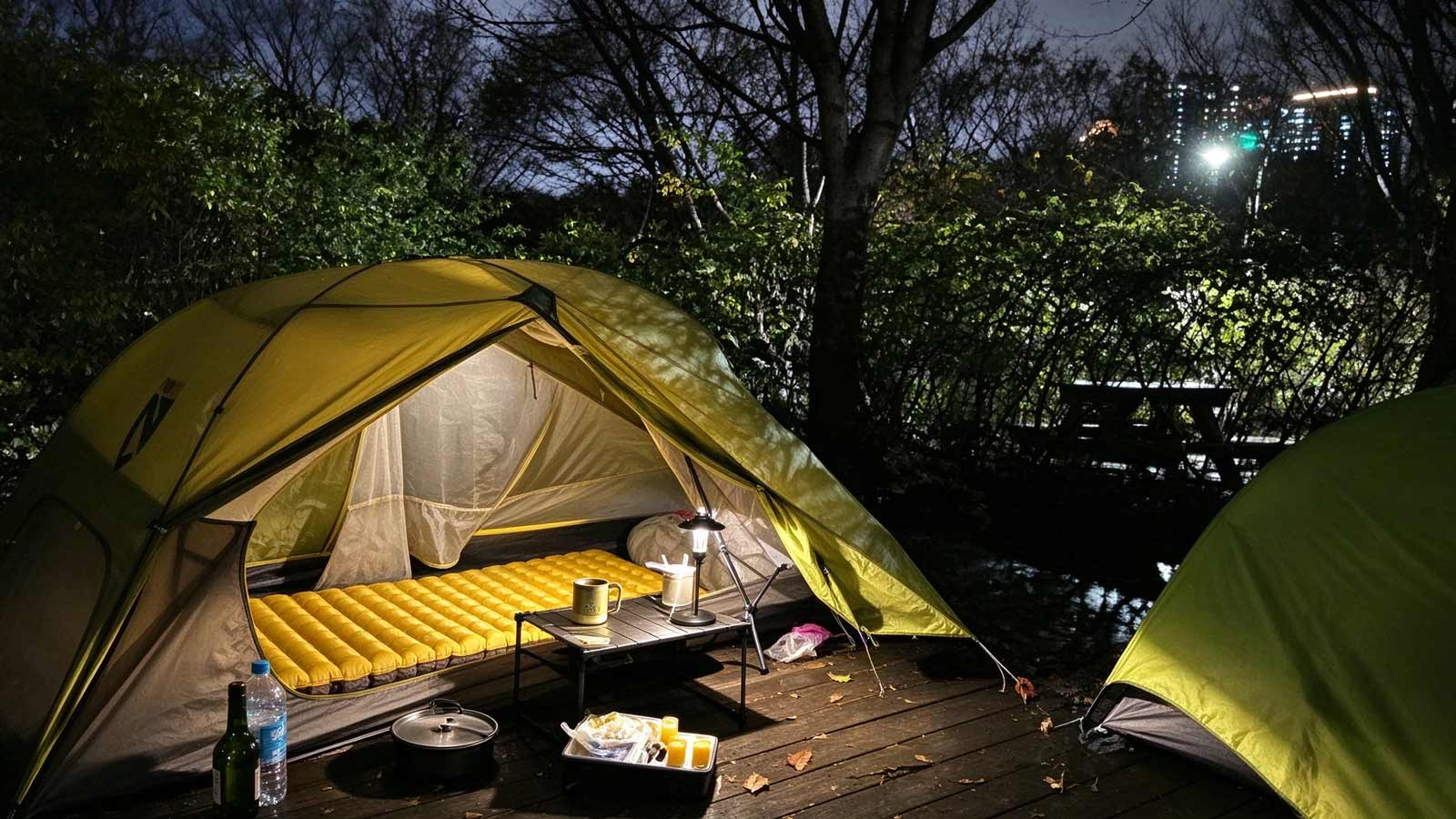
The design-first approach runs through materials and lifecycle too. OSMO is NEMO's proprietary tent fabric — a recycled poly-nylon blend engineered to repel water better and stretch less when wet than conventional nylon, addressing the sag-and-drip problem every tent owner knows and nobody had engineered against. Around the products sits Endless Promise, the company's repair-and-recycle program: items are designed to be fixed, and when they can adventure no more, to be recycled rather than landfilled. The two initiatives share a root assumption — that gear is a designed system from fiber to disposal, not a SKU — and they distinguish NEMO from competitors whose sustainability claims stop at material percentages.
The Store Sells the Full Camp, Segment by Segment
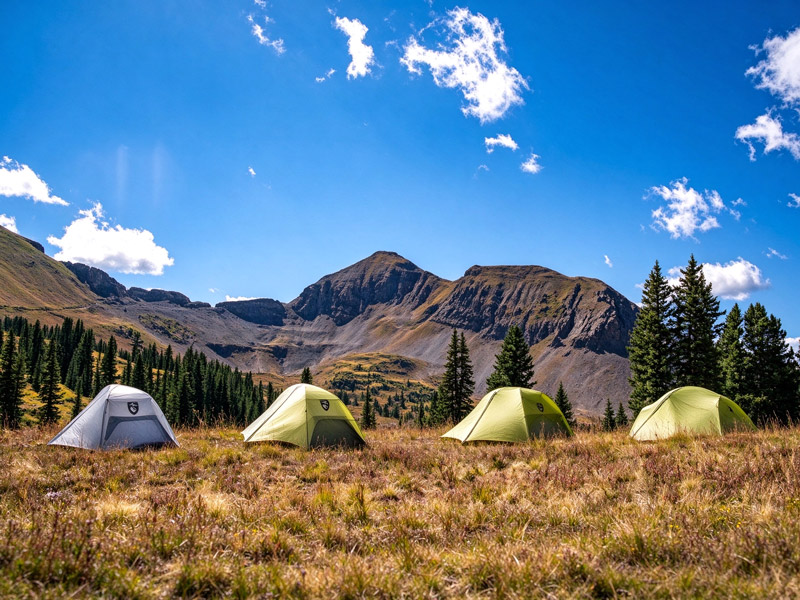
The Shopify storefront mirrors the brand's segmentation logic. The catalog is organized by camping type — beginner to expert, backpacking to family car camping — rather than by product taxonomy alone, which lets a first-time camper shop by trip rather than by jargon. Tents lead with OSMO fabric callouts and pole-geometry explanations; bags sort by Spoon shape and temperature rating; furniture includes the Stargaze family and lighter siblings; and every product page carries the lifetime warranty against defects in materials and workmanship. International distribution and a broad retail network mean the store functions partly as the brand's full-line showroom — the place where the whole redesign catalog is visible at once.
The Honest Frictions of Designer Gear
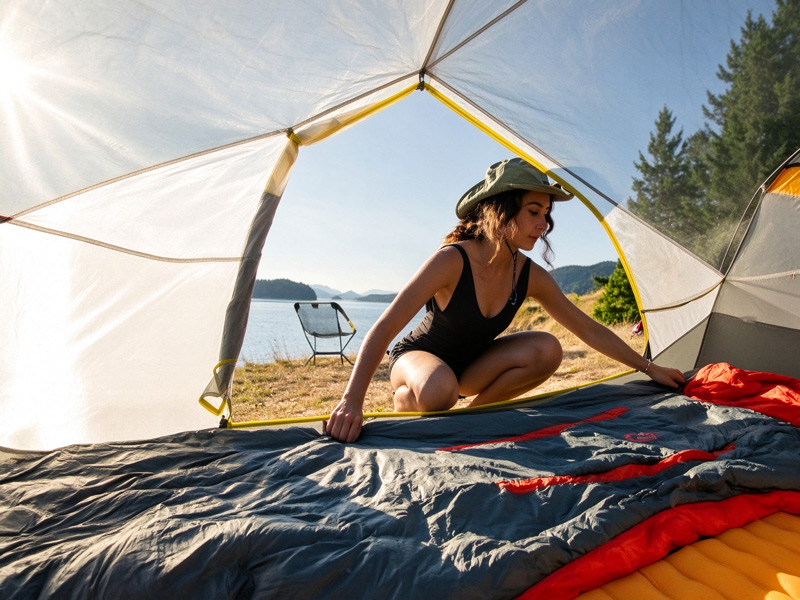
Design premiums are real, and NEMO's price tags sit above value-tier competitors across tents, bags, and especially furniture — the Stargaze's comfort costs more than a decade's worth of generic camp chairs. The Spoon shape's extra room trades a modest weight penalty against the most aggressive mummy bags, which ultralight counters will notice. NEMO's core strength is family and car-camping-adjacent comfort engineering, so thru-hikers chasing the absolute minimum baseweight will find the catalog heavier than cottage specialists. And while the lifetime warranty is generous, designer fabrics like OSMO are newer than the traditional nylons they replace, so decades-long durability data simply does not exist yet. These are the costs of questioning shapes the rest of the industry stopped questioning.
Two Decades of Asking Why It Looks Like That
NEMO Equipment's store is a catalog of answered stupid questions: why do bags assume we sleep flat, why do chairs fight us, why do tents stretch when wet. Founded by a designer who refused to accept the aisle's defaults, the brand has spent two decades converting those questions into best-invention awards, ergonomic shapes, proprietary fabrics, and a repair-first warranty — all from Dover, New Hampshire, all still under its founding CEO. For campers who suspect their gear was designed by tradition rather than by people, this is the store built to prove them right.