ICECO brand review: are portable camping fridges worth it? what to check
Official homepage: https://icecofreezer.com
Camping stores usually help you stay warm, dry, and rested. The newest category in the aisle helps you keep things cold: ICECO sells portable refrigeration — compressor-driven boxes built for truck beds and camp kitchens, the kind of appliance that converts a weekend campsite into a kitchen with a freezer. I browsed with a cooler full of melted ice and a growing suspicion that the ice industry had been coasting for a century. Here is the counter, decision by decision.
Door Policy: The Cooler, Electrified
The storefront names its territory in four words — smart outdoor living — and the hero products beneath it are not bags of ice but compressor boxes, the twenty-first-century answer to the foam cooler. Framing the store around refrigeration rather than general camping gear is category creation aimed at the overlander and the tailgater: the box is the product, the electricity is the premise, and the store has positioned itself at the exact intersection where camping meets the kitchen. The cold is the category; the category is the moat; and the moat is measured in degrees below freezing, and the degrees are why the ice bags melt alone.
Two Zones, One Box
The flagship line carries a feature the cooler never had — dual zones, one side frozen, one side merely cold, adjustable across a range wide enough to hold ice cream and fresh vegetables in the same box at different temperatures. Splitting the interior is engineering positioning aimed at the week-long camper: the dual zone replaces the separate cooler and freezer, the wide temperature range covers every perishable, and the store has converted a single appliance into the entire camp pantry. The two zones are the argument; the argument ends the debate about which box to bring; and the debate ended is the sale.
Aluminum as a Selling Point
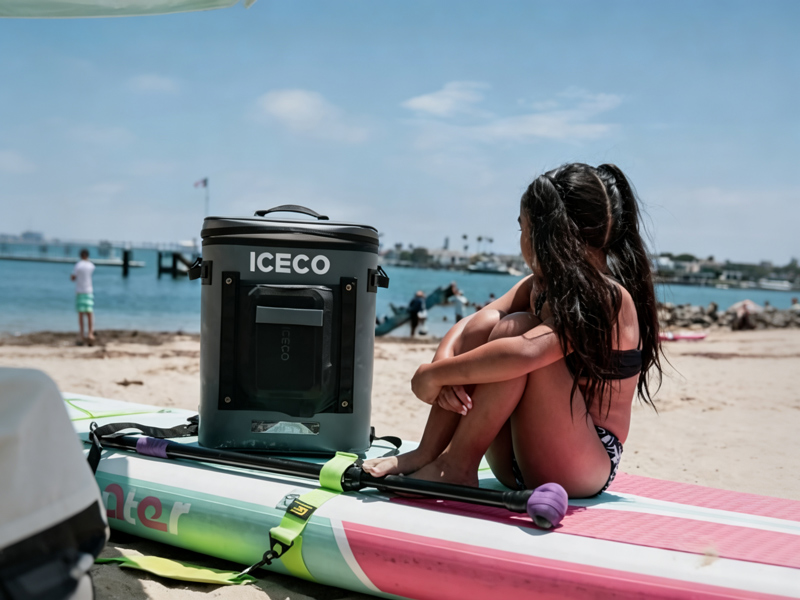
The mid-range model leads with its body — an aluminum shell, the copy boasting ultralight and ultracool in the same breath, the metal promising fast cooling and easy lifting. Choosing aluminum over plastic is materials marketing aimed at the weight-conscious overlander who loads and unloads the box daily: the aluminum says the box cools faster, weighs less, and survives the truck bed, and the store has made the shell a headline rather than a footnote. The metal is the differentiator; the differentiator is the reason the plastic coolers stay on the shelf; and the shelf is where the ice used to live.
Five Years of Warranty
The policy line carries a number the appliance industry rarely prints — five years of warranty coverage on a product category where one year is the norm. Stretching the warranty is confidence aimed at the hesitating buyer of a premium cooler: the five years say the compressor is built to outlast the trips, the warranty says the company expects the box to be dragged through a decade of weekends, and the store has converted after-sales service into a headline specification. The five years are the promise; the compressor is the bet; and the bet is printed in the policy where the skeptics read first.
The Wheel of Treats
When I visited, the homepage carried a spinning wheel — a Halloween promotion, spin to unlock your treat, the gamified discount replacing the standard coupon code. Gamifying the promotion is engagement aimed at the seasonal shopper: the wheel makes the discount an event, the suspense converts a code into a ritual, and the store has borrowed the casino's oldest trick for the campground's newest appliance. The wheel is the hook; the treat is the discount; the discount spins the browser into the buyer; and the buyer remembers the spin longer than the savings.
The Scene as the Spec Sheet
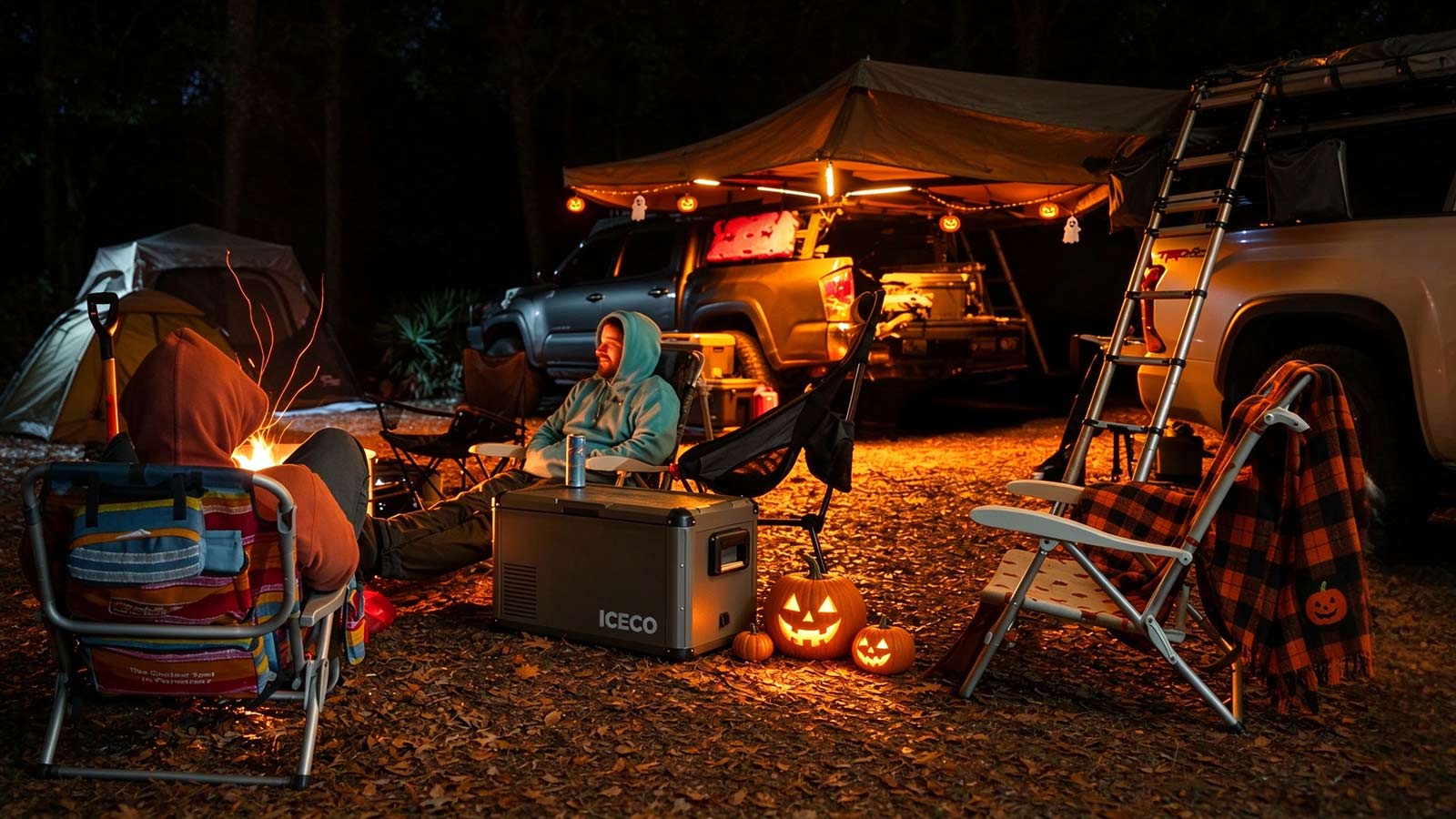
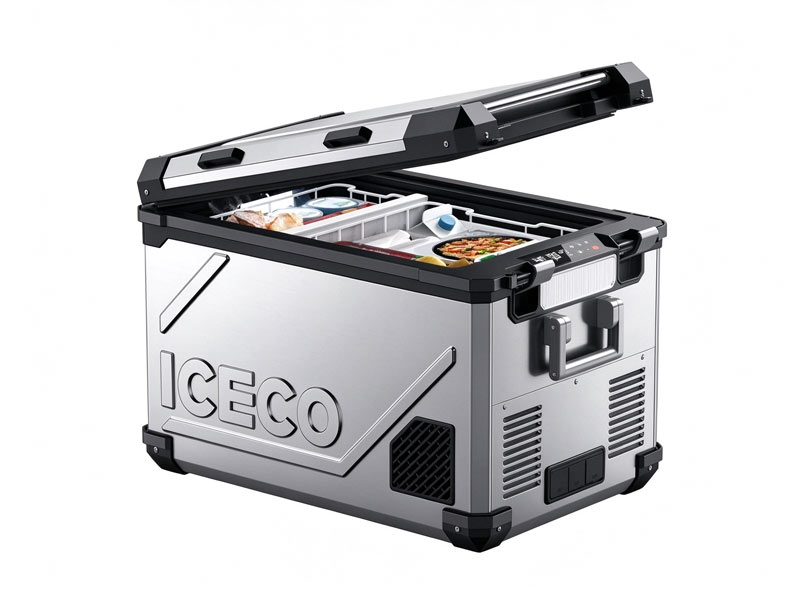
The product photography does the work of a thousand words — the box open on a truck tailgate, a fisherman pulling a cold bottle from the aluminum lid, pumpkins and campfires glowing around the closed unit at a Halloween campsite. Photographing the box in use is context positioning aimed at the customer who cannot imagine a refrigerator in the woods: the tailgate says it belongs in the truck bed, the fisherman says it replaces the ice run, the pumpkins say it survives the season, and the store has answered every objection with a single frame. The scene is the spec sheet; the spec sheet is a campfire; and the campfire is the coldest one in the woods.
Shipping as the Silent Policy
The header prints the practical promise — free shipping within the domestic United States — the words carrying more weight on a sixty-pound box than on any other product in the aisle. Waiving freight is conversion aimed at the customer who has abandoned heavy carts at the shipping reveal: the free freight says the price on the page is the price at the door, the weight is the company's problem, and the store has removed the last excuse the ice cooler had left. The freight is the threshold; the threshold is free; and the free threshold is how a sixty-pound box sells like a bag of ice, and the selling is the point.
The Brand as the Badge
The logo sits on the box like a crest — the name printed large on the aluminum, visible from across the campsite, the box itself a billboard for the brand that made it. Putting the name on the product is identity aimed at the community of overlanders who photograph their rigs: the logo says the cold box is a named brand rather than an anonymous cooler, the photograph spreads the name, and the store has turned its customers' pride into its advertising. The badge is the billboard; the billboard is free; the free billboard travels to every campground in the country; and the country is full of campgrounds.