
How govee built a smart lighting powerhouse on shopify: DTC, Amazon, and the matter bet

Official homepage: https://us.govee.com
Spend ten minutes scrolling through Govee's storefront and you start to understand why a brand that began life as an Amazon listing for cheap LED strips now behaves like a full-fledged smart home company. The rooms in its photography glow in gradients of violet and cyan. A floor lamp is never just a floor lamp — it's the finishing touch on a gaming setup, the mood behind a Halloween party, the thing that makes a dorm room look like it belongs to someone with taste. Govee isn't selling hardware. It's selling atmosphere, and the owned Shopify storefront is where that story gets told in full.
Three Waves, One Perfectly Timed Ride
The smart home market has been compounding at roughly 15% a year, and lighting keeps landing at the intersection of everything driving that growth: home decor, gaming culture, and energy-conscious upgrades. Govee didn't predict this so much as surf it, one wave at a time.
The first wave was pure novelty. Between 2017 and 2020, Bluetooth LED strips became the default accessory for streamers and dorm rooms, moved almost entirely through Amazon search, and Govee was one of the brands that rode the algorithm at exactly the right moment. The second wave turned those impulse buys into households. WiFi models, music sync, and the Govee Home app meant the strip behind your desk could quietly become a floor lamp, then wall panels, then sensors. The third wave is the one playing out now: Matter and Thread dragging the whole category toward genuine interoperability, and Govee moving early enough that "works with everything" became part of its pitch before buyers started demanding it.
None of this required prophecy. It required showing up to each wave a little earlier than the value-priced competition usually does.
The Storefront Amazon Can't Give Them
It's tempting to assume Govee keeps its Shopify store around for branding's sake — a polished window while Amazon does the real work. Spend a little longer there and that assumption falls apart.
The economics alone justify it. On its own store, Govee keeps the full margin on hero products and, more importantly, controls how products meet each other. A customer eyeing a floor lamp gets guided to strips, panels, and sensors in a single session — ecosystem logic that Amazon's grid of competing listings actively fights against. Benchmarks across Shopify's electronics category keep telling the same story: ecosystem-based brands earn repeat purchase rates 25–40% higher than single-product sellers.
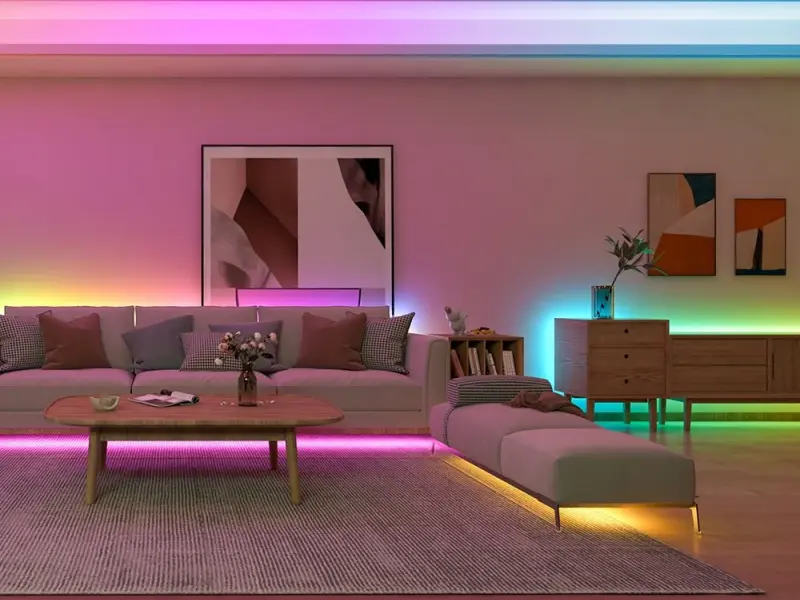
But the subtler play is how the store doubles as a content engine. Room makeovers, install guides, seasonal scene ideas — "Halloween lighting," "gaming setup" — the kind of pages that rank for high-intent searches no paid ad can profitably touch. For a product whose entire value is visual, this matters more than any spec sheet. You can't photograph ambiance in a bullet point. You have to show the room.

Matter Isn't a Feature. It's a Bet on Trust.
For electronics retailers, platform policy has come to mean something bigger than fee schedules. Interoperability standards now quietly decide whose devices get bought. When Matter arrived, "works with Apple Home / Alexa / Google Home" turned into a purchase trigger — a filter buyers apply before they ever compare lumens.
Govee leaned in early, publishing a dedicated Matter hub and pushing firmware to devices people had already bought. The effect is easy to miss and hard to overstate. Compatibility removes the fear that buying a mid-priced brand means settling for a walled garden. For a challenger priced under incumbents like Philips Hue, that fear is the real competitor — and standards adoption dissolves it far more cheaply than a decade of brand advertising would.
What the Rest of the Shelf Can Take From This
The lessons aren't complicated, but they're consistently ignored. Show the product in a real room, because a lamp on a white background tells the buyer nothing about why they want it. Run the two channels as one funnel, not two rivals — marketplaces for discovery and volume, the owned store for bundles, loyalty, and the bigger ecosystem order. Put the Matter and Alexa badges where the eye lands first, not buried in a spec accordion, because compatibility anxiety is one of the top drivers of electronics returns. And treat seasonal content as infrastructure, not decoration: Govee's holiday guides quietly capture the searches that ad budgets can't.
The Takeaway
Govee's storefront shows what happens when an electronics brand stops treating its own store as a checkout page and starts treating it as a lab. Marketplaces win the first order. The owned store wins the household. In a category growing this fast, the brands compounding aren't necessarily the ones with the best hardware — they're the ones who figured out earlier that the second sale, and the third, live somewhere Amazon can't follow.