Bartesian's capsule economics: five-spirit docks, a mocktail-to-strong slider, refill racks by the twenty
Official homepage: https://bartesian.com
Cooking-appliance stores usually sell you a machine and wish you luck with recipes. Bartesian sells you a machine and then, forever after, sells you the drinks. I browsed with a home bar of neglected bottles and a suspicion of single-serve anything, and found a store built on one confident bet: that cocktails can work like coffee. Here is the counter, decision by decision.
Door Policy: Borrow the Nespresso Shape
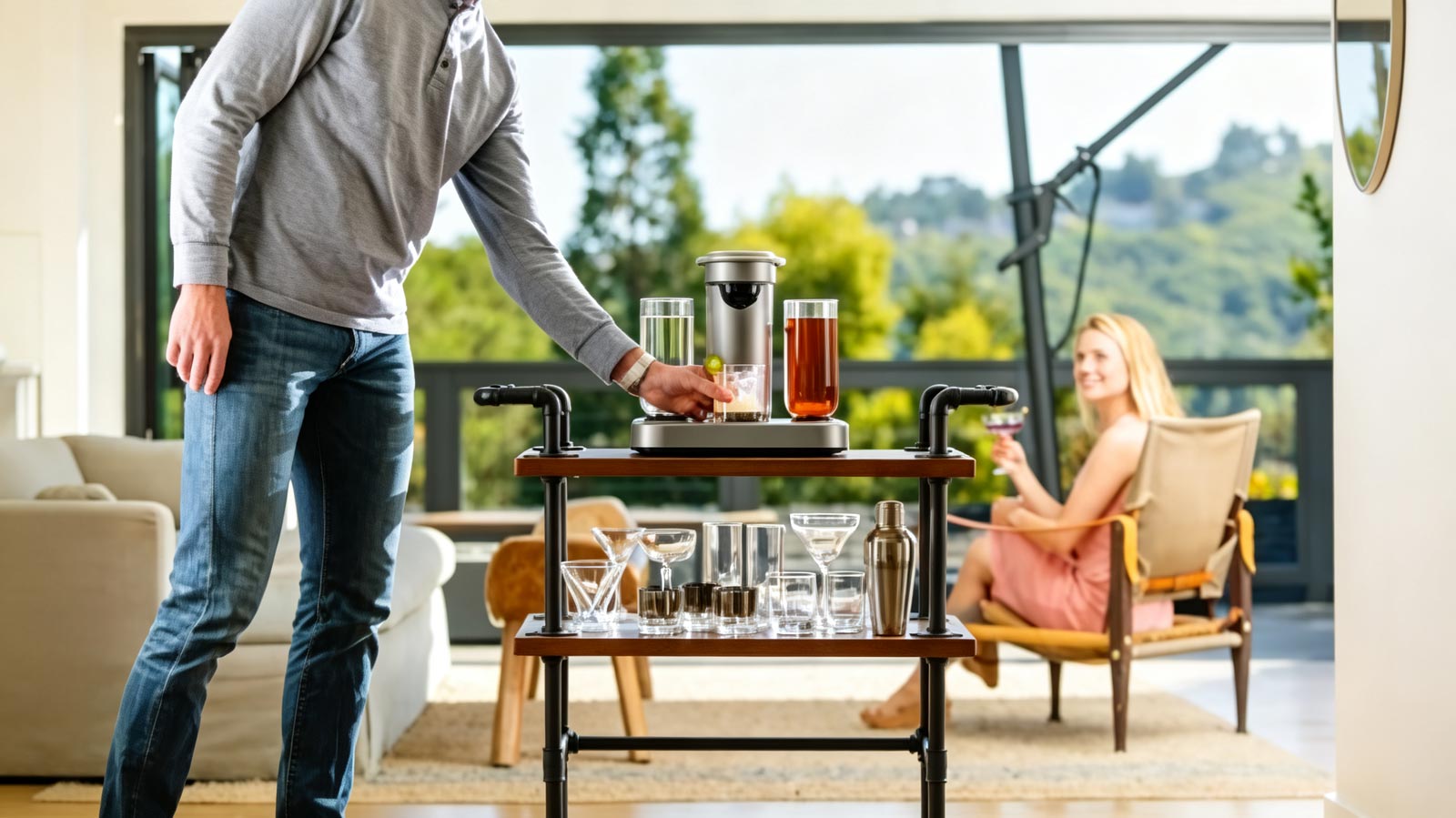
The storefront’s whole job is translation — a countertop cocktail maker that works like the pod machine everyone already understands. Capsules hold juices, bitters, and extracts; the machine measures and mixes. Leading with an analogy rather than a spec sheet is deliberate: inventing demand is expensive, so the store borrows the shape of an existing habit and lets the customer feel fluent on day one. Every headline, diagram, and how-it-works strip exists to collapse that learning curve.
Hardware That Refuses to Sell Alcohol
The capsules contain no alcohol. The customer supplies vodka, gin, rum, tequila, and whiskey, poured into the machine’s own reservoirs. That single design choice does enormous quiet work — it sidesteps the legal thicket of shipping liquor, lowers the effective price of ownership, and turns every household’s bottle collection into the store’s inventory partner. Building a dock instead of a dispensary is a regulatory and pricing decision disguised as a feature.
One Slider Serving Two Households
Because the capsules carry only flavor, the same pod serves a full-strength cocktail or a completely alcohol-free mocktail — the difference is a strength setting from mocktail to strong. Selling one consumable to two audiences at once doubles the store’s reach without a single additional SKU: the designated driver and the whiskey drinker buy the same box, and nobody is excluded from the ritual.
Refill Racks Run as the Real Business
Capsules run roughly twenty dollars for eight and seventy-two for thirty-two — about two-fifty to three dollars a pour before the customer’s own spirits — with an optional subscription trimming twenty percent and shipping free. Run the razor’s economics against a twelve-dollar bar pour and the machine becomes the door, the refill rack the business. The store behaves accordingly: subscriptions optional, variety generous, no lock-in, because a trapped subscriber is a refill model’s worst advertisement.
Five Docks as a Menu Fence
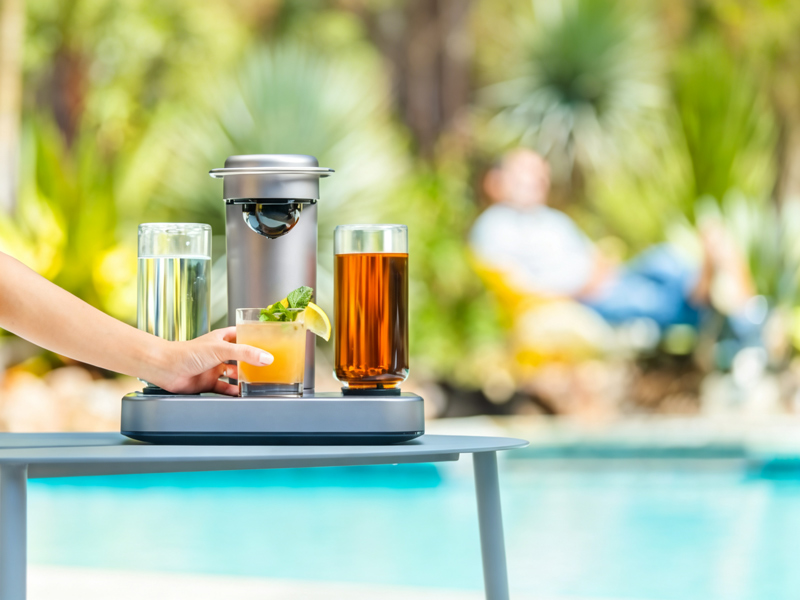
The reservoirs hold exactly five base spirits, and the capsule library is engineered inside that fence — blends formulated to pair with rum where a wine base would be expected. Constraining the hardware’s inputs keeps the capsule shelf legible, and every new flavor must pass five fixed partners before it ships. The fence is the menu.
Channels Split Like a Pub Crawl
The machines also sit in Williams Sonoma, Best Buy, Total Wine, and the usual marketplaces, but the direct store keeps the subscription discounts and the widest capsule selection. Retail shelves sample and gift; the brand store subscribes and replenishes. For a razor-and-blade model, the website is where the blade lives or dies — and this store knows it.