A forest ranger didn't believe his pack, so he built a company
Official homepage: https://hyperlitemountaingear.com
The origin story of Hyperlite Mountain Gear includes a scene most founders never get: a forest ranger stopping Mike St. Pierre on a trail in New York's Adirondacks, refusing to believe the small pack on his back could hold enough gear for a fifty-mile weekend — and making him empty it on the spot to prove it. The ranger was convinced; St. Pierre went home and founded a company. Since 2010, Hyperlite has operated from a renovated 1880s textile mill in Biddeford, Maine, building packs, shelters, and apparel from Dyneema Composite Fabric — the material obsession that made the ranger's disbelief possible. This review examines the store where ultralight stopped being a hobby and became an engineering discipline.
A Brooklyn Chef Couldn't Find the Gear He Wanted
Before Hyperlite, Mike St. Pierre was a chef in Brooklyn, escaping long restaurant hours for weekend trips to the Adirondacks and New Hampshire's White Mountains. Like many converts, he started weighing his gear and keeping spreadsheets, cutting his baseweight from fifty pounds toward ten — and along the way discovered that the durable, stripped-down, genuinely waterproof equipment he wanted did not exist. So he taught himself fabrics and production, and on his mother and grandmother's sewing machines in his Brooklyn apartment, built his first shelter, the Echo I — sewn, by his own account, on a cheap hundred-dollar household machine and far from elegant. His brother Dan, a corporate-finance refugee, joined to run the business side. Family and friends funded the early days; a garage in Kennebunk, Maine became the first workshop; and the company settled into the old mill in Biddeford that still anchors its identity.
Cuben Fiber Became the Whole Business Model
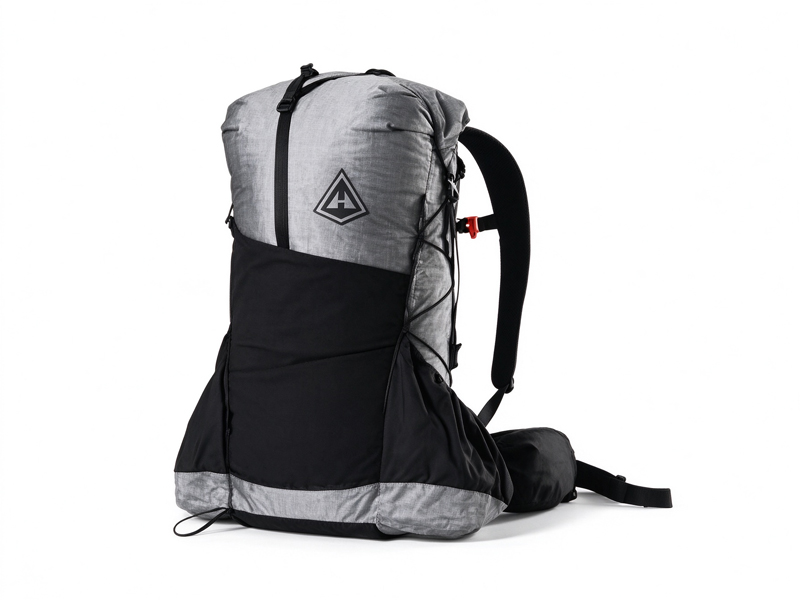
The material discovery that defined the company was Cuben Fiber — later renamed Dyneema Composite Fabric — a non-woven laminate originally developed for racing yacht sails, lighter than anything woven, fully waterproof, and stronger than steel by weight. St. Pierre called the company that made it, and the relationship became the business. Hyperlite has used Dyneema exclusively since the beginning, and its material science runs deeper than competitors': the company distinguishes between DCF, its own reinforced Dyneema Composite Hybrids with polyester face laminates for packs, Dyneema Hardline ripstop for pockets and hip belts, and woven Dyneema for abrasion-critical panels — recipes refined over fifteen years of field feedback from elite users. The visual signature follows from physics: Dyneema cannot be dyed without losing strength, so the gear is famously white and black, instantly recognizable across a ridgeline.
One Ranger Encounter Turned Curiosity Into Conviction
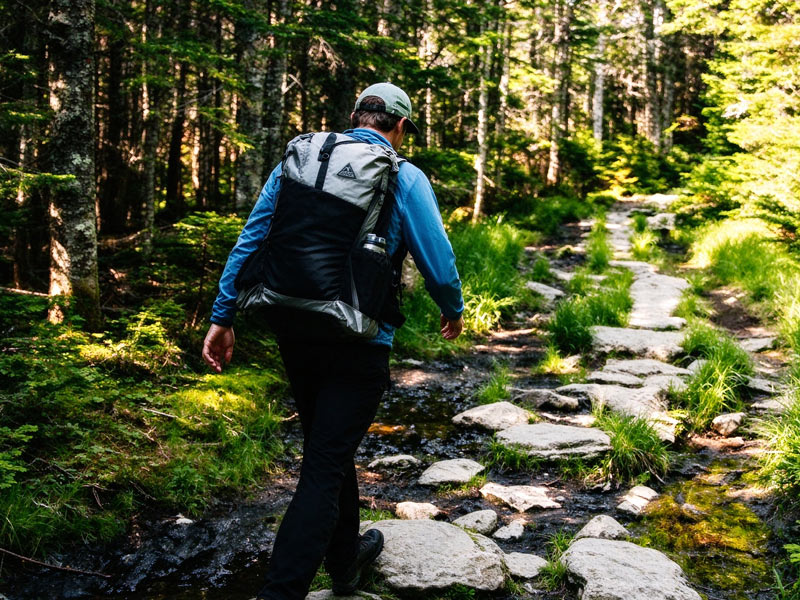
The anecdote St. Pierre still tells explains the company's early traction better than any metric. On that Adirondacks trip, the ranger's disbelief — she would not accept that a pack so small held a sleeping bag, let alone three days of gear — made him empty everything on the ground before she let him continue. Similar encounters repeated in the Whites. The lesson he took was that demand existed but knowledge did not: hikers loved the idea of going light and had no idea how. Early validation arrived institutionally too — in 2011, Google and American Express selected Hyperlite as a Small Business Saturday contest winner, putting the tiny mill operation on a national stage, and growth reportedly ran fifty to seventy percent a year through the following decade.
The Catalog Reads Like a Discipline, Not a Collection
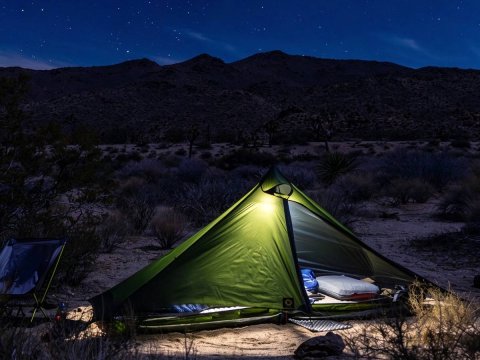
Hyperlite's product line is organized around a design philosophy St. Pierre states plainly: weight is a byproduct of stripping gear to essentials, not a goal pursued for its own sake. The pack family makes the point — the Windrider and Southwest (2,400 to 4,400 cubic inches) differ only in front-pocket material, mesh versus Hardline, for wet versus abrasive country; the Porter strips external features entirely for bushwhackers and packrafters; the Ice Pack carries tools and crampons for winter objectives. The UltaMid pyramid shelters and Dirigo 2 tent brought the same material logic to shelter, and The Shell — a Dyneema-eVent rain jacket under seven ounces — extended it to apparel in 2017. Around the edges sit the stuff sacks and pods that complete a waterproof system, because, as the company notes, taped seams handle needle holes but redundancy is the real answer.
The Store Carries the Mill's Story Onto the Screen
The Shopify storefront functions as the brand's direct voice — historically the channel for roughly eighty percent of sales, an unusually direct relationship for an outdoor manufacturer. Product pages explain fabric choices and model differences with an engineer's specificity, the kind of detail that turns first-time buyers into disciples. The 2025 upgrade of the core packs to fully woven Dyneema construction — up to ten times more abrasion resistant at the same weight — anchors the current catalog, alongside the Crosspeak 2 tent released that same year. A repair-and-warranty program supports the gear's premium positioning, and the company's testing bench remains the founder's own weekends in the White Mountains.
The Honest Frictions of Absolute Minimalism
The ultralight extreme has costs, and Hyperlite's are consistent. Prices sit at the category's ceiling — DCF packs, shelters, and jackets cost multiples of mainstream nylon equivalents, and the premium buys ounces rather than features. The famous white fabric shows dirt immediately, crinkles loudly, and demands care with abrasion and prolonged sun. Roll-top, frameless-adjacent designs assume a skilled, compressed load: beginners carrying traditional kits will find the packs unforgiving. The company's made-in-Maine identity softened in 2020, when booming demand pushed much production to a partner facility in Mexico — a rational scaling decision that some loyalists still read against the brand's origin story. And the catalog's relentless specificity means there is no comfortable generalist option here; Hyperlite sells tools for defined missions, not all-purpose comfort.
Fifteen Years After the Ranger Asked to See Inside
Hyperlite Mountain Gear turned one disbelieving forest ranger into a material-science house. The company that began on a household sewing machine now anchors the premium end of ultralight backpacking from a Maine mill, with Dyneema expertise that competitors license and customers evangelize. The store is the most complete expression of the philosophy — every gram argued for, every fabric choice documented, every product carrying the trail mileage that designed it. Buyers who count ounces already know the white-and-black silhouette; this review is for everyone else who is about to find out why the ranger made him empty his pack.